The Push to Breed Bigger Whippets
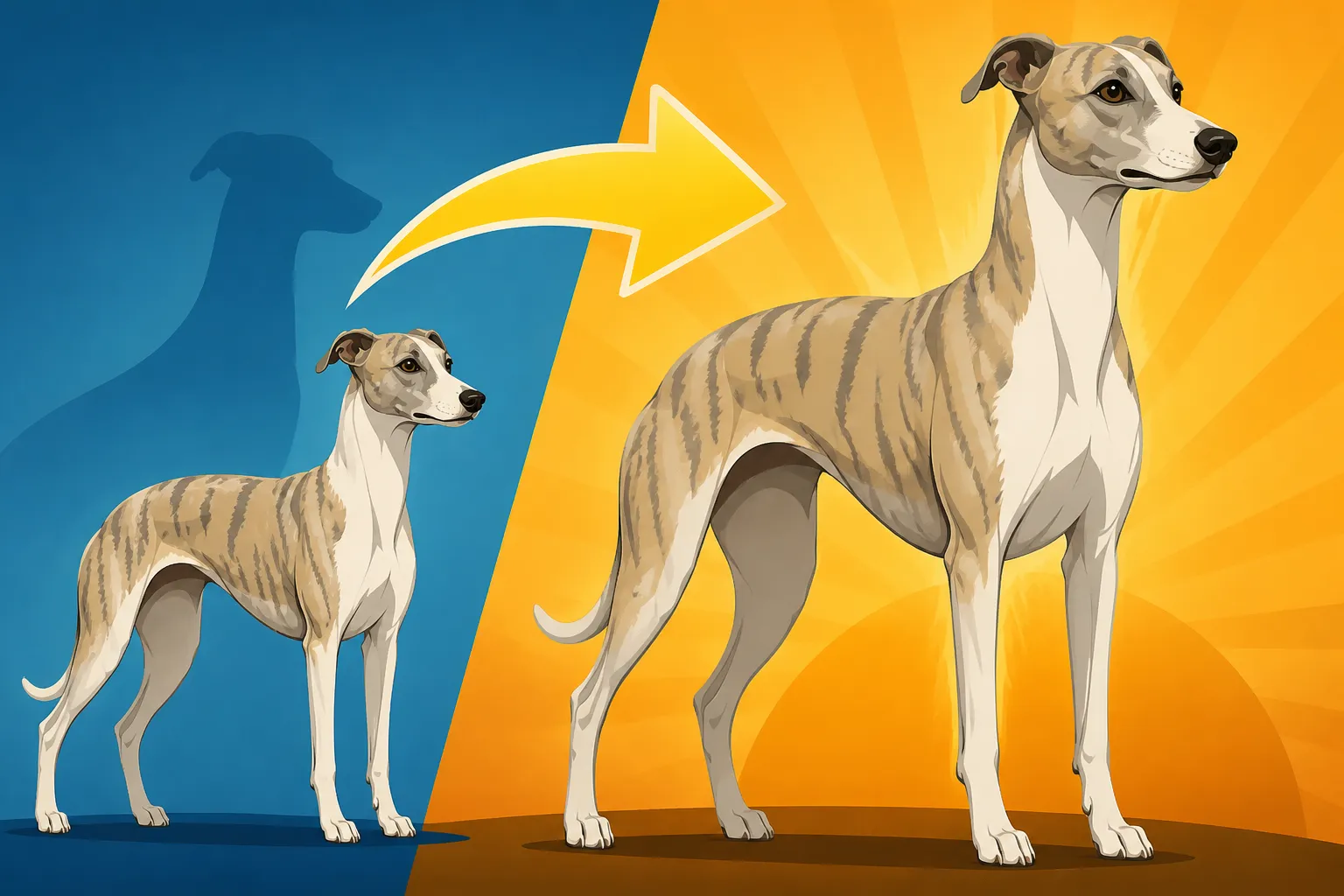
A taller, heavier Whippet can look impressive, but “bigger” does not automatically mean healthier, faster, or better built. Owners and puppy buyers can also struggle to tell normal variation from a dog bred outside the expected type—or simply carrying extra weight. This guide explains why some people favor larger Whippets, what size can and cannot tell you, and how to assess a dog fairly.
What people mean by a bigger Whippet
“Bigger” is an imprecise word. It might mean a Whippet stands taller at the shoulder, weighs more, has a broader frame, carries more muscle, or is simply heavier because it is overweight. Those are different things, and treating them as interchangeable can lead to mistaken judgments about a dog’s health or quality.
The most useful starting point is to consider height, build, and body condition separately. The breed standard used by a kennel club can help describe the intended type in that region, but a number on a scale alone cannot tell you whether an individual dog is well proportioned.
Height, weight, and substance are not the same
Height is measured at the withers, the point where the neck meets the back. Weight is the number on a scale. “Substance” usually describes the dog’s bone, muscle, and overall build. A Whippet might be taller without being especially heavy, or compact and muscular without being unusually tall.
That distinction matters when comparing dogs at a show, on a race field, or in a family home. A tall, fine-boned dog may weigh less than a shorter Whippet with more muscle. Two healthy dogs of the same height can also differ in weight because of sex, age, frame, conditioning, and individual variation.
If you are trying to understand your own dog’s size, look beyond the scale. Your veterinarian can assess body condition and growth in context, while What a Whippet Actually Weighs offers a closer look at why there is no single weight that fits every Whippet.
A lean Whippet can still look substantial
Whippets are naturally slim, so people who are used to stockier breeds sometimes mistake normal anatomy for underfeeding. Their waist tucks up, their ribs may be visible, and their hips can look prominent. That does not automatically mean the dog needs to gain weight.
A Whippet can also be muscular and athletic while keeping the characteristic outline. Conversely, a dog can weigh more than expected without being more muscular or better proportioned. If ribs are difficult to feel, the waist has disappeared, or the dog’s outline has changed noticeably, ask a veterinarian to evaluate body condition rather than trying to fix the issue by aiming for a particular number.
For a growing puppy, changes in height and weight happen at different rates. Keeping a simple record of weigh-ins and body condition can make gradual changes easier to notice. If you buy feeding or measuring supplies through a retailer such as Chewy, use them as practical tools—not as a reason to push a puppy toward a bigger target.
Show and racing backgrounds can shape expectations
People may have different ideas about the “right” Whippet size because they encounter dogs from different activities and breeding lines. Show breeders generally pay close attention to the written standard and overall conformation. Racing and performance homes may be especially interested in a dog’s athletic ability, soundness, and suitability for its sport.
Those priorities can influence what people notice, but neither label guarantees a particular height or weight. There is variation within show-bred and racing-bred Whippets, and a dog’s family background does not tell the whole story about its adult size. The Split Between Racing and Show Whippets and How Show Whippets Differ in Size From Racing Whippets explain why those categories can create different expectations.
Why some people favor larger Whippets
The interest in larger Whippets can come from several places: personal preference, a desire for a more substantial-looking dog, assumptions about athletic performance, or a breeder’s interpretation of what buyers want. It is not proof of a universal trend across the breed. Without reliable population data, it is more accurate to talk about a preference some people express than a settled, breed-wide shift.
The key question is not simply whether a dog is bigger. It is whether the dog remains recognizably well built, moves comfortably, and is bred with health and temperament in mind.
Appearance and buyer preference
Some buyers are drawn to a taller or heavier dog because they associate size with strength or robustness. A Whippet that looks more substantial may also seem less delicate to someone who has never lived with the breed. Those impressions can affect what prospective owners ask breeders for.
But appearance alone does not tell you how a dog will live. A larger Whippet is not necessarily calmer, sturdier, easier to exercise, or less prone to injury. Likewise, a smaller dog is not automatically fragile. Temperament, soundness, socialization, and the fit between the dog and household matter more than choosing an impressive number on a tape measure.
It is also worth asking what “bigger” means in a breeder’s description. Are they talking about height, adult weight, a muscular build, or a particular family line? A clear answer helps you compare dogs honestly rather than relying on vague marketing language.
Assumptions about speed and performance
Because Whippets are built for speed, it is tempting to assume that a taller or heavier dog must run faster or have more power. Size by itself cannot predict that. Running ability depends on many factors, including structure, fitness, coordination, health, training, and the individual dog’s motivation.
Extra body weight can come from muscle, but it can also come from excess fat. Those are not interchangeable forms of “strength.” A dog carrying unnecessary weight may find running and jumping harder, while a dog with an appropriate body condition can perform well without being unusually large.
Anyone considering racing or lure sports should look at the whole dog rather than chasing a size ideal. Ask about the dog’s soundness, movement, training history, and suitability for the activity. Whether a Racing Whippet Is Leaner Than a Show One offers more context on how work and conditioning can influence what people see.
Breeding goals and the risk of selecting for one feature
Responsible breeding involves balancing several traits, not maximizing one measurement. If people choose breeding dogs primarily because they are taller or heavier, other important qualities—such as proportion, movement, temperament, and health—can receive less attention.
That does not mean every larger Whippet is poorly bred or unhealthy. Size is one characteristic among many, and a dog outside a preferred range is not automatically a bad companion. The concern is a narrow breeding goal that treats “bigger” as an improvement regardless of how the dog is put together or whether the trait fits the breed standard being followed.
When considering a puppy, ask the breeder what they are trying to preserve in their dogs and how they evaluate their breeding choices. Look for thoughtful discussion of health, temperament, structure, and the puppy’s likely adult size—not promises that a dog will reach a particular weight.
How to judge size without confusing it with health
A Whippet’s size makes the most sense when considered alongside its proportions and condition. A quick visual comparison with another dog can be misleading, especially if the dogs differ in age, sex, coat pattern, muscle, or posture. Your veterinarian can help determine whether your dog is growing as expected and whether its body condition is appropriate.
Breed standards are useful references, but they are not substitutes for veterinary care. Standards vary by kennel club and country, so check the one relevant to the activity or registry you care about. Whether the Whippet Standard Sets a Height Limit explains why it is important to distinguish a written standard from a general impression of size.
Use a growth pattern, not a single weigh-in
A puppy’s weight on one day is only a snapshot. Growth is more informative when you consider a series of measurements, the puppy’s age, its frame, and its overall condition. A sudden change in appetite, energy, or growth pattern is a reason to contact a veterinarian rather than trying to adjust the puppy’s size yourself.
Puppies also do not grow in a perfectly even line. One may look leggy for a while, then develop more muscle later. Another may seem to fill out earlier. These differences are not a reason to overfeed or restrict food without guidance. Whether a Whippet Puppy Should Grow Slowly discusses why steady, appropriate development is more useful than trying to make a puppy grow as quickly or as large as possible.
If you keep a home record, note the date, weight, food changes, and any advice from your veterinary team. A small pet scale or a consistent weigh-in routine can make tracking easier. If you shop for pet-care supplies at Chewy, think of a scale or measuring tool as a way to collect useful information; ask your veterinarian how to interpret it.
Look at body condition and movement
A healthy body condition is about more than visible ribs. It helps to assess the waist from above, the abdominal tuck from the side, and how easily you can feel the ribs beneath the skin. The right appearance can vary, so a veterinarian’s assessment is more dependable than a stranger’s comment at the park.
Movement also offers clues. Watch whether the dog moves comfortably, turns easily, and keeps a balanced stride. A dog that appears reluctant to exercise, becomes unusually tired, or shows stiffness should be assessed for an underlying problem rather than being dismissed as “too big” or “not fit enough.”
When monitoring food portions, measure consistently and consider treats as part of the overall intake. Chewy or another pet-supply retailer may be one place an owner looks for basic feeding tools, but portion adjustments should be based on the dog’s needs and veterinary guidance—not on a wish to make the dog larger.
Consider adult development before judging a young dog
A young Whippet is not a finished adult. Height, muscle, and body condition continue to change as a dog matures, and the timing differs between individuals. Judging a puppy by how large it looks beside another puppy can create unnecessary worry or unrealistic expectations.
Breeders can often discuss the size of close relatives, but family history is a guide rather than a guarantee. Ask what adult sizes are typical in the litter’s relatives and whether the breeder expects variation. If you are choosing a puppy, consider the temperament and care needs that suit your home alongside any size preference.
Some owners are surprised when a young adult seems to fill out after the main growth period. That does not necessarily mean the dog has become overweight. Whether a Whippet Fills Out After Two explores the difference between normal maturation and an unwanted increase in body fat.
Choosing a Whippet without chasing size
If you are looking for a puppy or considering a breeding program, it is reasonable to ask about adult size. The goal should be to understand the breeder’s dogs and priorities, not to demand the largest puppy in the litter. A good match depends on more than height or weight.
A larger Whippet can be a wonderful companion, just as a smaller one can. What matters is that the dog is healthy, well cared for, and suited to the life you can offer.
Questions to ask a breeder
Ask how the breeder describes the size of the sire, dam, and close relatives, and whether those descriptions refer to height, weight, or overall build. Ask how they assess their dogs’ movement and temperament, and what health information they can share about the parents and related dogs.
You can also ask what they mean if they advertise “large Whippets.” Do they expect puppies to be near the upper end of a standard, or are they deliberately selecting for a different size? A transparent breeder should be able to explain the choice without implying that bigger automatically means better.
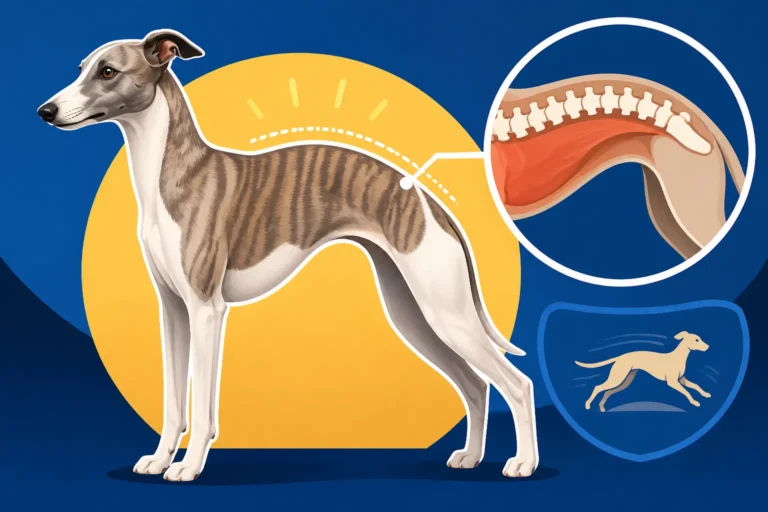
If you have a specific activity in mind, explain it. A breeder familiar with the relevant performance or show environment can help you understand what qualities matter for that purpose. What a Whippet's Arch Actually Does is a useful reminder that shape and structure have a role beyond simple height or weight.
When size deserves a veterinary conversation
Talk with your veterinarian if your Whippet’s weight changes unexpectedly, seems persistently too low or high, or comes with changes in appetite, energy, mobility, or general behavior. For puppies, bring growth records to appointments so the veterinarian can assess progress over time rather than reacting to one measurement.
A vet visit is also worthwhile if you cannot tell whether prominent bones are normal for your dog or a sign that it is too thin. Whippets’ outlines can look surprising to people unfamiliar with the breed, but that does not mean every slim dog is automatically in ideal condition.
Avoid trying to alter a dog’s adult size through extra food, supplements, or restrictive feeding. Nutrition supports healthy development; it cannot safely turn an individual dog into a different frame. If you are unsure how to manage portions, ask for an individualized feeding plan. Chewy may be convenient for household pet supplies, but decisions about growth, weight, and nutrition are best made with your veterinary team.
A practical comparison
| What you notice | What it may mean | A sensible next step |
|---|---|---|
| A taller dog with a lean outline | Natural variation in height and frame | Compare proportions and check the relevant breed standard |
| A heavier dog with visible muscle and a defined waist | Greater substance or conditioning | Ask a veterinarian to assess overall body condition |
| A higher number on the scale with little waist definition | Possible excess body fat, though a scale alone cannot diagnose it | Request a body-condition assessment |
| A puppy that changes shape as it grows | Normal development may be occurring | Track growth over time and discuss it at routine visits |
| A dog advertised as unusually large | A breeder’s description or selection preference | Ask what “large” means and what traits guide breeding |
| Stiffness, low energy, or a sudden weight change | A potential health concern, not merely a size issue | Contact a veterinarian |
Disclaimer
This article is for general informational purposes only and does not constitute professional advice. Laws, prices and regulations vary by location and change over time. Consult a qualified professional for guidance on your specific situation.