The Bedlington Terrier in the Whippet
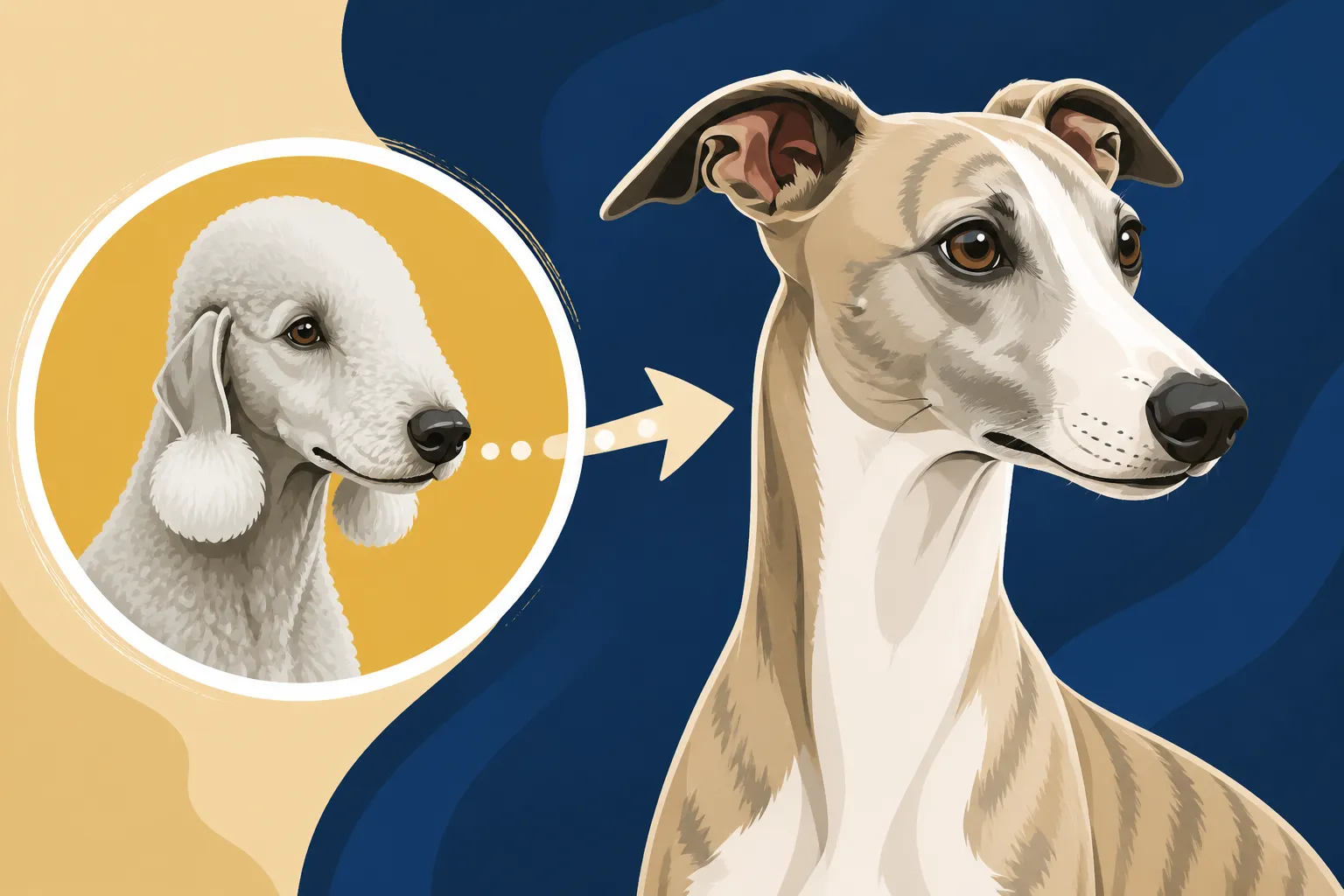
A Whippet’s terrier ancestry is often described with more confidence than the historical record supports. The Bedlington Terrier is sometimes named as one of the dogs behind the breed, but that does not mean today’s Whippets carry a clearly identifiable Bedlington pedigree. This guide separates plausible history from firm evidence and explains what the claim means for modern Whippet owners.
How the Bedlington Terrier became part of the Whippet story
The dogs that existed before modern breed records
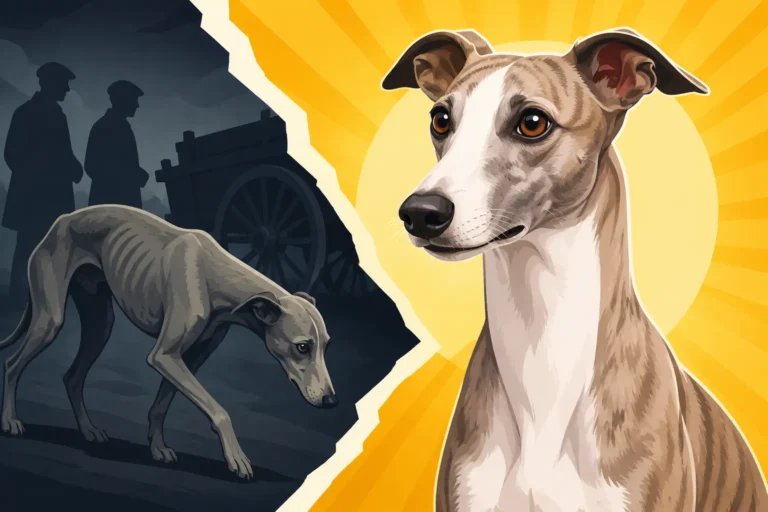
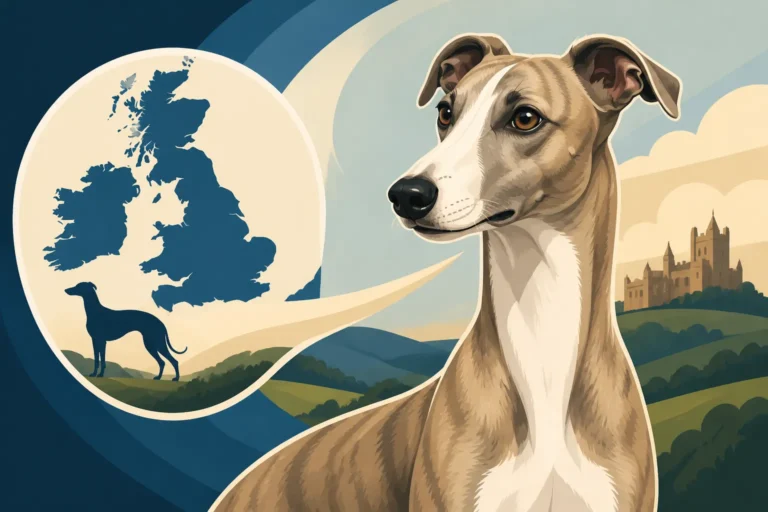
The Whippet developed in northern England, where working people valued a quick, economical dog that could hunt small game and race. The early dogs were not produced through the kind of tightly recorded, closed breeding programs familiar today. Their names and descriptions could vary from place to place, and the same local dog might be called a terrier, a snap dog, or a Whippet depending on its role and the person describing it.
That makes ancestry difficult to trace. A modern breed history usually follows named breeds and documented pedigrees. But early Whippet development took place before those records were consistently kept. Dogs were selected for useful traits such as speed, agility, a strong chase instinct, and a manageable size—not necessarily because they belonged to a formally recognized breed.
The Bedlington connection makes sense in that regional setting. Bedlington-type terriers and other working terriers came from parts of northern England, while Whippets were developed in the same broad region. Proximity makes it possible that dogs with Bedlington-like or related terrier ancestry contributed to early Whippets. It does not, by itself, prove that a particular Bedlington Terrier was used in a particular cross.
For more background, Where the Whippet Was Developed and The Century the Whippet Appeared help place the breed’s emergence in its historical setting.
Why a terrier cross was considered useful
A fast Greyhound-type dog could offer speed and keen vision, while a smaller, hardier dog could contribute size, resilience, or a stronger willingness to pursue quarry. Early breeders and working owners were interested in what a dog could do. They were not necessarily trying to preserve the appearance of either parent breed exactly.
That practical approach is one reason terrier ancestry appears in Whippet histories. The breed’s development may have involved various local dogs, including terrier types, rather than one neat, universally agreed cross. The phrase “terrier blood” can describe a broad possibility without naming one verified source.
The Bedlington Terrier is one candidate among several because of its regional history and working-dog background. Other terriers are also mentioned in accounts of Whippet development. The evidence does not support treating the Bedlington as the single, proven terrier ancestor of all Whippets. Which Breeds Went Into the Whippet and Whether Terrier Blood Is in the Whippet explore that broader question.
What is known and what remains uncertain
A plausible regional link is not a documented pedigree
The most careful answer is that Bedlington-type dogs may have contributed to some early Whippet lines, but the extent of that contribution is uncertain. Breed histories can preserve useful clues, yet stories passed down over generations sometimes become more definite than their original evidence. A possibility repeated often can start to sound like a recorded fact.
It also helps to remember that “Bedlington Terrier” did not always mean precisely what it means in a modern pedigree database. Before kennel clubs and breed standards fixed names and appearances, local working dogs were less neatly categorized. A dog resembling or related to what later became the Bedlington Terrier might have been described differently at the time.
| Claim | What can reasonably be said |
|---|---|
| Bedlington-type dogs existed in the region | The Bedlington’s roots are associated with northern England, a region relevant to Whippet development |
| A Bedlington was definitely crossed into every Whippet line | This is not established |
| Terrier ancestry may have helped shape early Whippets | It is plausible and appears in breed-history accounts |
| Modern Whippets are part Bedlington in a simple, measurable way | Historical possibility does not establish a clear modern ancestry percentage |
| A Whippet that resembles a Bedlington must have Bedlington ancestry | Appearance alone cannot prove ancestry |
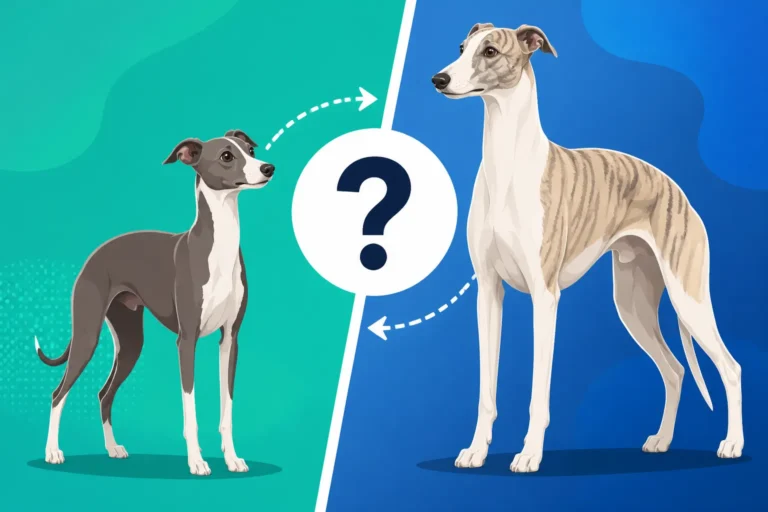
This distinction matters because the question “Was the Bedlington in the Whippet?” can mean two different things. It may ask whether Bedlington-type dogs could have influenced early regional sighthounds, or whether present-day Whippets have a traceable Bedlington ancestor. The first is plausible; the second is not something that can be assumed for every Whippet.
How Miners Built the Whippet From a Greyhound They Could Afford gives useful context for the practical breeding pressures involved, while Whether the Whippet Is Just a Small Greyhound explains why the breed’s history is more complicated than a simple scaled-down Greyhound story.
Why historians cannot pin the ancestry down neatly
Several problems stand in the way of a precise answer. Early breeding records are incomplete, and some accounts were written long after the dogs they describe. People also used breed labels loosely. A “terrier” in an old description may not map cleanly onto a modern breed, and the name of a local dog does not necessarily tell us its full ancestry.
Another challenge is that a working dog’s appearance and function can arise through selection across generations, not only through one identifiable cross. If breeders repeatedly favored smaller, faster, or more agile dogs, the result could become Whippet-like without a single famous Bedlington mating being responsible.
Modern DNA testing does not automatically solve this historical puzzle. A test may identify ancestry patterns relative to the breeds and reference populations included in its analysis, but it cannot recreate missing pedigrees or prove a specific undocumented mating centuries ago. Even if a test suggests terrier-related ancestry, that would not establish that the source was specifically a Bedlington Terrier.
The relationship between Whippets and Greyhounds has its own historical and genetic complexities. Whether the Whippet Is Genetically Close to the Greyhound and The Manchester Terrier in the Whippet offer related perspectives on how breed-origin stories can include several possible influences without yielding a simple family tree.
What the Bedlington connection means for today’s Whippet
It does not mean a Whippet behaves like a modern terrier
A Whippet’s behavior is shaped by its individual temperament, experiences, health, and breeding—not by a speculative historical ingredient in the breed’s ancestry. Whippets are sighthounds with a strong tendency to notice and chase moving animals. That instinct can be present whether or not terriers contributed to the breed centuries ago.
A Whippet owner who is surprised by a sudden chase should focus on practical management rather than trying to explain the behavior through terrier ancestry. Secure fencing, thoughtful leash use, and careful introductions to small pets matter far more than an uncertain historical cross. A dog’s recall can be reliable in familiar settings and still fail when prey moves quickly.
Likewise, a Whippet’s affectionate, often quiet home life should not be mistaken for a lack of working drive. Many are content to nap for long stretches, then become intensely alert outdoors. The breed’s history includes both a home companion and a fast hunting or racing dog; those traits can coexist in the same animal.
A modern appearance is not evidence of a Bedlington cross
Whippets vary in color, size, expression, and build. A particular coat texture, head shape, or body type might remind someone of a terrier, but resemblance alone is not a reliable way to identify ancestry. Whippets are a recognized breed with their own standards and pedigrees, and individual variation does not automatically point to a recent cross.
If a dog is being represented as a Whippet-Bedlington cross, ask for the source of that claim. A responsible seller or rescue may have parentage records, veterinary history, or a clear explanation of what is known and unknown. If the dog’s background is uncertain, it is more honest to say so than to present an attractive guess as fact.
For a dog with unknown parentage, focus on the needs you can observe: body condition, coat and skin, exercise response, comfort around other animals, and any health concerns raised by a veterinarian. If you are already shopping for routine supplies through Chewy, keep food and medication records together with veterinary notes so changes in appetite or treatment are easier to track. Chewy order histories may also help you remember which products your dog has tried, but they cannot confirm breed ancestry.
How to talk about the history without overstating it
Use careful language when describing the Bedlington theory
When discussing Whippet origins, wording matters. “The Bedlington Terrier is sometimes proposed as a possible influence” is more accurate than “Whippets were created by crossing Greyhounds and Bedlingtons.” The second statement suggests a documented, consistent breeding formula that the historical evidence does not establish.
You can also distinguish between a breed’s broad development and one specific ancestor. It is reasonable to say that early Whippets likely emerged from a mix of local sighthounds and other working dogs, with terrier influence often discussed. It is less defensible to assign a precise share of the modern Whippet’s ancestry to the Bedlington.
That caution does not make the history less interesting. It makes it more realistic. Breed development was often shaped by communities selecting dogs for their usefulness over time, and the surviving record is not always detailed enough to name every contributor. How the Whippet Reached America provides another example of how a breed’s history becomes clearer as formal organizations and records develop.
What prospective owners should prioritize
If you are choosing a Whippet puppy, ask the breeder about health, temperament, socialization, and the parents’ backgrounds. A carefully documented pedigree can tell you about recent ancestry, but it will not necessarily resolve every centuries-old question about the breed’s foundation. Good breeding practices and transparent records are more useful to a future owner than a dramatic claim about a single historical cross.
For an adult Whippet with an unknown past, the same principle applies: meet the dog as an individual. Ask about behavior around cats and small animals, comfort being left alone, previous injuries, and how the dog responds to handling. Those details affect daily life much more directly than whether a distant terrier influence might have existed.
If you are comparing breed histories, look for sources that separate documented pedigrees from reasonable historical theories. The Bedlington Terrier may have a place in the wider discussion of northern English working dogs, but the strongest conclusion is modest: a regional connection is plausible, while a precise, universal Bedlington-to-Whippet lineage remains unproven.
Disclaimer
This article is for general informational purposes only and does not constitute professional advice. Laws, prices and regulations vary by location and change over time. Consult a qualified professional for guidance on your specific situation.