The Fixing of Whippet Races
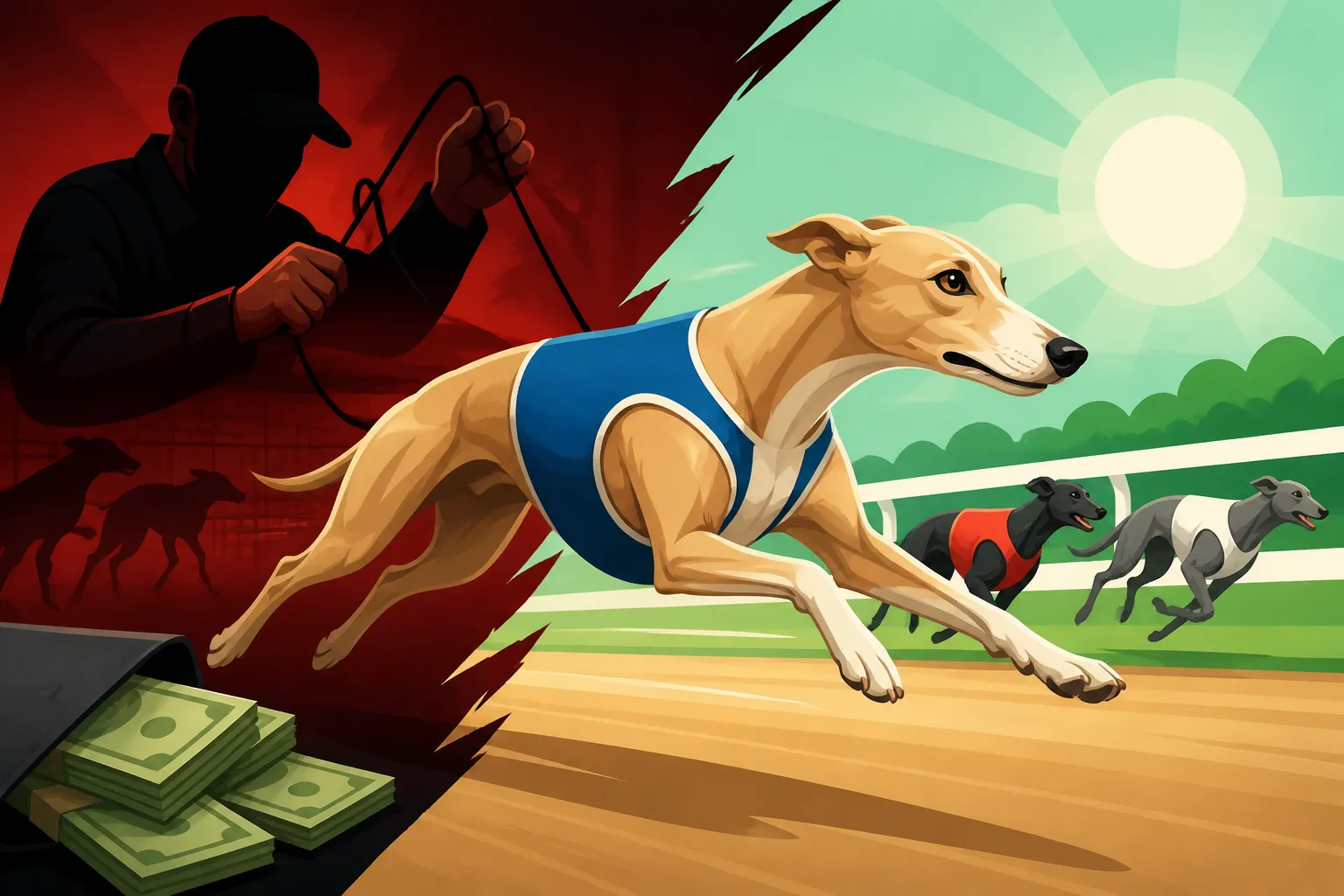
A close finish, a surprising upset, or a dog that seems to run below its ability can make any race look suspicious. In the working-class whippet races of northern England, betting and weight handicaps created opportunities for manipulation, but not every unexpected result was fixed. This guide explains how race fixing could work, why it was difficult to detect, and what the history can—and cannot—tell us.
Why Whippet Racing Could Be Vulnerable to Fixing
Betting and local rivalries made the stakes personal
Early whippet racing was often a local affair. Races took place in northern English communities where miners, mill workers, and other working people might keep, train, or race dogs. The sport was entertainment, but it could also involve wagers, pride, and a dog’s reputation. When people knew the owners and dogs personally, a result could matter well beyond the finish line.
That setting created a basic vulnerability: some of the people with influence over the outcome could also have a financial interest in it. An owner might know a dog’s fitness, temperament, and likely performance better than anyone placing a bet. A trainer might know whether the dog had been rested, injured, or deliberately entered against a favorable opponent. Those kinds of private information could be used honestly—or exploited.
Betting alone does not prove a race was fixed. People bet on uncertain events in every kind of sport, and a dog could win or lose for ordinary reasons. But when a small group of participants had close control over a race and wagering happened informally, it could be harder to separate a genuine upset from a deliberately engineered result. The broader history of working-class racing, including the social world described in The Poor Man's Racehorse: Whippets in the Northern Coalfields, helps explain why these races could carry both community meaning and financial temptation.
A handicap could make a fair race harder to judge
Whippet races often used handicaps to bring dogs of different ability into closer competition. A handicap might involve assigning different starting positions or distances, with the goal of giving each dog a plausible chance. Weight could also be part of how dogs were assessed or grouped. The details varied between races and places, so there was no single universal method to assume for every historical event.
Handicapping created a difficult judgment call. If one dog started behind another, or had to cover more ground, a close result might reflect the handicap rather than equal ability. A dog that lost after receiving an unfavorable allowance could appear to have underperformed, while a dog that won despite a difficult start might suddenly look like a champion. Understanding How a Whippet Was Handicapped by Weight and How Whippets Were Weighed Before a Race makes clear why judging performance was not always as simple as comparing who crossed the line first.
The system could be manipulated if an owner misrepresented a dog’s ability, arranged for it to run poorly before a handicap was set, or entered it under conditions that made its true form difficult to assess. Those are plausible methods of exploiting a handicap system, not proof that any specific race was fixed in that way. In a sport where the organizers relied on local knowledge and informal judgment, it could be hard to establish whether a generous handicap was an honest mistake or a calculated advantage.
How a Race Might Be Manipulated
Holding a dog back or hiding its true ability
One possible form of fixing was to make a capable dog appear less capable than it was. If a dog ran below its normal level in an earlier contest, observers might underestimate it in a later race. If handicaps or betting expectations were shaped by past performances, that false impression could create an advantage.
The reverse could happen, too. A dog might be promoted as a likely winner, drawing attention and wagers, even if its owner knew it was tired, unwell, or unlikely to run at full strength. A poor performance might then benefit someone who had positioned their bets accordingly. Such conduct would be difficult to prove without reliable records of a dog’s condition, training, prior times, and the bets placed around the event.
A dog that runs poorly is not automatically being held back. Whippets can hesitate, break awkwardly, lose focus, or respond unpredictably to noise and crowd movement. Weather, footing, fatigue, and minor injuries can also affect a sprint. This is why an unexpected result should be treated as a reason for questions, not a verdict. Accounts of How a Whippet Rag Race Was Run can help readers picture the fast, competitive setting, but the basic uncertainty of a short race remains: a few seconds can contain many ordinary explanations for a dog’s performance.
Manipulating the start, course, or finish
A race can be influenced without changing a dog’s ability. If a start is poorly controlled, a dog might get a better launch than its rivals. A course that is uneven or unfamiliar could favor one runner. Confusion about a false start, a dog’s lane, or the exact finishing point might also create room for disputes.
These risks mattered especially where rules were local, officials were few, and races were organized informally. The finish depended on people seeing what happened, and a close result could be difficult to settle without a clearly marked line or consistent procedure. The tradition of waving cloth at the finish is reflected in Why Whippet Owners Waved Cloth at the Finish Line. That visible signal helped define the race’s conclusion, but any finish judged by people rather than a dependable timing system could still invite disagreement.
A deliberately unfair start or disputed finish would be different from a simple mistake. To call it fixing, there would need to be reason to believe that someone arranged the condition or decision in order to produce a particular outcome. Historical descriptions of a disputed race do not, on their own, establish that kind of intent. Without dependable records, a confusing finish can remain just that: confusing.
| Possible source of suspicion | Ordinary explanation | What would make deliberate manipulation more plausible |
|---|---|---|
| A strong dog loses unexpectedly | Poor start, fatigue, distraction, or injury | Evidence that its owner knowingly arranged for it not to run properly |
| A dog receives a favorable handicap | Inaccurate assessment or limited information | A pattern of misleading performances before advantageous entries |
| A close finish is disputed | Poor visibility or unclear local rules | Evidence that officials knowingly ignored the same rule for one entrant |
| A dog’s form changes sharply | Training, health, or conditions may have changed | Reliable records showing the change was planned to affect betting or handicapping |
| A race attracts unusual wagering | Excitement around a popular contest | Credible evidence linking wagers to participants who controlled the result |
Why Fixing Was Hard to Prove
Informal records left gaps
The central problem for historians is evidence. A suspicion may survive in local memory, but proving a particular race was deliberately manipulated requires more than a surprising finish or a story repeated years later. Ideally, investigators would have access to clear rules, verified entries, records of the dogs’ previous performances, reliable accounts from independent witnesses, and information about wagering.
Small community races did not necessarily generate that sort of documentation. Some may have been recorded mainly through recollection, local reports, or informal accounts. If details were not written down at the time, later storytellers could remember the excitement but disagree about the start, handicap, or order of finish. That makes it risky to present a colorful allegation as an established fact.
The way dogs were weighed and assessed also complicates interpretation. A dog’s weight was only one piece of a broader picture that could include fitness, experience, and the handicap rules used at that meeting. The topic Why Whippets Were Weighed Before a Race offers useful context: weighing could help organize competition, but it could not reveal every factor that shaped a dog’s ability on the day.
An upset is not the same as a fix
Whippet racing is built around speed, and sprinting makes small differences matter. A dog may react late, lose its footing, run a slightly crooked line, or be unsettled by the crowd. The winner may simply have been quicker on that day. In a close contest, a fraction of a second can change the result, while the people watching may see only a sudden rush of dogs toward the finish.
A handicap can make a surprising winner more likely by design. If a weaker dog receives an allowance, it may beat a more naturally powerful rival without any dishonesty. Conversely, a dog expected to win may lose because its condition has changed or because the race unfolded differently from what its owner expected. A result that looks suspicious after the fact might have seemed reasonable before the start.
This distinction matters when reading about the sport. Whether Miners Bet on Whippet Races and How Much a Winning Whippet Was Worth provide relevant background on the relationship between racing, wagering, and value. But the existence of betting or prized dogs does not establish that a specific event was fixed. It only helps explain why competitors might have had something to gain from deception—and why accusations could arise when a dog produced an unexpected result.
What the History of Race Fixing Can Tell Us
The system created incentives, not proof of widespread corruption
The history of whippet racing points to a recognizable tension. Handicaps were meant to make races competitive, and local knowledge helped people understand the dogs. Yet those same features could create opportunities for someone who knew more than the bettors or officials. If racing was tied to wagers, the incentive to exploit hidden information was present.
That does not mean every race was corrupt, or that fixing was the defining feature of the sport. A community race could be genuinely competitive, with owners taking pride in their dogs and spectators enjoying the spectacle. The same event might also include betting and disputes. These things can coexist without every participant acting dishonestly.
It is also important not to impose modern assumptions on an older, less standardized sport. Rules and procedures could vary by meeting, and a practice that looks irregular today might have been accepted locally at the time. The best approach is to ask what the rules were for that particular contest, who controlled the start and finish, how the handicap was assigned, and whether there is evidence of deliberate intent.
A careful way to evaluate a claim
When you encounter a story that a whippet race was fixed, work through the claim rather than accepting or dismissing it immediately:
- Identify the specific race. Look for a place, date, named dogs, owners, or a contemporary account. A general claim about “the races” is harder to test than a specific allegation.
- Find out how that meeting worked. The start, handicap, weighing procedure, and finish rules may have differed from those used elsewhere.
- Separate the result from the motive. A dog’s loss or win is an outcome. To establish fixing, there should be evidence that someone intentionally influenced it.
- Check whether the story has independent support. A single recollection may be valuable, but repeated versions of the same account are not necessarily separate evidence.
- Consider ordinary explanations. Fitness, footing, distraction, a poor start, and the handicap itself may account for an unexpected performance.
- Be clear about uncertainty. If a source says a race was suspected of being fixed, describe it as a suspicion unless there is evidence that confirms the allegation.
The most useful historical picture is not a simple story of honest sport ruined by cheats, or a claim that every close finish was crooked. Whippet racing combined speed, local identity, handicapping, and sometimes wagering. Those ingredients could create opportunities for manipulation, but they also made ordinary upsets easy to misread. Keeping those distinctions in view lets us take allegations seriously without turning possibility into proof.
For more context on the sport’s development, When Whippet Racing Became Organized and The Legality of Early Whippet Racing help place race practices within the broader history of whippet competition.
Disclaimer
This article is for general informational purposes only and does not constitute professional advice. Laws, prices and regulations vary by location and change over time. Consult a qualified professional for guidance on your specific situation.