How Many Cups a Day an Adult Whippet Eats
Many Whippet owners find themselves constantly questioning whether they're feeding their lean, active dogs enough, especially when well-meaning strangers often comment on how "thin" their Whippet looks. It's a common frustration, trying to balance their high energy needs with their tendency to stay naturally slender, and generic feeding guidelines on food bags rarely seem to fit these unique sighthounds. This guide aims to clear up the confusion, helping you understand precisely how much food your adult Whippet truly needs each day to thrive, not just survive.
Understanding Your Whippet's Unique Nutritional Needs
Whippets are not your average dog when it comes to metabolism and body structure. They are built for speed and efficiency, which translates into a lean physique and a specific approach to feeding that often differs from other breeds. You can't just feed them like a Labrador or a bulldog; their internal workings are simply different.
The Sighthound Metabolism: Not Like Other Dogs
One of the biggest misconceptions about Whippets is that they are perpetually underweight. In reality, their sighthound metabolism is incredibly efficient. They burn through calories quickly when active but are also masters of conserving energy when lounging, which they do a lot! This means they don't carry much fat, and you'll typically see their ribs, hip bones, and a pronounced tuck-up. This isn't a sign of starvation; it's their natural, athletic build. Trying to "fatten up" a Whippet beyond its ideal body condition can actually be detrimental to their joints and overall health. It's about feeding for lean muscle and efficient energy, not bulk.
Their high metabolic rate also means they utilize nutrients differently. They often have higher protein needs to support their lean muscle mass and recovery after those explosive sprints. Balancing this protein with appropriate fat and carbohydrates is key to providing sustained energy without leading to unhealthy weight gain or digestive upset.
Activity Levels: Couch Potato Versus Athletic Dynamo
It's a widely known joke among Whippet owners that their dogs are "40 mph couch potatoes." While they absolutely love to zoom, reaching incredible speeds for short bursts, they spend a significant portion of their day napping or lounging. This dual nature means their daily caloric needs can fluctuate wildly depending on their activity.
A Whippet that gets one or two vigorous sprints in a securely fenced area each day, followed by long naps, will have different requirements than a Whippet that regularly participates in competitive activities like lure coursing or racing. An active working Whippet, or one that accompanies you on long hikes or runs, will naturally need more fuel than one whose primary exercise consists of leisurely walks around the block. This distinction is crucial because feeding an athletic Whippet like a couch potato will leave them too thin, and vice versa can lead to them carrying too much weight, which is unhealthy. We delve deeper into this dynamic in Feeding a Whippet That Sprints and Then Sleeps.
Age and Life Stage Considerations
Just like humans, a Whippet's nutritional needs change throughout their life. A growing puppy requires more calories and specific nutrients to support rapid development, but it's important not to overfeed them, as fast growth can put stress on developing joints. We encourage slow, steady growth rather than pushing them to be big too quickly.
Adult Whippets, generally from around 12-18 months of age, settle into a more consistent feeding routine. However, as they transition into their senior years, typically around ages 7-8, their metabolism might slow down, or they may become less active. Caring for an Old Whippet That Feels the Cold often involves adjusting their diet to prevent weight gain while still ensuring they receive all necessary nutrients, especially those supporting joint health or cognitive function. It's an ongoing conversation you'll have with your vet, adjusting as your dog's lifestyle and health evolve.
Decoding Food Labels and Calorie Counts
When you pick up a bag of dog food, the feeding guide on the back can feel like a riddle. For a Whippet, those generic charts are often more confusing than helpful. Understanding how to truly calculate your Whippet's needs goes beyond broad recommendations.
Why Bag Guidelines Fall Short for Whippets
Most commercial dog food bags provide a feeding chart based on an average dog's weight. The problem is, a 25-pound Whippet is structurally and metabolically very different from a 25-pound terrier mix. These charts don't account for the Whippet's lean body mass, high metabolism, or typically lower body fat percentage. Following them strictly can often lead to overfeeding, as they might assume your Whippet needs more food to maintain a heavier, more conventionally "muscular" frame that simply isn't natural for the breed. Alternatively, for a highly active Whippet, these guidelines might vastly underestimate their true caloric needs.
It’s easy to get frustrated when your Whippet still looks lean according to the bag’s suggestion, making you feel like you're doing something wrong. But remember, the bag's general guidelines are just a starting point, not the gospel truth for every unique dog.
The Importance of Body Condition Score (BCS)
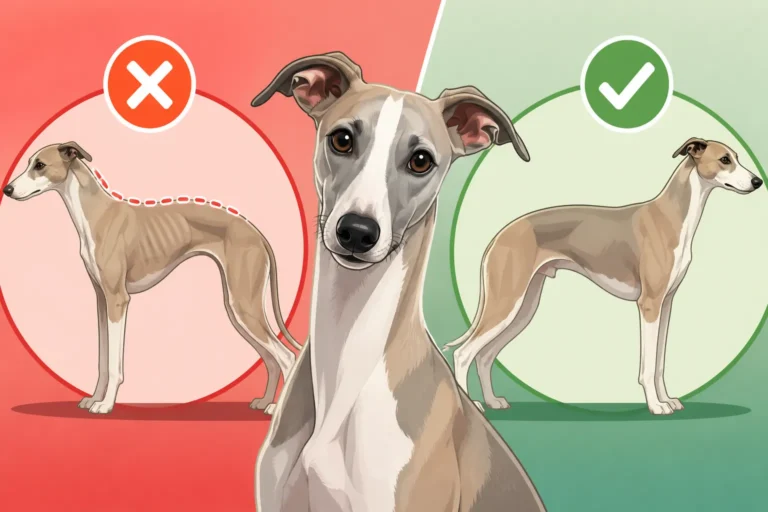
Instead of relying solely on the numbers on a food bag, the most accurate way to determine if your Whippet is getting enough food is through a Body Condition Score (BCS). This visual and tactile assessment helps you evaluate your dog's fat reserves and muscle mass. For a Whippet, an ideal BCS typically ranges from 3 to 4 out of 9, meaning they are very lean but not emaciated.
Here's a quick guide to checking your Whippet's BCS:
- Ribs: You should easily be able to feel their ribs, and often see the last 2-3 ribs without pressing. They shouldn't look like they have a "washboard" stomach, but the ribs should be distinct. We have a detailed guide on Feeling a Whippet's Ribs and Hip Bones that can help.
- Waist: Look down at your Whippet from above. They should have a very pronounced waist, an hourglass shape, behind the ribs.
- Tuck-up: From the side, their abdomen should clearly tuck up sharply from their chest towards their hindquarters, not hanging low.
- Hips: Their hip bones should be easily felt and often visible as slight prominences.
If you can't easily feel your Whippet's ribs or spine, or if their waist isn't apparent, they might be carrying too much weight. Conversely, if all ribs are sharply visible, spine and hip bones are extremely prominent, and there's no fat cover at all, they might be genuinely too thin. What Body Condition Score a Whippet Should Be offers more in-depth insights into this crucial assessment.
Calculating Caloric Needs: A Better Approach
Once you have a good understanding of your Whippet's ideal BCS, you can estimate their daily caloric needs more accurately. A common starting point is to calculate their Resting Energy Requirement (RER), which is the calories needed for basic bodily functions. Then, you multiply the RER by an activity factor to get their Maintenance Energy Requirement (MER).
While giving exact caloric numbers here isn't feasible as they vary wildly by food brand and individual dog, the principle is key. Look for the caloric density (kcal/cup or kcal/kg) on your dog food label. Use this number in conjunction with online calculators (many reputable vet sites offer them) that allow you to input your dog's ideal weight and activity level to get an estimated daily calorie intake. For instance, if your adult male Whippet ideally weighs around 30-35 pounds, and your female Whippet around 25-30 pounds, use those target weights, not their current potentially over or underweight figure. What an Adult Male Whippet Weighs and What an Adult Female Whippet Weighs can provide more specific weight ranges. Then, divide the total daily calories by the kcal per cup of your chosen food to determine the actual volume. This scientific approach provides a much more tailored feeding plan than generic bag instructions.
Practical Feeding Strategies for a Healthy Whippet
Once you've done the calculations and understood the principles, applying them consistently is the next step to ensuring your Whippet maintains optimal health and energy. It's about precision and observation.
Measuring Food Accurately: No More Guesswork
One of the biggest pitfalls in dog feeding is inconsistent measurement. Scooping "about a cup" can lead to significant variations in caloric intake over time. For a Whippet, where a slight adjustment can make a big difference due to their lean build, accuracy is paramount. Invest in a digital kitchen scale to measure food by weight (grams or ounces) rather than volume (cups). This is the most accurate method, as the density of kibble can vary even within the same brand. If you must use cups, ensure you're using a standard measuring cup, not a random scoop, and level it off consistently.
This level of precision ensures that if you calculate your Whippet needs, say, 350 kcal per day, you are consistently providing that amount. This is especially helpful if your vet advises a slight weight gain or loss, as you can make precise adjustments. You can easily find reliable food scales and measuring cups on platforms like Amazon or Chewy.
Meal Frequency: Spreading Out the Calories
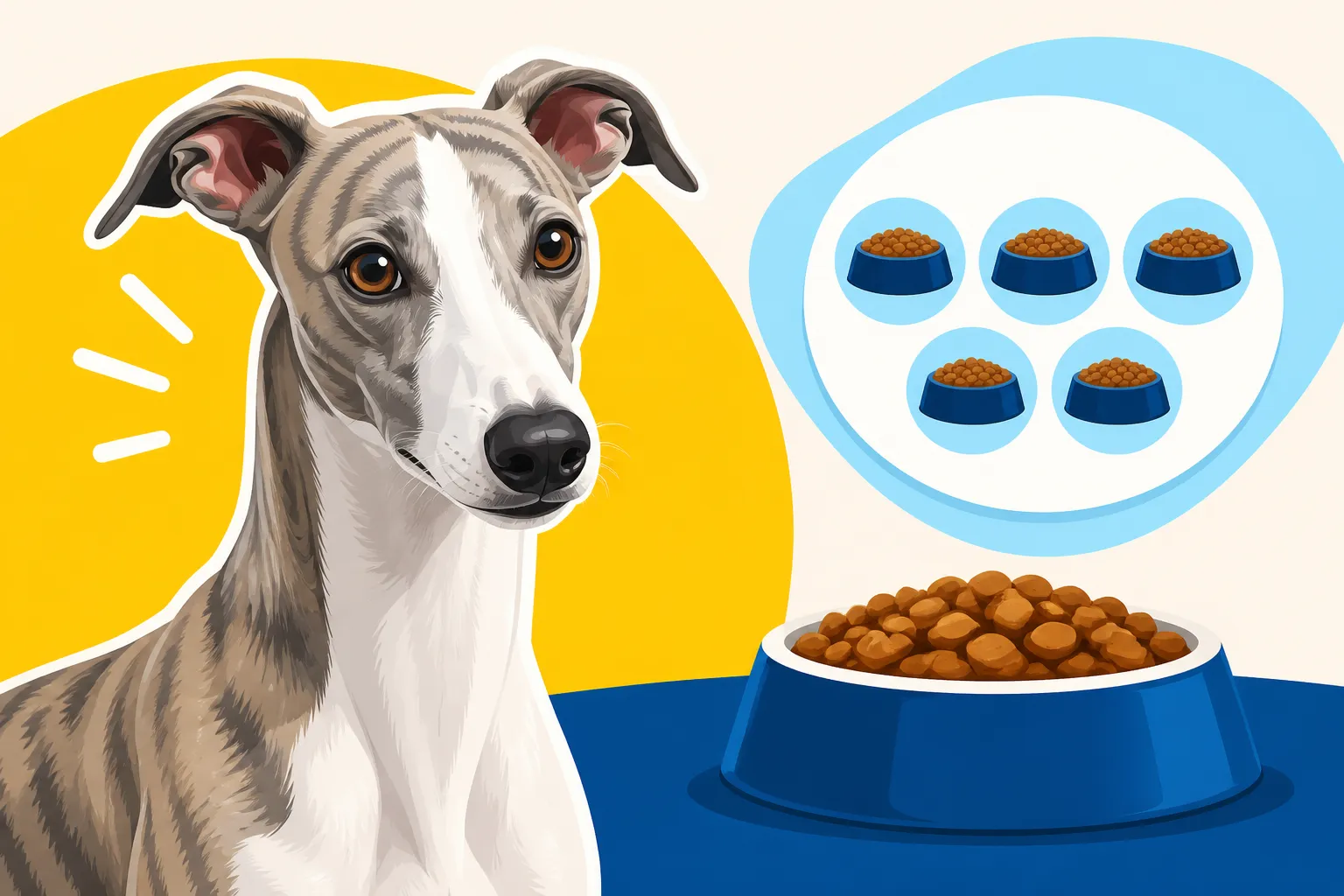
For adult Whippets, two meals a day is generally recommended. This helps to keep their metabolism steady, prevents them from feeling overly hungry, and can reduce the risk of bloat, though bloat is less common in Whippets than in deeper-chested breeds like Greyhounds. Splitting their daily caloric intake into a morning and evening meal works well for most dogs and owners.
Some Whippets, especially those with sensitive stomachs or very high energy output, might benefit from three smaller meals spread throughout the day. However, for the average adult Whippet, two well-portioned meals are usually sufficient and align with their natural eating patterns. Learn more about meal timing in How Many Meals a Day a Whippet Needs.
Monitoring and Adjusting: Your Whippet's Best Guide
Feeding isn't a "set it and forget it" task. Your Whippet's needs can change due to seasonal activity, slight variations in metabolism, or even just stress levels. Regularly assess your Whippet's Body Condition Score (BCS) – ideally weekly or every other week. Run your hands over their ribs, check their waist, and note any changes.
If you notice their ribs becoming more prominent, or their energy levels dropping, they might need a slight increase in food. If they start to feel a bit "padded" over their ribs, or their waist becomes less defined, it's time to slightly reduce their intake. Small adjustments, like a quarter-cup less or more per day, can make a big difference over time. Keep a log of their weight and feeding amounts if you want to be super diligent!
Navigating Common Whippet Feeding Challenges
Even with the best intentions and calculations, feeding a Whippet can present its own set of unique challenges. These sighthounds have distinct personalities and physical traits that sometimes require a creative approach to their diet.
When Your Whippet is a Picky Eater
It might seem counterintuitive for a dog that burns through calories to be a picky eater, but some Whippets can be surprisingly finicky. They might turn up their nose at kibble one day or decide a perfectly good meal isn't up to their discerning standards. This can be particularly frustrating when you're trying to ensure they maintain their ideal lean weight.
If your Whippet is a picky eater, try a few strategies: warming their food slightly to enhance its aroma, adding a little low-sodium broth or water, or incorporating a small amount of a highly palatable "topper" like plain cooked chicken, pureed pumpkin, or a drizzle of salmon oil. Some owners find success with fresh food options, which are often more appealing. Brands like Ollie offer pre-portioned, human-grade fresh meals that many picky dogs adore. You might also consider rotating kibble flavors or brands, though do so slowly to avoid digestive upset. Explore more about this in Whether a Whippet Is a Picky Eater.
Keeping Weight On a Whippet During Intense Activity
For Whippets involved in regular intense exercise, such as competitive racing or lure coursing, maintaining their weight and muscle condition can be a constant balancing act. These athletes burn a lot of calories and need a diet that supports their performance and recovery.
In these cases, you'll likely need to feed more than the average couch potato Whippet. Look for high-quality performance dog foods that are higher in protein and fat, providing dense calories and essential amino acids for muscle repair. Adding healthy fats, like fish oil or a high-quality animal fat supplement (like a spoonful of goat milk or plain full-fat yogurt if they tolerate dairy), can provide extra calories without excessive volume. Multiple, smaller meals throughout the day can also help prevent overwhelming their digestive system while ensuring a steady energy supply. Don't forget treats add to daily intake too; for active dogs, using high-value training treats like dried liver can be a good way to add a few extra calories. Find more insights on this specific challenge in Keeping Weight On a Whippet Without Making It Fat and Whether a Racing Whippet Needs More Calories.
The Role of Treats and Supplements
Treats are an important part of training, bonding, and just spoiling our Whippets, but their caloric contribution can quickly add up. A few small training treats here, a dental chew there, and suddenly you've added a significant portion of their daily calorie allowance. Always factor treats into your Whippet's total daily intake, especially if you're trying to manage their weight. Opt for low-calorie treats or break larger treats into smaller pieces.
Supplements can also play a role, particularly for older Whippets or those with specific health needs. Joint supplements, omega-3 fatty acids for skin and coat health, or probiotics for gut health are common additions. However, always discuss any new supplements with your veterinarian to ensure they are appropriate for your Whippet and don't interact negatively with their diet or any existing medications. Reputable brands of supplements can be found at pet stores or online retailers like Chewy or Amazon.
Disclaimer
This article is for general informational purposes only and does not constitute professional advice. Laws, prices and regulations vary by location and change over time. Consult a qualified professional for guidance on your specific situation.