The Age a Bully Whippet’s Muscling Shows
It's completely normal to feel a mix of fascination and maybe a little concern when you first encounter the concept of a "Bully Whippet" or realize your own puppy might be one. The dramatic muscling they develop is certainly eye-catching, and it raises a lot of questions for owners, especially about when these unique physical traits actually begin to emerge. This comprehensive guide will walk you through the timeline of muscle development in Bully Whippets, helping you understand what to expect at various stages of their growth.
The Genetics Behind the Bully Whippet's Unique Physique
Before we dive into timelines, it's really important to understand why some Whippets develop this extraordinary musculature. It’s not about diet or exercise; it’s all in their DNA. This understanding sets the stage for appreciating the specific age at which these traits become visible.
Decoding the Myostatin Gene
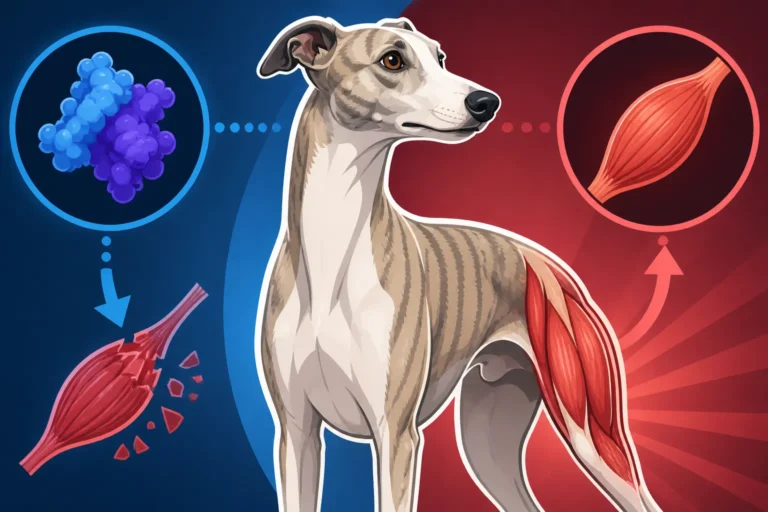
At the heart of the "Bully Whippet" phenomenon is a specific mutation in the myostatin gene. Myostatin is a protein that normally acts as a brake on muscle growth. Think of it like a governor on an engine – it prevents the engine from revving too high. In some Whippets, a mutation causes their bodies to produce either very little or no functional myostatin. When that brake isn't working, or isn't there at all, muscle growth can go into overdrive. It's a fascinating biological twist that fundamentally alters their build. If you're curious about the deeper science, you might find more detailed information in our article on What Myostatin Does in a Whippet.
The Difference Between Carriers and Affected Dogs
It’s not just a simple "yes" or "no" when it comes to the myostatin gene mutation. There are actually three possibilities for a Whippet:
- Clear (N/N): These Whippets have two normal copies of the gene and produce myostatin as usual. They have the classic, lithe Whippet physique.
- Carrier (N/my or +/-): These dogs have one normal copy and one mutated copy. They produce some myostatin, but less than clear dogs. Interestingly, many of these carriers are often faster on the track because they tend to be a bit more muscular than their clear counterparts, without the extreme bulk. This slight increase in muscle mass can give them an edge. We explore this further in Why One Copy of the Bully Gene Makes a Whippet Faster.
- Affected (my/my or -/-): These are the true "Bully Whippets." They have two copies of the mutated gene and produce little to no functional myostatin. This is where you see the dramatic, heavy muscling that gives them their distinctive look. It's a significant difference that really sets them apart from typical Whippets, leading to the condition known as Bully Whippet Syndrome and the Myostatin Gene Behind It.
Understanding these genetic nuances is crucial because it helps explain why some Whippets have subtle differences, while others develop the pronounced musculature that characterizes a true Bully Whippet.
Pinpointing When Muscling Becomes Evident
One of the most common questions from owners or those simply curious about Bully Whippets is exactly when these distinctive muscles start to show. It's not an overnight transformation; it's a gradual process, but there are definite stages where the changes become undeniable.
Early Development: What to Expect in Puppies
When a Bully Whippet is born, you won't see immediate signs of their future muscular build. Newborn puppies, regardless of their myostatin status, generally look quite similar. They are tiny, fragile, and all about nursing and sleeping. It's incredibly difficult, if not impossible, to pick out a Bully Whippet puppy from its littermates at just a few days or weeks old based solely on appearance. You can learn more about this initial stage in What a Bully Whippet Looks Like at Birth.
As they grow through their first few weeks and months, you might start to notice a slight difference in their overall sturdiness compared to their littermates, but it's often so subtle that only an experienced eye would spot it. We're talking about a marginally broader chest or a slightly thicker limb, nothing dramatic enough to definitively say "this is a bully." At this stage, their puppy fat and rapid growth can mask the underlying genetic predisposition.
Adolescent Growth Spurts: The Defining Period
This is the phase where things really start to get interesting and the answer to "the age a Bully Whippet's muscling shows" becomes clear. For most Bully Whippets, the pronounced musculature typically becomes visibly evident around three to six months of age. This is often when they hit a significant growth spurt, and the lack of myostatin really allows their muscles to develop without inhibition.
You might notice their shoulders and hindquarters start to bulk up, giving them a more powerful, almost stocky appearance compared to their sleek, fine-boned Whippet peers. Their neck might appear thicker, and their leg muscles will start to ripple more distinctly. It's during this adolescent period, as they shed some puppy fat and their bodies begin to take on a more adult shape, that the genetic difference becomes truly apparent. This is a time when many owners start to wonder if something is different about their otherwise healthy pup. The changes continue to progress over the following months, becoming more defined.
Maturation: Full Muscling in Adulthood
While the muscling becomes clear in adolescence, a Bully Whippet's full, mature physique typically isn't reached until they are around 18 months to two years old. Just like human bodybuilders, their muscle mass will continue to develop and fill out as they reach physical maturity. By this age, there's usually no mistaking a Bully Whippet for a traditionally built Whippet.
Their muscles will be incredibly dense and defined, often leading to a profile that is much wider and more substantial than the breed standard. This peak muscling is what truly earns them the "bully" moniker. It’s important to remember that while their muscling is extraordinary, it's still a Whippet underneath all that impressive bulk, with all the energy, personality, and sensitivity that implies. Owners often comment on the sheer power and presence these dogs have once they've fully matured.
To give you a clearer picture, here's a table outlining the typical muscle development timeline:
| Age Stage | Typical Whippet Muscle Development | Bully Whippet Muscle Development (Myostatin Deficient) |
|---|---|---|
| 0-3 Months | Subtle muscle definition, rapidly growing puppy. | No obvious difference from littermates; puppy fat hides potential. |
| 3-6 Months | Starting to show lean, athletic puppy build. | Visible muscling begins to emerge; shoulders, hindquarters thicken. |
| 6-12 Months | Adolescent growth, lean and gangly, developing adult form. | Muscling becomes distinctly pronounced; noticeably more powerful build. |
| 12-18 Months | Approaching adult form, athletic, graceful. | Significant muscle mass; body starting to fill out to full "bully" look. |
| 18 Months – 2+ Years | Mature, sleek, and athletic adult physique. | Full, dense, and defined musculature achieved. Often strikingly different from breed standard. |
Health and Lifestyle Considerations for Bully Whippets
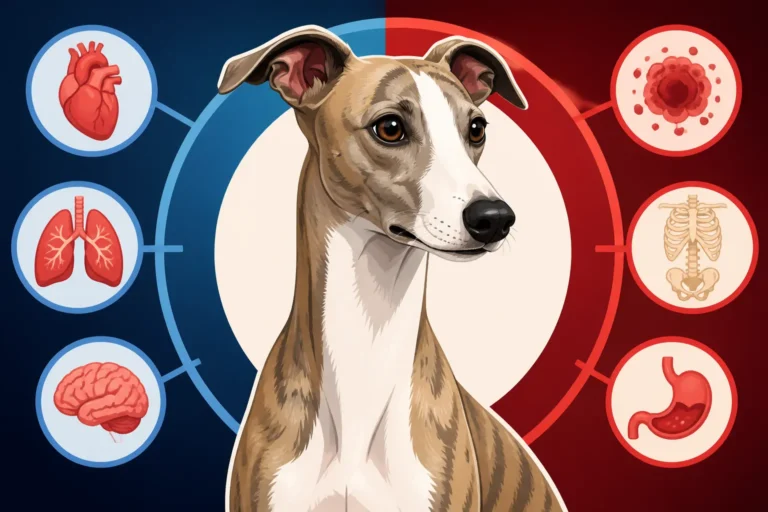
Living with a Bully Whippet means understanding that their unique physique comes with certain considerations. While many are robust and healthy, their extreme musculature can influence their day-to-day life and specific health needs. It's not just about aesthetics; it's about responsible ownership.
Unique Physical Challenges and Veterinary Care
Due to their significantly increased muscle mass, Bully Whippets can experience some specific physical challenges. Their sheer bulk can put different stresses on their joints and skeletal structure compared to a standard Whippet. While they are often incredibly strong, rapid growth spurts or intense, uncontrolled exercise might need careful monitoring. We've seen Whippets suffer from a range of injuries, and while bully Whippets aren't necessarily more prone to injury, the type of injury or the impact of it might be different due to their build.
Furthermore, their unique physiology can sometimes present challenges in veterinary settings. For instance, like all sighthounds, they have a particular sensitivity to certain anesthetic drugs. It's vital that your vet is aware of this breed-specific need, especially for a Bully Whippet, where metabolism and body composition can be even more extreme. Always discuss Why a Whippet Needs a Sighthound Anesthesia Protocol with your vet before any procedure. When discussing potential medical needs, having robust pet insurance like Healthy Paws can provide peace of mind for unexpected vet bills related to their unique health profile. You want to be sure you can provide the best care without financial strain.
Bully Whippets can also have unique dental considerations, with some experiencing The Jaw Problems a Bully Whippet Develops, which might require specialized veterinary attention. Keeping an open dialogue with your veterinarian about these specific traits is paramount to their long-term health.
Exercise, Nutrition, and Joint Health
Despite their muscular appearance, Bully Whippets share the same need for appropriate exercise as any Whippet. They are still sighthounds at heart, meaning they thrive on short bursts of intense activity followed by ample lounging. It's a common misconception that more muscle means they need more grueling workouts; quite the opposite. Over-exercising a young, still-developing Bully Whippet could potentially strain their joints or lead to injuries. Instead, focus on safe, controlled opportunities to run and play. For general Whippet health, we often discuss Whether a Whippet Needs Joint Supplements in older dogs, and this consideration might come earlier or be more critical for Bully Whippets given their added mass.
Nutrition also plays a crucial role, though it doesn't create the muscles. A high-quality diet, appropriate for their activity level, is essential to support their muscle mass and overall health. While they might appear large, they still need their caloric intake carefully managed to avoid unhealthy weight gain, which would put undue stress on their already robust frame. Remember that while they are muscular, they don't necessarily weigh vastly more than a standard Whippet; their muscle-to-bone ratio is just incredibly dense. For a general idea of breed weight, our article What a Whippet Actually Weighs offers good context.
The Problem of Cramping in Bully Whippets
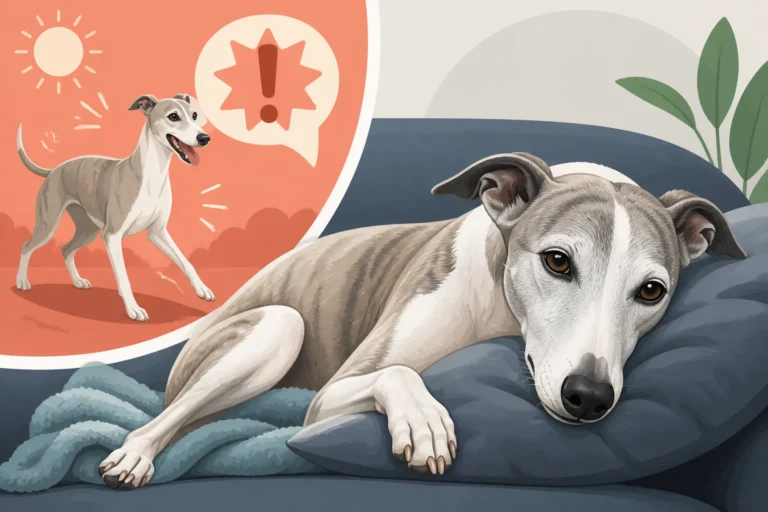
A particular concern for Bully Whippets, stemming directly from their extraordinary muscle mass and metabolic differences, is the propensity for muscle cramping. This isn't just a minor discomfort; these cramps can be severe and debilitating, often occurring after periods of intense exercise or excitement. When their muscles work hard, they can deplete energy stores and struggle with waste product removal in a way that leads to painful, prolonged contractions. Owners describe their dogs suddenly seizing up, sometimes unable to move. This can be alarming and requires careful management.
Understanding Why a Bully Whippet Cramps is crucial for owners. It often involves a delicate balance of appropriate warm-ups, cool-downs, and careful monitoring of activity levels. Dehydration can also exacerbate cramping, so ensuring constant access to fresh water, especially around exercise, is vital. Some owners work with their vets to explore dietary supplements or specific feeding strategies that might help manage these episodes. If your Bully Whippet experiences cramping, it’s always best to consult with your veterinarian to rule out other issues and develop a tailored management plan. Such specialized care can sometimes lead to unexpected veterinary costs, so having a good pet insurance plan from a provider like Healthy Paws can really make a difference in your ability to seek the best treatments without hesitation.
Living with a Bully Whippet: Expectations and Realities
Bringing any dog into your home comes with a set of expectations and realities, and a Bully Whippet is no different. Their unique appearance often sparks conversation, and understanding their temperament and needs beyond their physical traits is key to a happy life together.
Public Perception and Misconceptions
One of the most immediate realities of owning a Bully Whippet is the public's reaction. Prepare for a lot of stares, questions, and sometimes, even judgment. People unfamiliar with the myostatin mutation might assume your Whippet is a "pit bull mix" due to their impressive muscle definition, or that you've deliberately overfed or over-exercised them. It can be frustrating to constantly explain, but it's an opportunity to educate.
It's important to remember that their appearance doesn't define their temperament. Despite the "bully" in their name, these dogs are still Whippets – generally gentle, affectionate, and sensitive souls. They are not inherently aggressive or difficult. However, their unusual look does mean you might need to be extra vigilant about management in public spaces to avoid misunderstandings, especially if local breed-specific legislation is in effect. For new owners, this might be a factor in considering Whether a Bully Whippet Belongs in a Pet Home.
Temperament and Trainability
Just like their standard Whippet counterparts, Bully Whippets are typically known for their sweet, somewhat aloof, but deeply loyal nature. They are often intelligent and can be quite sensitive, responding best to positive reinforcement training methods. Harsh corrections or training techniques can cause them to shut down or become withdrawn. Their energy levels are often the same as a regular Whippet: capable of incredible bursts of speed but perfectly happy to spend the rest of the day curled up on the sofa. They are truly the 40 mph couch potatoes of the dog world.
While they may look formidable, their desire to please is strong, and with consistent, patient training, they can be wonderful companions. Their musculature doesn't generally translate to a different personality or make them harder to train; rather, it's their sighthound instincts that dictate much of their behavior, like a strong prey drive. Remember, beneath the extra muscle, you have a dog with the same soft heart as any other Whippet. Unexpected medical needs can crop up with any dog, and particularly for unique genetics, so exploring options like Healthy Paws for pet insurance early on is a wise decision to support their overall well-being.
Disclaimer
The information provided in this article is for general informational purposes only and is not intended as a substitute for professional veterinary advice. Always consult with a qualified veterinarian regarding any medical concerns or before making any decisions about your pet's health or treatment.