Whether a Whippet Sulks
It's a familiar scenario for many Whippet owners: you've had to correct your beloved sighthound for counter-surfing, or maybe you inadvertently stepped on their paw, and suddenly, they're giving you the cold shoulder. They retreat to their bed, turn their back to you, or refuse to make eye contact, making you wonder if your sensitive Whippet is actually sulking. While it might look exactly like a human tantrum or silent treatment, the truth is a bit more nuanced. This guide will dive deep into what these behaviors really mean for your Whippet and how to respond in a way that strengthens your bond, rather than creating distance.
Understanding "Sulking" from a Whippet's Perspective
When your Whippet appears to be "sulking," it's easy to project human emotions onto their behavior. We see them retreat, avert their gaze, or ignore us, and our minds jump to conclusions about them being offended, holding a grudge, or trying to manipulate us. However, a Whippet's internal world operates very differently from ours, and what looks like a calculated act of defiance is almost always a much simpler, often deeply felt, response to their environment.
Why We See It As Sulking
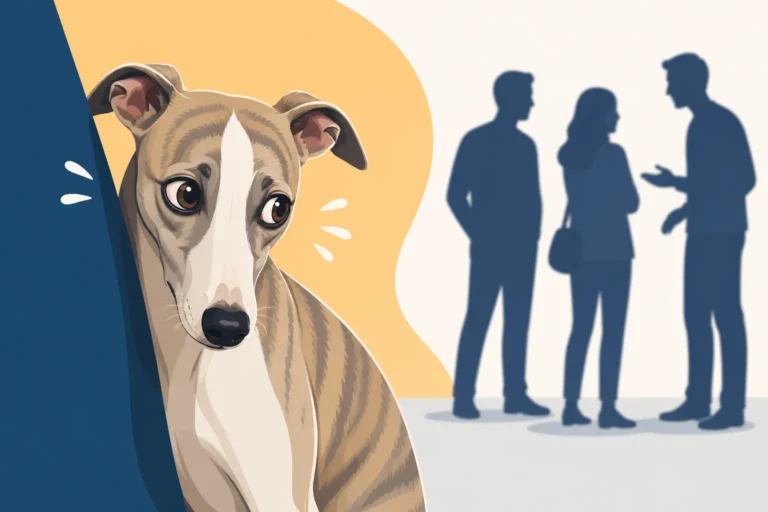
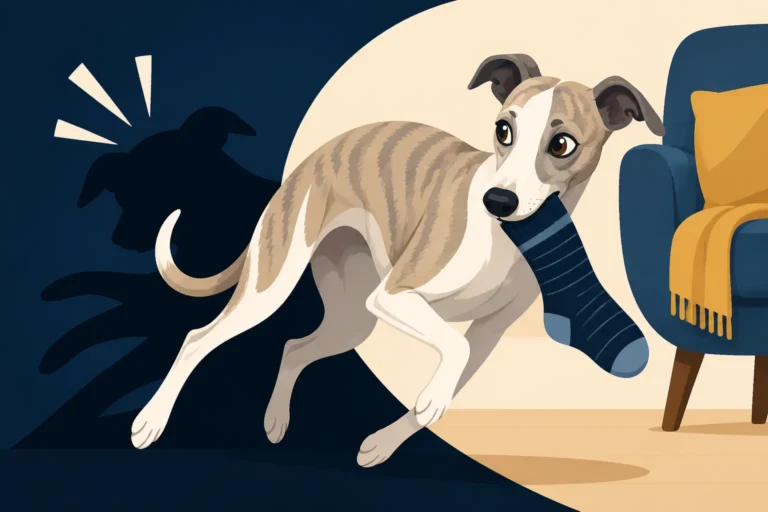
Let's face it, our Whippets are incredibly expressive, aren't they? With those big, soulful eyes and their often dramatic body language, they make it easy for us to believe they're feeling complex emotions like resentment or indignation. If you've just given them a stern "no" for trying to snatch a sandwich from the table, and they then saunter off to lie with their head under a blanket, it feels uncannily like they're saying, "Fine, I don't want to talk to you either!" This perception is further fueled by their intelligence and their ability to learn associations quickly. We know they understand us, so when they seem to ignore us, it registers as intentional.
Consider the classic Whippet 'side-eye' or the slow, deliberate turn of the head when you call them after a perceived offense. It’s hard not to chuckle at how human it looks. But it's crucial to understand that while they are reacting to your tone or actions, they aren't necessarily processing it with the same emotional depth or long-term memory for perceived injustices that a human would. They're processing an immediate shift in their environment and your demeanor.
What It Most Likely Is: A Sensitive Reaction
Instead of sulking, what you're witnessing is more likely a manifestation of your Whippet's extreme sensitivity, their desire to avoid conflict, or a direct response to discomfort – be it physical or emotional. Whippets are sighthounds, bred for speed and keen senses, and they are typically finely tuned to their surroundings and the emotions of their people. They don't typically do well with harsh corrections or loud voices. Think about How a Whippet Reacts to a Raised Voice; it's often not defiance, but a profound withdrawal.
They are incredibly attuned to tone, body language, and subtle changes in your demeanor. A sharp word or a sudden movement might not even register for a more robust breed, but for a Whippet, it can feel like a genuine threat or a deep disappointment. They learn very quickly what leads to a negative interaction, and their instinct is often to disengage or move away from it. This isn't malice; it's self-preservation in their gentle, somewhat delicate world.
The Whippet's Sensitive Nature and How It Manifests
Whippets are renowned for their gentle, sensitive dispositions. This isn't just a charming trait; it's a fundamental aspect of their being that dictates how they interact with the world and respond to training and discipline. Understanding this sensitivity is key to interpreting behaviors that might otherwise be mislabeled as "sulking."
Physical Sensitivity and Discomfort
Let's start with the physical. Whippets have incredibly thin skin and very little body fat, making them prone to injury and sensitive to pressure. They bruise easily, and even a firm pat on the rump that might feel good to a Labrador could be uncomfortable for a Whippet. This physical delicacy translates to how they perceive even minor physical corrections. If you've ever had to give a gentle tap or guide them physically, and they pull away or act wary, it's not because they're being dramatic; it’s because it genuinely might feel unpleasant or even a little painful. Consider How a Whippet Learns When It Bruises From Pressure – their physical makeup means they experience things differently.
This sensitivity extends to their general comfort. A Whippet will go to great lengths to find the softest spot in the house, often burrowing under blankets or insisting on the sofa. If they're lying on a hard floor and you've just corrected them, they might move to a softer spot not out of spite, but because they're genuinely seeking comfort after an unsettling interaction. If their sleeping arrangements aren't padded, they can even develop pressure sores. This is why investing in good beds and Whether a Whippet Needs a Padded Crate Mat is so important.
Emotional Sensitivity and Avoidance
Beyond the physical, Whippets are emotional sponges. They pick up on moods, stress, and tension in the household with remarkable accuracy. If you're upset or angry, even if it's not directed at them, they'll often feel it and respond by seeking distance or trying to make themselves "small." When you are the source of the negative emotion (like after a scolding), their response is often to retreat to a perceived safe space. This isn't them holding a grudge, but rather their way of deflecting perceived negativity and calming themselves.
They learn very quickly which actions lead to which reactions from you. If a stern tone or a pointed finger consistently precedes an uncomfortable feeling for them, they'll learn to avoid that situation. This might look like ignoring your calls, turning their head, or walking away when they sense you're about to issue a command or correction. It's a learned avoidance behavior, a coping mechanism, rather than an active attempt to be difficult. Think of it more as "I don't want to get in trouble again" than "I'm mad at you."
How Past Experiences Shape Their Reactions
Just like us, Whippets are products of their past experiences. A Whippet who has been handled harshly, even in a previous home, may be exceptionally sensitive to correction or loud noises. For such a dog, even a mild telling-off could trigger a significant withdrawal or fear response. This isn't sulking; it's a genuine emotional reaction based on ingrained associations.
For a Whippet, the world can sometimes be a loud, overwhelming place. Their keen senses mean they hear and perceive much more than we do. A sudden loud noise, a stranger entering the home, or even a change in routine can be unsettling. Their reaction, which might appear withdrawn or "moody," is often a coping strategy to manage sensory input or anxiety. It's why socialization is so important for a Whippet puppy, and why they can sometimes appear Why a Whippet Is Shy With Strangers if not properly introduced to new experiences.
Beyond Sulking: Real Reasons for a Whippet's "Off" Behavior
Instead of attributing human-like "sulking" to your Whippet, it's more productive and accurate to look for the underlying reasons for their behavior. These reasons are often rooted in their specific breed traits, their learned associations, or even subtle physical cues we might miss.
Confusion and Misunderstanding
One of the most common reasons a Whippet might seem to be "sulking" is simple confusion. We often assume our dogs understand exactly what we want, but communication can be tricky. If your Whippet is giving you a wide berth after a correction, they might not fully grasp what they did wrong or what you expect of them. They understand your tone and body language signals displeasure, but the reason for that displeasure might be lost. This can lead to them shutting down, as seen in Why a Whippet Shuts Down When Corrected.
For example, if you scold your Whippet for jumping on guests, but don't clearly teach them an alternative (like "sit" for greetings), they might become confused. They know jumping is "bad," but they don't know what "good" is in that situation. Their retreat might be a response to this cognitive dissonance, an attempt to escape the situation where they feel unable to succeed.
Seeking Comfort or Space
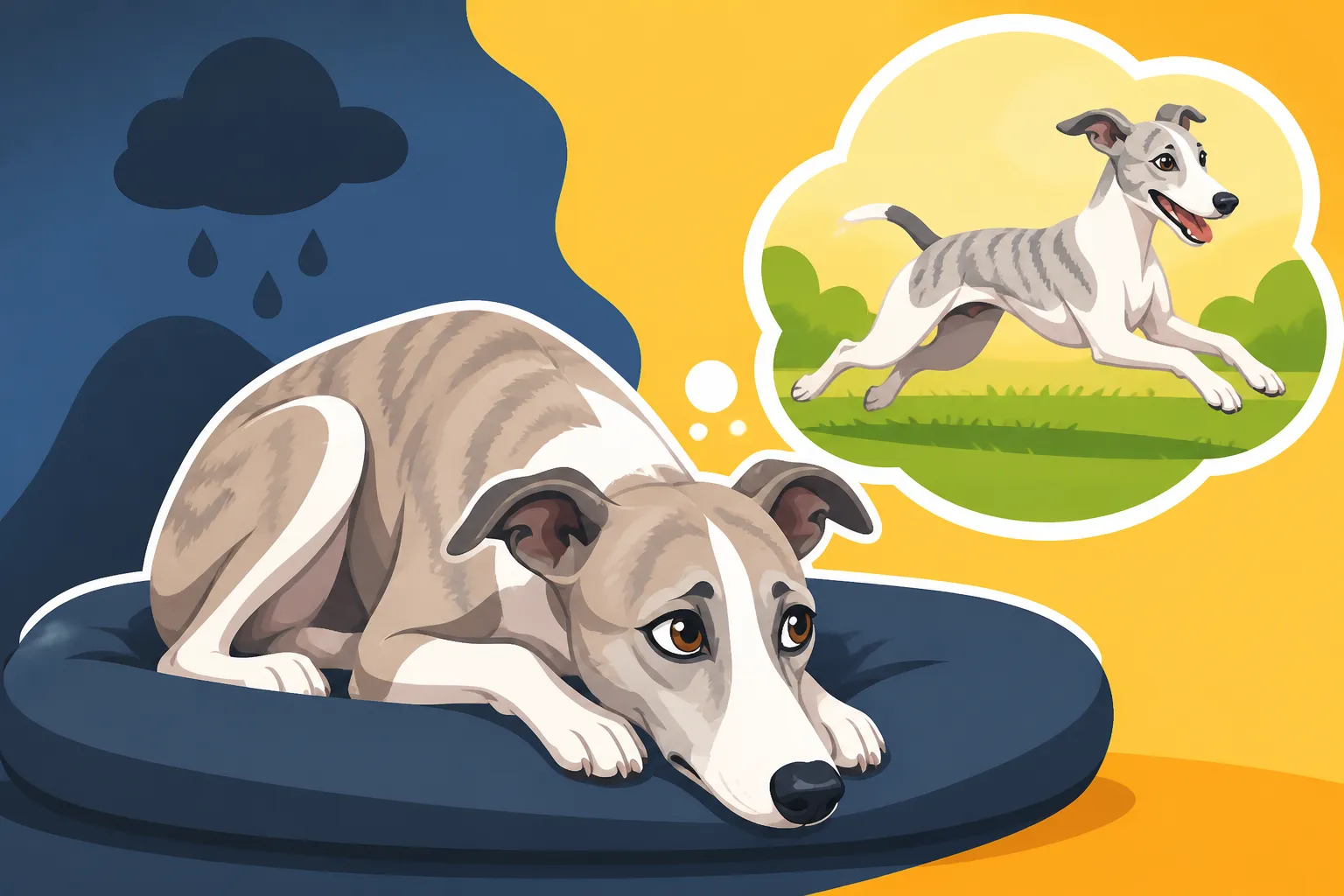
Sometimes, what looks like sulking is simply your Whippet seeking comfort or space. Whippets are notorious for their love of soft beds and blankets. If they've just been startled or corrected, their immediate instinct might be to find their favorite, cozy spot to decompress. This isn't about ignoring you; it's about self-soothing. You might find them curled up in their crate, snuggled under a blanket on the sofa, or buried deep in a dog bed from a brand like Amazon Basics, completely disengaged from the action.
They might also be seeking space if they feel overwhelmed. Whippets generally aren't "in your face" dogs. They appreciate calm environments and can become stressed in chaotic or loud settings. If a scolding or a chaotic moment has just occurred, retreating to a quiet corner is a very normal Whippet response, not an act of defiance.
Learned Avoidance and Negative Association
Whippets are incredibly intelligent and learn associations very quickly. If a particular command or interaction consistently leads to a negative or uncomfortable experience for them, they will learn to avoid it. This is not them being stubborn, but rather making a logical connection from their perspective. For instance, if you always use a harsh tone when calling them to come inside, they might start to associate your call with unpleasantness, leading them to delay or ignore you.
Think about the classic example of a Whippet who The Whippet That Will Not Toilet in the Rain. It's not out of spite; it's often a learned aversion to discomfort. Similarly, if they associate your presence after a certain action with a negative response, they might try to avoid you to prevent that negative interaction. This is why positive reinforcement is so crucial with this breed, as opposed to punishment.
Subtle Physical Discomfort
Finally, don't rule out subtle physical discomfort. Because Whippets are so thin-skinned and lean, minor aches or pains might manifest as a general withdrawal or reluctance to engage. Perhaps you accidentally bumped their hip, or they landed awkwardly during a zoomie session. If they seem "off" and are keeping their distance, it's always worth a quick check to ensure there's no visible injury or tenderness. A dog experiencing pain will often try to hide it or simply withdraw, which can easily be mistaken for sulking.
How to Effectively Communicate and Rebuild Trust with Your Whippet
Given their sensitive nature, effective communication and consistent, positive interactions are paramount to building a strong, trusting relationship with your Whippet. Ditching the idea of "sulking" and focusing on understanding their true motivations will transform your approach and their responses.
Embrace Positive Reinforcement
For a Whippet, positive reinforcement isn't just a training method; it's the foundation of a happy, confident dog. They thrive on praise, gentle encouragement, and tasty treats. When teaching new behaviors or correcting unwanted ones, focus on rewarding the desired action rather than punishing the undesirable one. If your Whippet tries to counter-surf, instead of a harsh "no," redirect them with a "leave it" command and reward them for looking away from the counter. Programs like BAXTER & Bella often emphasize positive, fear-free training that works wonders for sensitive breeds like Whippets.
Avoid yelling, scolding, or any physical corrections. As we discussed, Whippets are incredibly sensitive, and these methods can lead to them shutting down, becoming fearful, or developing learned avoidance behaviors, which we often mistake for sulking. Whether Positive Training Alone Works on a Whippet is a question many owners ask, and the answer is a resounding yes, especially for this breed.
Be Clear and Consistent
Confusion is a major source of stress for Whippets. Ensure your commands are clear, concise, and always mean the same thing. If "off" means "get off the couch" one day and "get off the person" another, your Whippet will struggle to understand. Consistency from all family members is also vital. If one person allows a behavior and another punishes it, your Whippet will become confused and stressed, potentially leading to more withdrawn behaviors.
Establish routines where possible. Whippets generally do well with predictable schedules for meals, walks, and potty breaks. This predictability creates a sense of security and reduces anxiety, which can lessen the likelihood of "off" behaviors.
Create a Safe and Comfortable Environment
A Whippet who feels safe and comfortable is less likely to exhibit withdrawn or fearful behaviors. This means providing plenty of soft, warm places to rest, especially since A Whippet Has No Insulation and No Padding. Ensure they have access to their favorite beds in various rooms, so they always have a retreat. A cozy crate (perhaps with a soft blanket from Amazon) can be a fantastic den for them. Consider Whether a Whippet Can Be Crate Trained carefully, ensuring it's introduced as a safe haven, not a place of punishment.
Be mindful of noise levels and sudden movements in the home. If your Whippet retreats after a loud event, give them space to decompress. When introducing them to new people or situations, do so gradually and positively, allowing them to approach at their own pace.
Giving Space and Rebuilding Connection
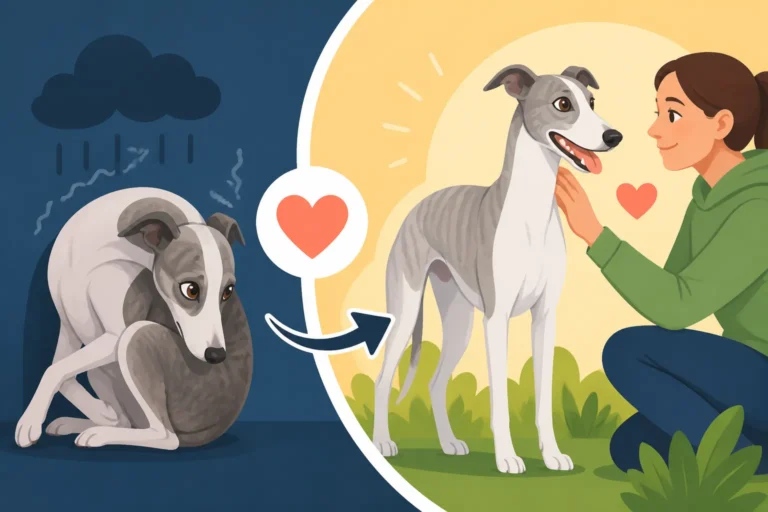
If your Whippet seems withdrawn after an incident, the best thing you can do is give them a little space, then calmly re-engage. Don't chase after them or try to force affection. Let them settle. Once they've had a moment, approach them calmly, in a gentle tone, perhaps with a favorite treat or toy. Rebuilding connection is about showing them that the negative interaction is over and that you are still a source of comfort and security.
This isn't about letting them "get away with" anything, but about acknowledging their sensitive nature. How Long a Whippet Holds a Grudge isn't really a concern because they don't hold grudges. They react to the moment. By calmly re-engaging, you teach them that disagreements are temporary and that your bond is resilient. This approach fosters a trusting relationship, where your Whippet feels secure enough to make mistakes without fearing harsh repercussions.
Identifying Behavior Types
Understanding the nuance between different Whippet behaviors can help you respond more effectively.
| Behavior Type | Common Human Interpretation | Whippet's Probable Motivation | Effective Owner Response |
|---|---|---|---|
| Retreating/Hiding | Sulking, being dramatic | Seeking comfort, avoiding conflict | Give space, then calmly re-engage with positive cues. |
| Ignoring Commands | Stubborn, defiant | Confusion, learned avoidance | Re-evaluate training methods, use clear positive reinforcement. |
| Avoiding Eye Contact | Ashamed, guilty | Deference, fear, discomfort | Use soft gaze, gentle voice, avoid direct confrontation. |
| Low Energy/Disinterest | Moody, uncooperative | Physical discomfort, stress, boredom | Check for health issues, provide engaging activities, comfort. |
| Whining/Soft Growls | Complaining, protesting | Discomfort, anxiety, need for attention | Identify and address underlying cause (potty, hunger, fear). |
By focusing on genuine understanding, clear communication, and consistent positive reinforcement, you’ll find your Whippet’s "sulking" behaviors diminish, replaced by a more confident, connected, and happy companion. This breed is a joy to live with, and a little empathy goes a long way in ensuring they feel understood and loved.
Disclaimer
This article is for general informational purposes only and does not constitute professional advice. Laws, prices and regulations vary by location and change over time. Consult a qualified professional for guidance on your specific situation.