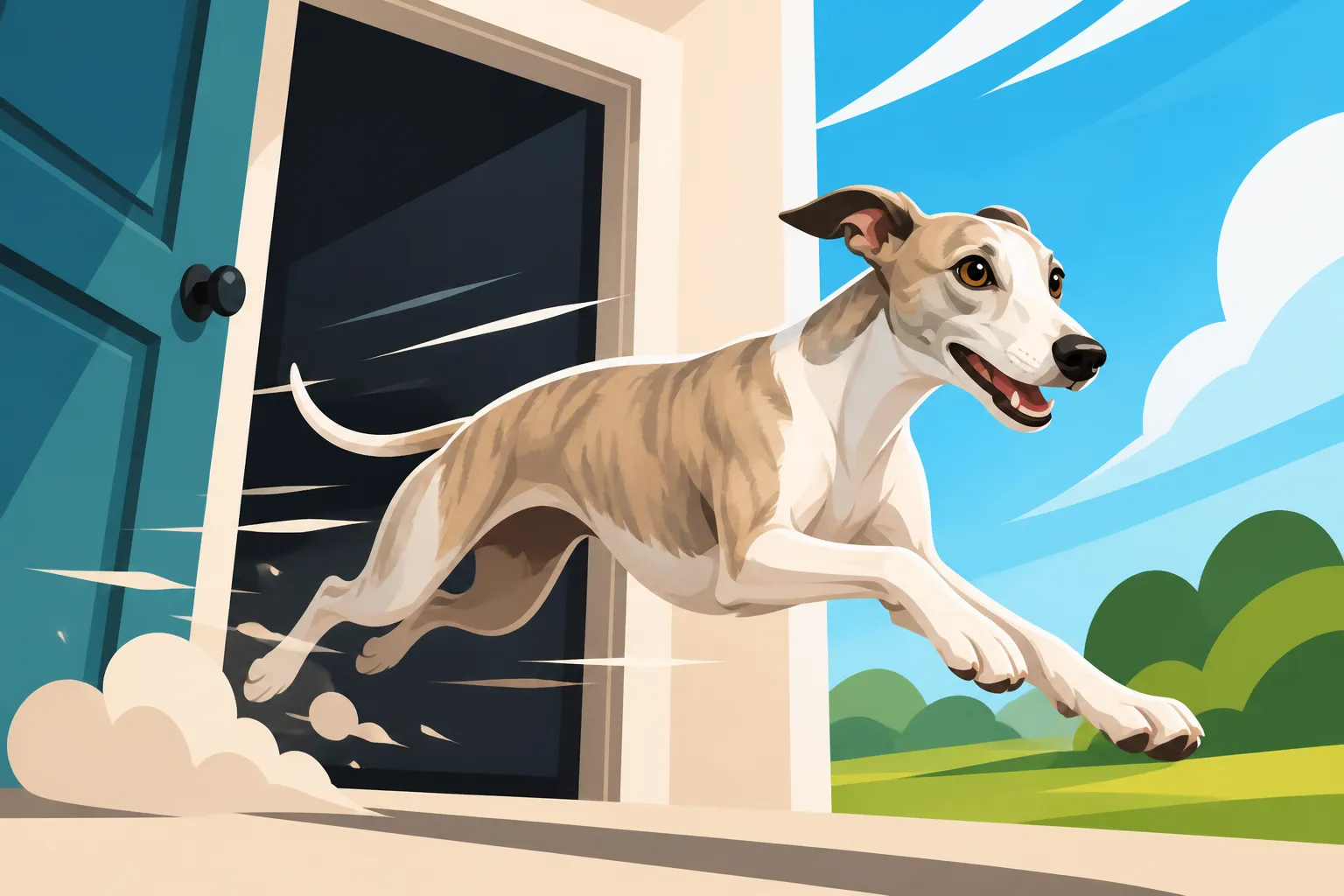
The Whippet That Bolts Through an Open Door
The moment a whippet sees an open door, a gap in the fence, or even a momentarily unlatched gate can trigger an instinctual dash that leaves owners breathless with fear. That incredible sighthound speed, usually a joy to behold, becomes a heart-stopping liability when your beloved companion vanishes in a blur, driven by an ancient prey drive or simply the thrill of the chase. This guide is here to walk you through understanding why your whippet might bolt, how to meticulously prevent it, and what training and safety measures you can put in place to keep your speedy friend safe.
Understanding the Whippet's Door-Dashing Instinct
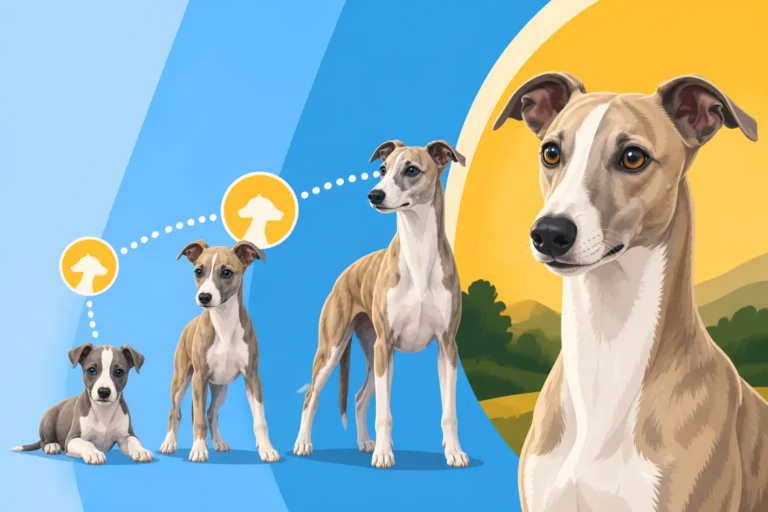
Let's be real: whippets are built for speed and the chase. It's in their DNA. So when an opportunity arises, that little voice in their head screams "Go!" It's not defiance; it's deeply ingrained instinct. Understanding this is the first step to managing it.
The Irresistible Call of the Wild (or Just a Squirrel)
Whippets are sighthounds, meaning their primary hunting tool is their incredible vision and speed. They spot movement from a distance and, almost without thinking, they're off. An open door is a portal to a world full of potential movement – a squirrel across the street, a leaf blowing past, another dog playing. For a whippet, that immediate visual stimulus can override even the most diligent training in a split second. Their acceleration is astounding, and before you can even react, they've covered significant ground. This is why a simple "stay" command might hold in the living room, but crumble at the threshold of freedom.
Spatial Awareness and the Whippet's World
While intelligent, whippets often lack a certain "street smarts" when their chase instinct takes over. They don't process the danger of traffic, the boundaries of your property, or the distance they're putting between themselves and you in that initial burst of speed. They are simply focused on the target, or the pure joy of the run. This isn't about being dumb; it's about a specific type of intelligence honed for hunting, not navigating suburban perils. They might not even register that they're leaving you behind until they've hit top speed and the initial excitement starts to wane. This is why you often hear stories of whippets getting lost or injured if they manage to get loose in an unsecured area, as their instincts propel them into situations they're not equipped to handle safely.
Novelty and the "Fear of Missing Out"
Sometimes, it's not even about prey. For some whippets, especially younger or more curious ones, the world outside that open door represents an exciting unknown, a giant playground begging to be explored. They have a natural curiosity, and when they see an opening, their "fear of missing out" on an adventure can be a powerful motivator. This can be especially true if they've had limited exposure to varied environments or if they're generally under-stimulated. The desire to see what's out there, to explore new smells and sights, can be just as strong as the prey drive. This urge, combined with their speed, makes any momentary lapse in door security a significant risk.
Preventing the Dash: Environmental Management and Doorway Discipline
The best defense against a bolting whippet is a good offense: prevention. This means being incredibly vigilant and setting up your home environment to minimize opportunities for escape, as well as establishing clear rules around doorways.
Creating a Safe Home Environment
Think of your home as a fortress. Every entry and exit point needs to be secured with your whippet's incredible speed and determination in mind.
- Double Barriers: Consider using baby gates or pet gates at strategic locations, like the entrance to your living room or a hallway leading to the front door. This creates a secondary barrier even if the main door is opened. Many affordable options are available on Amazon that are tall enough to deter a leaping whippet. This provides a crucial buffer zone, giving you precious seconds to react if the main door is compromised.
- Secure Fencing: If you have a yard, ensure your fence is solid and high enough. Whippets can jump surprisingly well, especially if motivated. A six-foot solid fence is generally recommended. Regularly check for loose boards or potential digging spots. Remember, a whippet will exploit any weakness.
- Door and Gate Latches: Make sure all external doors and gates have reliable, secure latches. Magnetic closures on screen doors are not enough. Consider adding barrel bolts or chain locks to doors your whippet might try to nudge open. Train family members and guests to always ensure doors are fully closed and latched behind them.
Doorway Protocol: Training Humans First
It’s often our human habits that inadvertently create opportunities for a whippet to bolt. Establishing strict "doorway manners" for everyone in the household is paramount.
- The "Human Barrier" Rule: When anyone approaches an exit, the whippet should not be allowed to rush the door. Teach everyone to make their body a barrier. If the whippet tries to squeeze past, they must back away from the door until the whippet gives space. This might involve stepping back yourself and waiting for your whippet to calm down, even if it takes a moment.
- No Free Exits: Your whippet should never be the first one out the door. Ever. Whether you're going for a walk, getting the mail, or letting them out into the yard, you go first. This reinforces that you control the exit, not them. This also gives you time to visually scan the area outside for potential hazards or distractions before your whippet steps out.
- Communication with Guests: Have a clear, firm protocol for guests. Explain that your whippet is a sighthound with a strong chase instinct and must not be allowed to rush the door when they enter or leave. A sign on the door can be a helpful reminder. This prevents awkward situations and keeps your dog safe, even if it feels a little formal.
Equipping Your Whippet for Safety
Even with the best prevention, accidents can happen. Having the right gear on your whippet is a non-negotiable safety net.
- Appropriate Collar: A properly fitted martingale collar is essential for a whippet. Their slender necks mean they can easily slip out of traditional flat collars when startled or pulling away. A martingale tightens just enough to prevent escape without choking, making it a critical piece of equipment for walks and even just being around the house. Whether a Whippet Needs a Martingale delves deeper into this.
- Secure Leash: Always use a sturdy leash. A long line can be a great training tool for practicing recall in a safe, contained area, giving your whippet some freedom without risk. You can find robust, lightweight long lines on Amazon that are perfect for whippets.
- ID Tags and Microchip: This is your absolute last line of defense. Ensure your whippet wears up-to-date ID tags with your phone number at all times. More importantly, make sure they are microchipped and that your contact information with the microchip registry is current. If they do get out, this dramatically increases the chances of a safe return.
| Prevention Strategy | Description | Ideal Use Case | Key Benefit |
|---|---|---|---|
| Physical Barriers | Baby gates, pet gates, secure fencing, double doors | High-traffic doorways, property boundaries | Creates delay, prevents immediate escape |
| Doorway Protocol | "Human barrier" rule, no rushing, owner exits first, guest communication | All entry/exit points in the home | Establishes owner control, builds manners |
| Proper Gear | Martingale collar, secure leash, ID tags, microchip | Walks, outdoor time, general daily wear | Prevents collar escape, aids in recovery |
| Training ("Wait") | Teaching a reliable "wait" or "stay" command at thresholds | Front door, car door, crate door | Develops impulse control, reduces rushing |
Training for Doorway Manners: Building Impulse Control
Environmental management is crucial, but true safety comes from a combination of management and solid training. Teaching your whippet impulse control around doorways is key to preventing those heart-stopping dashes.
The "Wait" Command: Your Best Friend at the Door
The "wait" command is invaluable. It's different from "stay" because it implies a temporary pause until you give a release cue, often used for thresholds.
- Start Simple: Begin practicing "wait" in a low-distraction environment, away from any doors. Hold a treat, ask your whippet to "wait," take a step back, and if they hold position, return and reward. Gradually increase the distance and duration.
- Move to the Door: Once your whippet understands "wait," bring the training to the doorway. With your whippet on a leash, approach the door. Before you even touch the handle, ask for a "wait." If they hold, reward. Repeat, slowly increasing the difficulty: hand on the handle, slight opening of the door, wider opening.
- Practice with Leash Off: Once they are reliable with the leash on, practice with the leash off (but still in a secure area, like a fenced yard or with a long line attached). Open the door slightly, ask for "wait," and only when they are calm and still, give your release cue ("okay" or "free") and allow them to pass. This teaches them that calm waiting leads to access, not frantic rushing.
Practicing Threshold Control
Threshold control is about teaching your whippet to respect boundaries, even invisible ones. This is particularly important for your front door or gate to the backyard.
- Doorbell Drill: The doorbell is often a trigger for excitement. Practice by having someone ring the bell while your whippet is on a leash. Demand a "sit" or "down" and "wait" before you even move towards the door. Reward calm behavior. Gradually work up to opening the door while they hold their position.
- The Invisible Barrier: Teach your whippet that they can only cross a threshold on your command. Stand in the doorway and block them with your body if they try to pass without permission. Don't say anything, just block. As soon as they take a step back, praise and potentially reward. This teaches them that the doorway is your space to control.
- Using a "Station" Command: You can also teach your whippet to go to a specific "station" – like their bed or a mat – when the doorbell rings or when you're approaching an exit. This gives them a clear, alternative behavior to perform instead of rushing the door. Consistency is key here.
Positive Reinforcement and Consistency
Whippets respond incredibly well to positive reinforcement. Harsh corrections can make them shut down or become anxious, making training much harder. How a Whippet Learns When It Bruises From Pressure explains their sensitive nature.
- High-Value Rewards: For a whippet, high-value treats (like small pieces of cheese, cooked chicken, or hot dogs) are often the best motivators. Find what truly excites your dog and reserve those treats specifically for doorway training.
- Short, Frequent Sessions: Whippets can get bored with repetitive drills. Keep training sessions short (5-10 minutes) but do them frequently throughout the day. This keeps them engaged and makes learning fun.
- Enlist Online Support: If you're struggling, don't hesitate to seek professional help. Online training platforms like BAXTER & Bella offer virtual coaching and comprehensive programs that can guide you through these specific challenges. Their step-by-step approach and supportive community can make a huge difference, especially for those complex behavioral issues like door-dashing. They often provide excellent resources for building reliable obedience in a sensitive breed like a whippet.
- Consistency is Non-Negotiable: Every single family member, every guest, every time. If you allow your whippet to rush the door even once, you undo a significant amount of training. This is where the whole family needs to be on board and committed to the same rules.
When the Dash Happens: Emergency Protocol and What Not to Do
Despite your best efforts, sometimes a whippet will still manage to bolt. In these terrifying moments, knowing what to do – and what not to do – can be the difference between a quick retrieval and a prolonged, dangerous search.
Immediate Actions for a Loose Whippet
Panic is natural, but acting quickly and strategically is vital.
- Avoid Chasing (Initially): Your whippet can run Thirty Five Miles an Hour and No Brakes on a Whippet's Recall. You cannot outrun them. Chasing them will often trigger their "game on" instinct, making them run faster and further away from you, sometimes directly into danger. Instead, try to make yourself interesting.
- Call, Don't Command: Instead of shouting "Come!" or "Stay!" in an angry tone, try to get their attention with an excited, happy voice. Squat down, clap your hands, or call their name enthusiastically. If they have a favorite squeaky toy or treat, use those sounds or scents to try and lure them back.
- The "Flop" or "Play Bow": Some whippets respond well to their owner suddenly flopping to the ground, playing dead, or doing a playful bow. This unexpected behavior can break their chase focus and pique their curiosity, often making them circle back to investigate what you're doing. This is a tactic that can be surprisingly effective for a breed that thrives on playful interaction.
- Emergency Recall Word: If you’ve practiced an emergency recall, now is the time to use it. This should be a unique word or phrase used only for dire situations, associated with the highest value rewards. For example, if you trained with "Cookie!", shout that word once, excitedly, and be prepared to offer an amazing treat when they return. Teaching a Whippet an Emergency Recall provides a more detailed guide on this crucial skill.
Safe Retrieval Techniques
Once your whippet is within a reasonable distance, you need to execute a safe retrieval.
- Lure, Don't Grab: Continue to entice them with your happy voice and high-value treats. Let them come to you. Avoid lunging or grabbing, as this can scare them off and make them associate returning with being caught, rather than with a positive outcome.
- Walk Away (Strategic Retreat): Sometimes, if your whippet is looking at you but not approaching, turning and walking away from them can make them curious enough to follow. They might think you're going somewhere exciting and want to join. Keep checking over your shoulder, and as they get closer, gently redirect them towards a safe, enclosed area if possible.
- Open a Car Door (If Safe): Many whippets associate car doors with fun outings. If it's safe to do so, opening a car door and calling them might tempt them to jump in. This can be a swift way to contain them if they're close enough and familiar with car rides.
Lessons Learned and Preventing Future Escapes
Every escape is a learning opportunity, albeit a terrifying one.
- Analyze the Breach: After safely retrieving your whippet, calmly analyze how they got out. Was a gate left ajar? Was the front door not fully latched? Did someone violate the doorway protocol? Pinpointing the exact point of failure is crucial for preventing a repeat.
- Reinforce Training Immediately: The very next training session should heavily focus on doorway manners and impulse control. Use the highest value rewards and ensure every family member is on the same page. This is not the time for anger, but for diligent reinforcement.
- Consider Professional Guidance: If door-dashing becomes a recurring issue, or if you feel overwhelmed, consider working with a professional dog trainer who has experience with sighthounds. They can provide tailored strategies and hands-on coaching to help you and your whippet succeed. Resources like BAXTER & Bella can connect you with experienced trainers virtually who understand the unique aspects of whippet behavior.
- Review Your Safety Gear: Does your whippet's collar fit correctly? Is their leash showing signs of wear? Are your ID tags readable? This incident is a stark reminder to double-check all safety equipment. Why a Whippet Cannot Be Let Off Leash in an Open Field and How Far a Whippet's Recall Can Be Trusted reinforce the importance of these layers of safety.
Bolting through an open door is a deeply ingrained behavior for many whippets, rooted in their sighthound heritage. While it can be incredibly frightening, with careful environmental management, consistent positive reinforcement training, and a clear emergency plan, you can significantly reduce the risk and ensure your speedy companion stays safe and sound within your care.
Disclaimer
This article is for general informational purposes only and does not constitute professional advice. Laws, prices and regulations vary by location and change over time. Consult a qualified professional for guidance on your specific situation.