What Sedation Adds to a Whippet’s Wound Repair
One of the most disheartening experiences as a whippet owner is the sudden, unexpected skin tear or laceration. These delicate dogs, with their tissue-paper skin, seem to collect wounds with astonishing frequency, and once you’ve rushed them to the vet, the immediate worry turns to how to get the wound closed properly. Often, this means sedation, which adds a layer of complexity—and cost—that many owners aren't prepared for. This guide will walk you through why sedation is often a necessary component of whippet wound repair, what the process entails, and what you can expect to see on your vet bill.
The Delicate Reality of Whippet Skin and Wound Repair
Whippets are magnificent creatures, renowned for their sleek lines and incredible speed. However, these very traits come with a unique set of vulnerabilities, particularly concerning their skin. Many an owner has found themselves in an emergency vet visit, bewildered by how a seemingly minor bump or brush could result in such a significant injury.
Why Whippets Are Prone to Skin Tears
It's not just an old wives' tale; whippets genuinely have incredibly thin, almost translucent skin. Couple that with a near-total absence of insulating body fat, and you have a recipe for easy injury. Their skin is delicate, lacking the thick subcutaneous tissue that other breeds possess, which means even a glancing blow can lead to a significant tear. Imagine running through a field with tall, stiff grass, or perhaps your whippet bounds a little too enthusiastically against a doorframe or the corner of a coffee table. What might be a minor scrape for a Labrador could easily be a deep, gaping laceration for a whippet. Owners often find themselves faced with these injuries after what seems like innocuous play, or even just a clumsy moment around the house. This fragility is a well-known characteristic of the breed, and it’s why many of us are constantly on alert. For a deeper dive into this common issue, check out The Thin Skin That Sends a Whippet to the Vet for Stitches.
When Stitches or Glue Are Needed
When your whippet arrives at the vet with a wound, the first step is always a thorough assessment. The veterinarian will look at several factors: the depth of the wound, its length, whether it's gaping, the amount of bleeding, and if there's any visible contamination from dirt or debris. Small, superficial nicks might be treated with an antiseptic wash and perhaps a protective bandage. However, if the skin layers are separated, if the wound is long or deep, or if it's in an area that moves a lot (like a joint), some form of closure will likely be needed. This is where options like surgical glue or traditional stitches come into play. Glue is sometimes an option for very clean, shallow tears, but most significant whippet lacerations require sutures to ensure proper healing and to minimize scarring. The goal is always to bring the edges of the skin back together cleanly, creating an environment where the body can heal effectively and quickly. The choice between these methods often depends on the specific characteristics of the injury. To understand more about these options, you might find Whether a Whippet's Wound Needs Glue or Stitches helpful.
Understanding Sedation for Whippet Wound Repair
So, your whippet has a wound that needs closing. You'd think a quick stitch or two would be all it takes, right? Not so fast, especially with a whippet. While some dogs might tolerate a quick procedure with just local anesthetic, whippets often require a bit more intervention to ensure a safe, stress-free, and effective repair.
Why Sedation is Often Necessary for Whippets
Whippets are known for their sensitive and often stoic nature, but that doesn't mean they'll lie perfectly still for a needle and thread. In fact, many whippets are incredibly sensitive to handling, prone to shivering when stressed, and can become quite nervous or squirmy when faced with a procedure. Trying to stitch a wriggling dog, even with local numbing, is not only incredibly difficult for the vet but also highly stressful and potentially painful for your whippet. Sedation ensures your dog remains calm, still, and comfortable throughout the process. This allows the veterinarian to thoroughly clean the wound, assess its full extent, and perform a precise closure, minimizing the risk of infection and ensuring the best possible cosmetic and functional outcome. Without sedation, a proper, sterile repair is often impossible, risking poor healing, infection, and the need for a repeat procedure. This approach prioritizes your whippet's well-being and the quality of the medical care. Whippets, like other sighthounds, also have unique physiological characteristics that make any anesthetic or sedative protocol slightly different. Learn more about these sensitivities in Why Anesthesia Is Riskier in a Whippet.
The Sedation Process: What to Expect
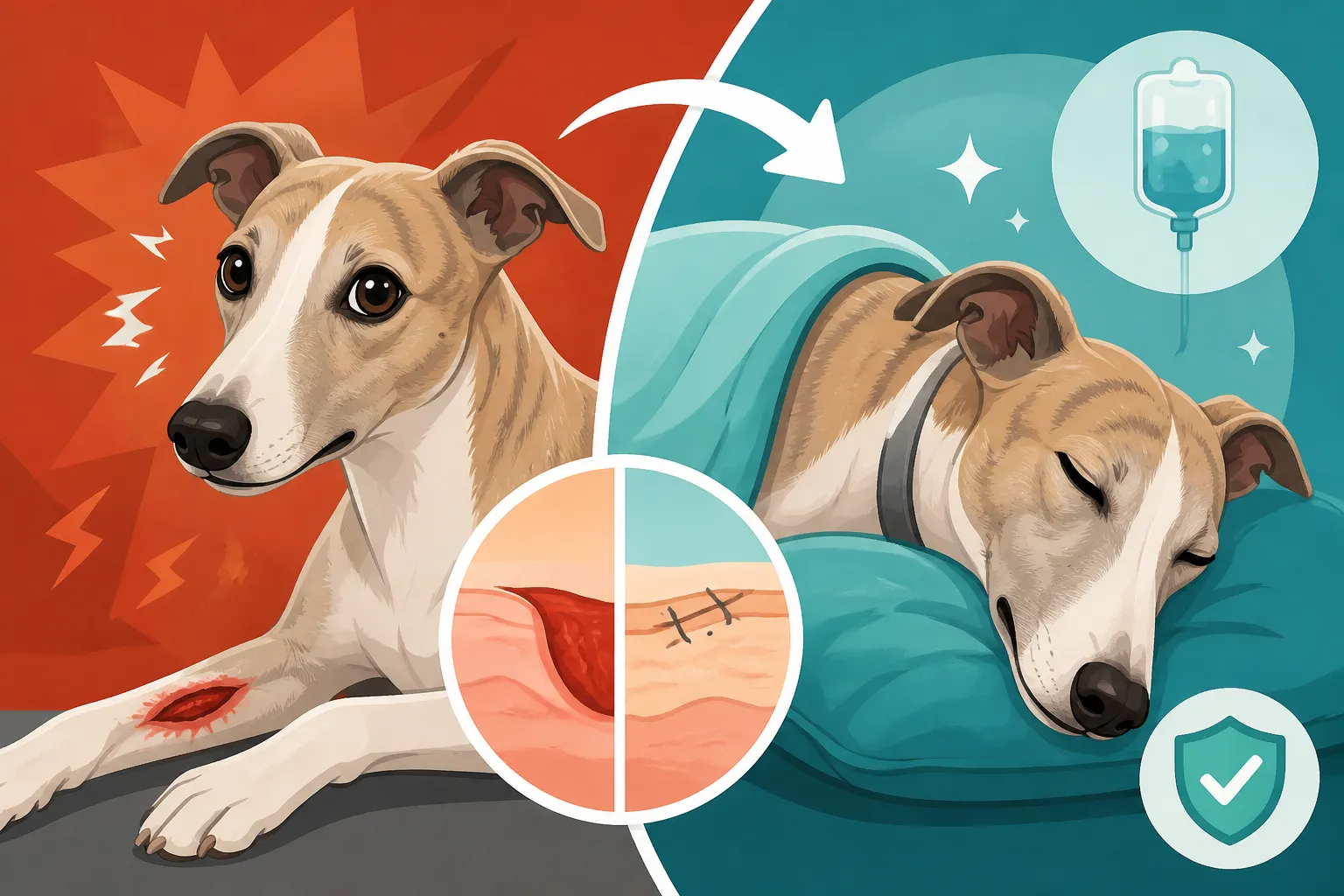
When your whippet needs sedation for wound repair, it's typically not a "knock-out" general anesthesia unless the wound is extremely severe or requires extensive work. Often, it's a lighter form of sedation that keeps them relaxed, pain-free, and still, but still breathing on their own. The process usually begins with a pre-sedation physical examination and often includes bloodwork to ensure your whippet is healthy enough for the sedatives. This helps the vet tailor the medication to your specific dog. Once the go-ahead is given, the sedative is administered, usually via an injection.
Throughout the procedure, your whippet will be closely monitored. Their heart rate, breathing, and temperature will be tracked to ensure they remain stable. Whippets are particularly prone to getting cold under sedation due to their lack of body fat, so warming measures like blankets or circulating warm air blankets might be used. After the wound is cleaned and closed, the vet will begin the recovery process. This usually involves administering a reversal agent (if appropriate for the specific sedative used) or simply allowing the medication to wear off under close supervision. It’s crucial that your vet is familiar with sighthound-specific protocols for anesthesia and sedation, as certain drugs and dosages can affect them differently than other breeds. Understanding these specific needs is covered in detail in Why a Whippet Needs a Sighthound Anesthesia Protocol.
The Financial Impact: What Sedation Adds to the Bill
Nobody likes unexpected vet bills, and the cost of repairing a whippet's wound, especially when sedation is involved, can certainly add up. It's not just the cost of "the stitches" but a whole host of services that ensure your dog's safety and proper healing.
Itemized Costs of Sedation
When you receive a bill for a sedated wound repair, it can seem daunting, but breaking down the costs helps to understand what you're paying for. Sedation isn't just a single drug; it's a comprehensive medical service. You'll typically see charges for:
- Veterinary Examination/Consultation: This covers the initial assessment of the wound and discussion of treatment.
- Pre-sedation Bloodwork: Essential for ensuring your whippet's organs are functioning well enough to process the sedatives safely. This might include a basic chemistry panel and complete blood count.
- Sedative Medications: The actual drugs used to relax and immobilize your whippet. The type and amount will vary based on your dog's size and the depth of sedation required.
- Pain Medications: Often administered before, during, and after the procedure to ensure comfort.
- IV Catheter and Fluids: An IV line is usually placed to deliver fluids, maintain hydration, and provide immediate access for emergency medications if needed.
- Monitoring Fees: This covers the time and equipment used to monitor vital signs like heart rate, breathing, oxygen saturation, and temperature while your whippet is sedated.
- Surgical Supplies: Sterile drapes, gloves, sutures, cleaning solutions, and other disposables.
- Wound Closure: The actual labor and expertise of the vet performing the stitching or gluing.
- Recovery Care: Post-procedure monitoring as your whippet wakes up.
- Take-Home Medications: Such as antibiotics and additional pain relief.
These costs can vary significantly depending on whether the procedure is performed during regular clinic hours or as an emergency after-hours visit. Emergency fees alone can substantially increase the total. While specific numbers change frequently, it's safe to say that sedation can easily add a significant percentage to the overall bill, sometimes doubling or tripling the cost compared to a quick, unsedated procedure (which is rarely possible for a serious whippet tear). For a broader understanding of what to expect for wound repair, see What Repairing a Whippet's Skin Tear Costs.
Budgeting and Insurance Considerations
The reality of these unexpected vet bills can hit hard. It’s a moment when many owners wish they had a crystal ball to predict when their clumsy darling would next incur an injury. To soften the blow, proactive planning is key.
One of the most effective ways to manage the financial burden of unexpected injuries, like a sedated wound repair, is pet insurance. Providers like Healthy Paws offer various plans that can cover accidents and illnesses, including the costs associated with diagnostics, sedation, and surgical repair. It's worth looking into different policies and understanding what they cover, as waiting until after an injury occurs means it will likely be considered a pre-existing condition and won't be covered. Read the fine print, understand deductibles and reimbursement percentages, and ask about any waiting periods.
If pet insurance isn't an option or doesn't fit your budget, building an emergency fund specifically for your whippet is a wise choice. Setting aside a small amount each month can create a financial cushion for those inevitable moments when your whippet lives up to its "poor man's racehorse" reputation in the most literal, injury-prone way. Remember, preventative care, like keeping your yard free of sharp objects and supervising outdoor play, can help, but accidents still happen. Being financially prepared helps you make the best medical decisions for your whippet without added stress. Dive deeper into budgeting for these emergencies with Emergency Stitches: the Whippet Bill Nobody Budgets For.
| Service Component | Without Sedation (Minor Wound Example) | With Sedation (Moderate Wound Example) |
|---|---|---|
| Initial Exam/Consult | Typically included | Typically included |
| Wound Cleaning/Prep | Minimal, often local only | Extensive, sterile prep |
| Local Anesthetic | Yes | Yes, in addition to sedatives |
| Sedative Medication | No | Yes, based on weight/needs |
| IV Catheter & Fluids | No | Yes |
| Monitoring (HR, RR, Temp) | Basic physical check | Continuous electronic monitoring |
| Surgical Supplies | Basic | Comprehensive, sterile kit |
| Wound Closure (Vet Time) | Quick | More time for precision |
| Recovery Care | Minimal | Monitored, potentially longer |
| Take-Home Meds | Possibly antibiotics | Likely antibiotics & pain meds |
| TOTAL COST IMPACT | Lower | Significantly Higher |
Note: This table provides a general comparison. Actual costs and included services vary greatly by veterinary practice, location, and the specifics of the injury.
Post-Sedation Care and Recovery at Home
The vet visit is over, the wound is stitched, and your whippet is home. Now the real work of recovery begins. This phase is crucial for ensuring the wound heals properly and your whippet returns to their usual energetic (or couch potato) self.
Managing Your Whippet After Sedation
When you bring your whippet home after a sedated procedure, don't expect them to be their usual self right away. They might still be a little groggy, wobbly on their feet, and disoriented. This is perfectly normal as the sedatives continue to wear off. It's a bit like us after a minor medical procedure; we just want to curl up in our own bed. Your primary goal is to provide a quiet, warm, and safe environment for them to recover. Due to their lean body mass and thin skin, whippets can get cold easily, especially as the sedatives make it harder for them to regulate their body temperature. Make sure they have a soft, warm bed, preferably off the cold floor, and a blanket to burrow under. Keep them away from stairs, busy household areas, and other pets or excited children for the first 12-24 hours. They might not have a great appetite, or they might feel a little nauseous. Follow your vet's specific instructions regarding food and water, which often involve offering small, bland meals at first. You'll likely receive detailed instructions from your vet, and it's vital to follow them to the letter. Understanding how they typically recover from sedation can set your expectations right; How Slowly a Whippet Wakes From Sedation offers more insights into this process.
Ensuring Proper Wound Healing and Follow-Up
The healing process at home is just as important as the repair itself. The biggest challenge for many whippet owners is preventing their dog from licking, chewing, or otherwise interfering with the wound site. Those delicate stitches are no match for a determined whippet tongue! Your vet will likely send your whippet home with an Elizabethan collar (the infamous "cone of shame") or perhaps a softer, inflatable donut collar. While they might protest, it’s absolutely essential that they wear it diligently. Any interference can lead to infection, delayed healing, or even pulling the stitches out, which means another costly vet visit.
You'll also need to monitor the wound daily for any signs of complications. Look for redness, swelling, heat, discharge (especially pus), or a foul odor. If you notice any of these, contact your vet immediately. They might also provide specific instructions for cleaning the wound or changing bandages. Often, a follow-up visit is scheduled for 7-14 days after the repair to check on healing and remove stitches. Ensure you keep this appointment, as it's crucial for long-term recovery. During this time, offering easily digestible, appealing food can encourage appetite. Brands like Ollie deliver fresh, human-grade food that can be very palatable for a recovering dog, or you can find a variety of gentle food options suitable for sensitive stomachs on Chewy. Proper aftercare significantly impacts how quickly and completely your whippet recovers, minimizing the risk of further complications. To learn more about the specifics of whippet skin healing, check out How Slowly a Whippet's Skin Heals.
Disclaimer
This article is for general informational purposes only and does not constitute professional advice. Laws, prices and regulations vary by location and change over time. Consult a qualified professional for guidance on your specific situation.