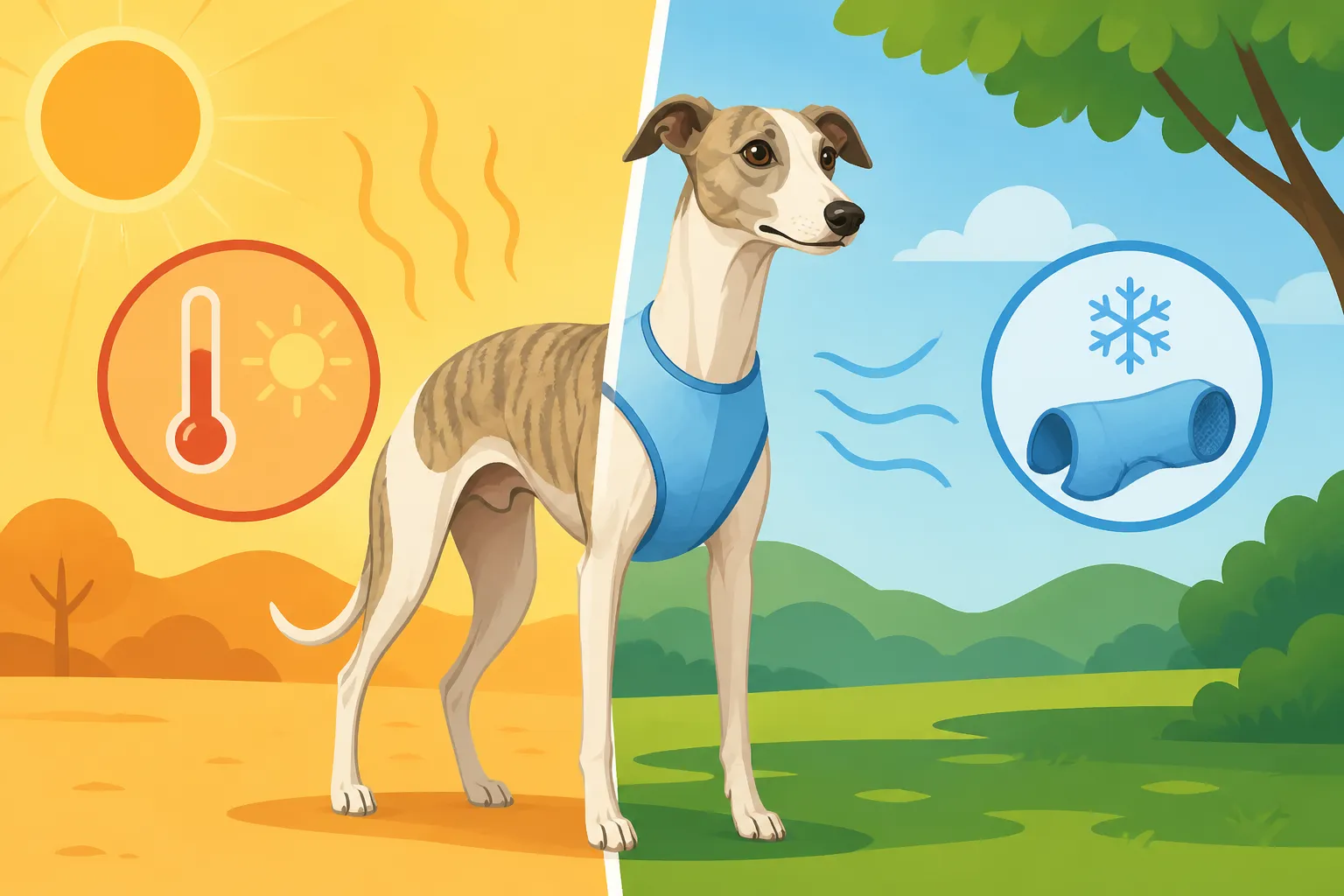
Whether a Whippet Needs a Cooling Coat in Summer
It’s easy to look at a sleek, thin-skinned Whippet and think, "Well, they get cold easily, so they must be fine in the heat, right?" Many of us fall into this trap, overlooking the specific ways our fine-boned friends handle summer temperatures. This guide will dive deep into whether a cooling coat is a necessary addition to your Whippet's summer wardrobe, examining their unique physiology and offering practical advice to keep them comfortable and safe when the mercury rises.
Understanding Your Whippet's Unique Thermoregulation
Whippets are built for speed, not for insulation or extreme temperature regulation. Their physiology is quite distinct from many other breeds, which means we, as their owners, need to understand how both cold and heat affect them. It’s not just about keeping them warm; it’s about recognizing their vulnerabilities across the temperature spectrum.
The Lack of Natural Insulation
One of the most defining characteristics of a Whippet is their almost complete lack of body fat and their very thin, single coat. Unlike double-coated breeds or those with a substantial layer of fat, Whippets have virtually no natural insulation. This is fantastic for their speed and agility, allowing them to be incredibly lightweight, but it also means they struggle to maintain a stable body temperature without external help. A Whippet Has No Insulation and No Padding explores this in more detail. In winter, this translates to shivering cold, but in summer, it means their bodies can absorb and reflect heat differently. They don't have a thick fur coat to shed and regulate airflow, nor do they have a significant fat layer to act as a buffer against environmental temperatures. Their thin skin can also be more susceptible to direct sunlight.
Consider a hot asphalt road on a sunny day. A dog with thick paw pads and a dense coat might feel the heat, but a Whippet with its more delicate pads and exposed skin is going to feel it much more intensely and quickly. The heat transfers directly to their body without much resistance.
How Whippets Dissipate Heat
Like most dogs, Whippets primarily dissipate heat through panting and through the paw pads. However, the efficiency of this system can vary. While sighthounds are often observed to be less inclined to pant as heavily as some other breeds, this doesn't mean they don't get hot. It might just mean they're reaching dangerous temperatures before exhibiting the most obvious signs of distress that owners are trained to look for in other breeds.
Their large surface area relative to their body mass can help them lose heat, but this is only effective if there's a cooler environment for the heat to transfer to. If the ambient air temperature is close to or above their body temperature, or if humidity is high, evaporative cooling from panting becomes less effective. Imagine trying to cool down by sweating in a sauna – it just doesn't work the same way as sweating in a dry, cool breeze. This is a critical point when considering cooling methods like evaporative coats.
Do Cooling Coats Actually Help a Whippet in Summer?
The short answer is: sometimes, and with careful consideration. Cooling coats are designed to help dogs regulate their body temperature, primarily through evaporative cooling. They can be a valuable tool, but they aren't a magical solution and might not be suitable for every Whippet or every summer scenario.
How Cooling Coats Work
Most cooling coats for dogs work on the principle of evaporative cooling. You wet the coat thoroughly, wring out the excess water, and then put it on your dog. As the water in the coat evaporates, it draws heat away from your dog's body, creating a cooling effect. Some coats might also have reflective properties to bounce sunlight away.
For a Whippet, whose skin is so close to the surface, this evaporative cooling can be quite efficient. The thin coat allows for direct heat transfer from the body to the cooling fabric. However, the effectiveness hinges significantly on environmental factors:
- Humidity: In low-humidity environments, evaporation happens readily, and the cooling effect is strong. In high-humidity environments, evaporation is much slower, and the coat might just become a warm, wet blanket, potentially trapping heat rather than releasing it.
- Airflow: A gentle breeze or movement helps accelerate evaporation, maximizing the coat's effectiveness. Still, stagnant air will reduce its cooling power.
- Coat Wetness: The coat needs to remain wet to continue cooling. Once it dries out, its cooling properties diminish dramatically, and it might even start absorbing heat if it's a dark color and exposed to direct sun.
When a Cooling Coat Might Be Beneficial
A cooling coat can be a good option for your Whippet in specific situations:
- Outdoor Activities in Moderate Heat: If you're planning a walk or a light play session on a warm, dry day (think mid-70s Fahrenheit with low humidity), a properly dampened cooling coat can help keep your Whippet comfortable and prevent overheating. It's especially useful if you're out in an open field with limited shade.
- Waiting at Outdoor Events: If you're attending a lure coursing event or a dog show where your Whippet might be waiting in a crate or near the ring for periods, a cooling coat can offer some relief, especially if they are in a shaded area.
- Light-Colored Whippets: Dogs with very light or white coats and pink skin, like some Whippets, can be prone to sunburn. A cooling coat can offer a physical barrier against the sun's harsh UV rays, while also providing a cooling effect. Where a Whippet Sunburns covers this concern.
- Whippets Prone to Overheating: Some individual Whippets might be more sensitive to heat than others. For these dogs, a cooling coat can be part of a multi-pronged approach to keep them comfortable.
Potential Downsides and When to Be Wary
While beneficial, cooling coats are not without their caveats, especially for a sensitive breed like a Whippet.
- High Humidity: As mentioned, in muggy, humid conditions, a cooling coat can quickly become counterproductive. The water won't evaporate efficiently, and you could end up creating a steamy layer against your Whippet's skin, which can raise their core temperature. Always assess the humidity before using one.
- Coat Drying Out: If the coat dries out completely in direct sun, it loses its evaporative cooling effect and can quickly become a heat trap. You need to be vigilant about re-wetting it regularly. Carrying a water bottle to re-dampen the coat is essential if you're out for an extended period.
- False Sense of Security: Relying solely on a cooling coat can give owners a false sense of security, leading them to stay out longer in hot conditions than they should. A cooling coat helps, but it doesn't make your Whippet impervious to heatstroke. It's a tool, not a shield.
- Rubbing and Discomfort: While generally well-fitting, some coats can rub sensitive areas on a thin-skinned Whippet, especially if worn for long periods or if they don't fit perfectly. Always check for signs of chafing or discomfort.
Alternatives and Complementary Cooling Strategies
A cooling coat is just one item in your arsenal against summer heat. For a Whippet, who How a Whippet Handles Summer Heat often by seeking shade and comfort, a holistic approach is always best. Here are other crucial strategies to keep your Whippet cool and comfortable.
Timing Your Outings
This is perhaps the simplest and most effective strategy. Avoid walking your Whippet during the hottest parts of the day. Early mornings and late evenings are ideal for exercise and bathroom breaks. Not only is the air cooler, but pavements and asphalt, which can burn delicate paw pads, will also have cooled down. A good rule of thumb is if it's too hot for you to walk barefoot on the pavement, it's too hot for your Whippet.
Consider a hot afternoon in July. Instead of your usual midday stroll, opt for a quick potty break in a shaded yard and save the longer walk for after sunset when the air is still, but the sun is down, and surfaces have cooled.
Providing Ample Shade and Water
Always ensure your Whippet has access to shade when outdoors. This might mean setting up a canopy in your yard, choosing shaded walking routes, or staying home during peak sun hours. Shade significantly reduces the radiant heat absorbed by their body.
Water is equally critical. Always carry fresh water for your Whippet, even on short walks. Offer it frequently. Dehydration can quickly exacerbate overheating. At home, ensure multiple water bowls are available, and consider adding ice cubes to make it more appealing. Some Whippets enjoy a cool, damp towel placed over them while resting, or even a shallow kiddie pool to wade in (though many sighthounds are not keen on swimming!).
Cooling Mats and Elevated Beds
For indoor comfort, cooling mats and elevated beds can make a huge difference. Cooling mats, often gel-filled, absorb body heat and provide a cool surface for your Whippet to lie on. Elevated beds, made of breathable mesh, allow air to circulate underneath, preventing heat buildup that can occur on solid beds or floors. These are fantastic options for their favorite napping spots. Many online retailers, like Chewy, offer a wide variety of these products.
Whippets, by nature, seek comfort. If you notice your dog trying to lie on the tile floor even though they have a plush bed, it's a clear sign they're trying to cool down. Providing them with a dedicated cooling spot can encourage them to use it instead of seeking out less comfortable, albeit cooler, surfaces.
Grooming and Health Considerations
While Whippets have minimal coats, a light brushing can help remove any loose hair, allowing for better airflow to the skin. However, never shave a Whippet down to the skin, as this removes their natural (albeit minimal) protection against sunburn and can interfere with their ability to regulate temperature.
Pay close attention to your Whippet's overall health. Dogs that are overweight, elderly, or have underlying health conditions (especially cardiac or respiratory issues) are much more susceptible to heatstroke. Regularly check in with your vet to ensure your Whippet is in optimal health for the warmer months. Maintaining a healthy weight through quality nutrition, perhaps with options like Ollie, can contribute to their overall resilience.
Recognizing Signs of Overheating and When to Act
Even with all preventative measures, it's vital to know the signs of overheating and heatstroke in your Whippet, as early intervention can be life-saving. Whippets, being stoic sometimes, might not always show obvious distress until it's severe.
Early Warning Signs
Keep a close eye on your Whippet for these subtle to moderate signs of overheating:
- Excessive Panting: While panting is normal for cooling, look for panting that seems more rapid, deep, or labored than usual for their activity level.
- Bright Red Gums or Tongue: Their gums and tongue might appear a much brighter red than their normal healthy pink.
- Increased Thirst: They might be constantly seeking water.
- Drooling: More drool than usual, or thicker, ropey drool.
- Reluctance to Move: They might slow down, lag behind, or try to find a cool spot to lie down.
- Warm to the Touch: Their ears, belly, or armpits might feel unusually warm.
Imagine you're on a morning walk, and your Whippet, usually zipping ahead, suddenly starts lagging, panting more heavily than usual, and keeps stopping to sniff at cool patches of grass. Their usually pink tongue might be a vivid red. These are your cues to stop immediately and assess the situation.
Signs of Heatstroke (Emergency!)
Heatstroke is a medical emergency. If you observe any of these severe signs, act quickly:
- Staggering or Collapse: Loss of coordination, inability to stand, or outright collapse.
- Vomiting or Diarrhea: Especially if it contains blood.
- Dark Red or Purple Gums: A sign of severe shock.
- Seizures: Uncontrolled muscle spasms or convulsions.
- Unconsciousness: They become unresponsive.
- Rapid, Irregular Heartbeat: You might be able to feel their pulse racing.
If your Whippet exhibits any of these signs, it's an absolute emergency. Immediately move them to a cooler environment, begin cooling them down, and get to a veterinarian without delay.
Emergency Cooling and Veterinary Care
If you suspect heatstroke:
- Move to Shade/Cool Area: Get your Whippet out of the sun and into the coolest available spot immediately.
- Apply Cool Water: Wet them down with cool (not icy!) water. Focus on areas with good blood flow like the armpits, groin, and paw pads. You can use a hose, wet towels, or even a spray bottle.
- Offer Water: If conscious, offer small amounts of water, but do not force them to drink.
- Fan Them: Use a fan or direct airflow towards them to help evaporation.
- Get to the Vet: This is critical. Even if they seem to be cooling down, heatstroke can cause internal organ damage that needs immediate professional attention. Call ahead to your vet or emergency clinic (your local emergency vet or a provider covered by something like Healthy Paws insurance) so they can prepare for your arrival. Whether a Whippet Should See an Emergency Clinic for a Cut details how critical fast vet access can be.
Remember, cooling a heatstroke victim too quickly with icy water can actually be harmful, causing blood vessels to constrict and hindering the heat dissipation process. Aim for cool, not cold.
Summer Care Checklist for Your Whippet
To help you keep your Whippet safe and comfortable all summer long, here's a quick checklist.
| Category | Action Item | Details |
|---|---|---|
| Walks & Exercise | Adjust timing of outings | Walk early morning or late evening. Avoid midday sun entirely. |
| Check pavement temperature | Use the "seven-second rule": if you can't hold your hand on the pavement for seven seconds, it's too hot for paws. | |
| Keep activities moderate | Limit strenuous exercise on warm days. Focus on shorter, gentle strolls. Remember, even a moderate temperature combined with vigorous exercise can be dangerous for a Whippet. The Whippet That Will Not Toilet in the Rain may indicate an aversion to certain weather conditions, but heat is a different battle. | |
| Hydration | Always carry fresh water | Bring a portable bowl and water bottle for every outing. Offer frequently. |
| Ensure constant home access | Provide multiple water bowls indoors and out. Consider adding ice cubes. | |
| Environment | Provide ample shade outdoors | Use natural shade, umbrellas, or canopies. Never leave a Whippet in direct sun for long periods. |
| Keep indoors cool | Use air conditioning, fans, or open windows (safely). | |
| Offer cooling resting spots | Provide cooling mats, elevated beds, or simply allow access to cool tile floors. | |
| Protection | Consider a cooling coat (with caution) | Use in appropriate conditions (low humidity, good airflow). Re-wet frequently. Do not rely solely on it. |
| Sun protection for pink skin | Consider dog-specific sunscreen on ears, nose, and thin skin areas, especially for light-colored Whippets, or a light covering. | |
| Observation | Learn signs of overheating | Know the difference between normal panting and excessive panting, and other warning signs. |
| Act immediately on severe signs | Understand heatstroke is an emergency. Initiate cooling and seek vet care without delay. |
Ultimately, while a cooling coat can be a helpful tool for your Whippet in certain summer conditions, it's just one piece of a much larger puzzle. Their unique physiology demands a thoughtful, proactive approach to warm weather care. By understanding how they dissipate heat, being vigilant for warning signs, and implementing a range of cooling strategies, you can ensure your elegant companion enjoys the summer months safely and comfortably. For more information on what your Whippet needs to stay comfortable year-round, check out The Wardrobe a Whippet Needs Because It Has No Body Fat.
Disclaimer
This article is for general informational purposes only and does not constitute professional advice. Laws, prices and regulations vary by location and change over time. Consult a qualified professional for guidance on your specific situation.