Whether a Whippet’s Heart Looks Enlarged on X Ray
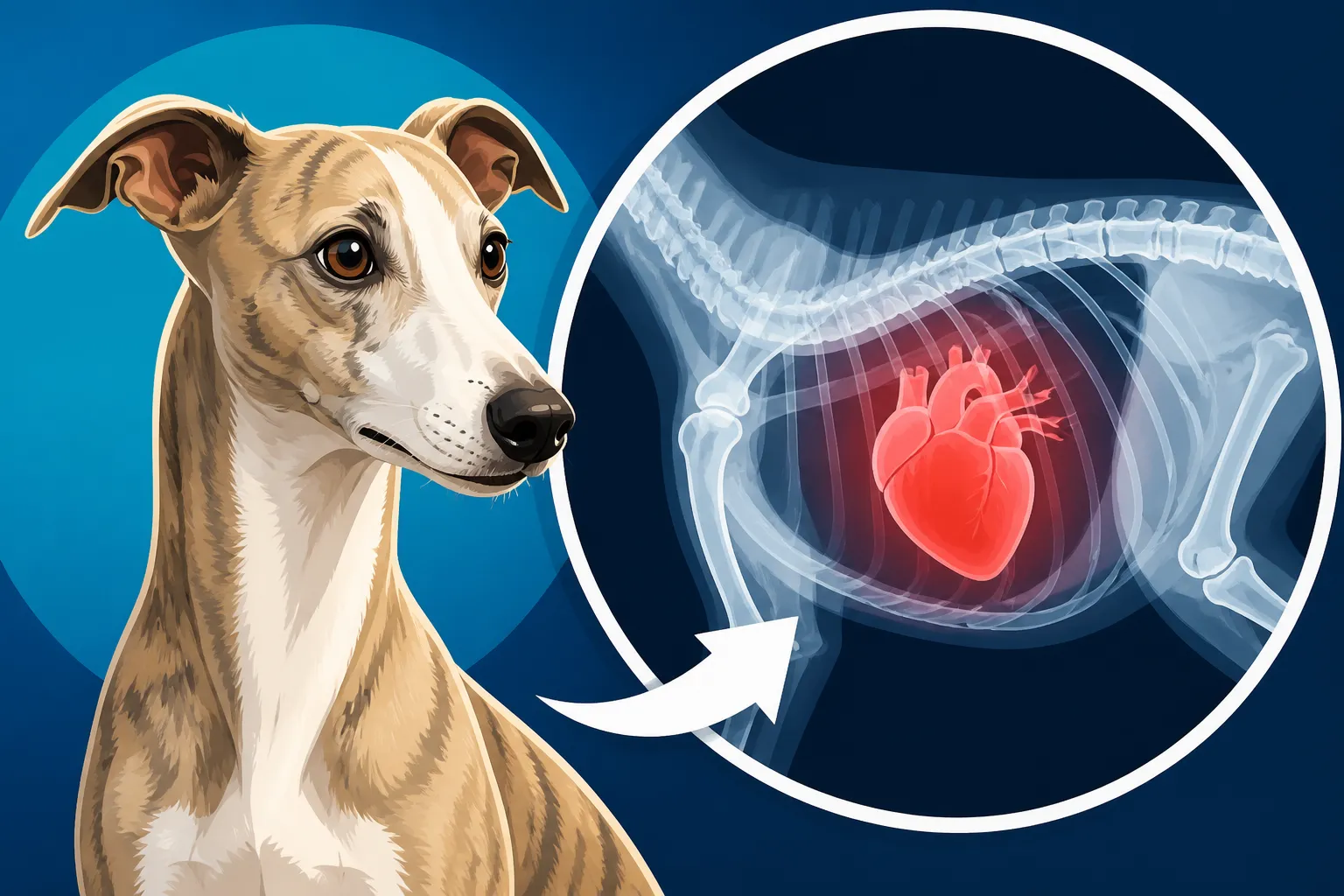
It’s a scenario many Whippet owners have faced: your beloved speedy companion goes in for an X-ray, perhaps for an injury or pre-surgical screening, and the vet comments on their “large heart.” A wave of panic can easily wash over you, immediately conjuring worst-case health scenarios. But before you spiral, take a deep breath; for Whippets and other sighthounds, an X-ray showing a seemingly enlarged heart is often a completely normal, even healthy, finding. This guide will help you understand why your Whippet’s heart might look larger than average on an X-ray and what your vet is truly assessing.
Why Your Whippet's Heart Naturally Looks Big on an X-Ray
It’s natural to feel a jolt of worry when a veterinary professional mentions something "large" in connection with your dog's heart. However, with sighthounds like Whippets, what often looks 'large' to an untrained eye, or even compared to general canine averages, is actually perfectly normal for their athletic physiology. These dogs are built for speed and endurance, and their cardiovascular system is specifically adapted for that incredible performance.
The Athletic Heart Phenomenon in Sighthounds
Whippets are not just ordinary dogs; they are finely tuned athletes. Their bodies are designed to chase down prey or race across a field at exhilarating speeds. This means their hearts are intrinsically different from, say, a Bulldog or a Labrador. Just like a human marathon runner will often have a larger, more efficient heart than someone who lives a sedentary lifestyle, a Whippet’s heart is bigger and stronger to handle the demands of its active life. This phenomenon is often referred to as "athletic heart syndrome" and it's a mark of their incredible physical prowess.
Their hearts, particularly the left ventricle, are capable of pumping a greater volume of blood with each beat. This increased stroke volume is what allows them to achieve such bursts of speed and maintain their energy during sustained running. So, when you look at an X-ray, this natural adaptation often translates into an organ that simply occupies more space within the chest cavity. It's an efficient, powerful pump, not necessarily a diseased one. It's a key reason Why a Whippet's Big Heart Is Not a Diagnosis right off the bat, but rather a starting point for further assessment.
How Radiographs Can Be Misleading in 2D
One of the biggest challenges in interpreting X-rays of a Whippet's heart is the very nature of a radiograph itself. An X-ray is a two-dimensional image of a three-dimensional object. Imagine trying to judge the true size and shape of an apple by looking at its shadow. Depending on the angle and how the apple is positioned, the shadow could appear longer, rounder, or more flattened. The same principle applies to your Whippet's heart.
The positioning of your Whippet during the X-ray, the phase of their breath (inhale vs. exhale), and even their natural deep chest conformation can all affect how the heart appears on the film. A heart that looks slightly elongated or broad might just be an optical illusion created by the projection angle or a deep, narrow chest. Furthermore, the ribs and sternum can also obscure or overlap parts of the heart, making accurate visual assessment of its borders tricky. This is why veterinarians don't just eyeball the size; they use specific measurements and their understanding of sighthound anatomy to get a clearer picture. Your vet is keenly aware that Why an Athletic Whippet's Heart Is Bigger and will consider this in their assessment.
Deciphering an X-Ray: What Your Vet Is Really Looking For
When your veterinarian examines your Whippet's chest X-ray, they aren't simply looking for a "big heart." They're engaged in a much more nuanced process, using specific measurements and clinical judgment honed by experience with sighthounds. They understand that a Whippet's heart is built differently, and they apply specialized knowledge to differentiate between a healthy, athletic heart and one that truly indicates a problem.
The Vertebral Heart Score (VHS) and Its Whippet-Specific Nuances
One of the most common objective methods veterinarians use to assess heart size on an X-ray is the Vertebral Heart Score (VHS). This measurement involves comparing the size of the heart to the length of specific vertebrae in the spine. For most dog breeds, there's a generally accepted normal range for the VHS, typically around 9.7 to 10.7 vertebral bodies. However, this standard range does not apply to sighthounds like Whippets.
Because of their naturally larger and more efficient hearts, Whippets often have a VHS that falls outside the typical "normal" range, sometimes as high as 11.5 or even 12.0, while still being perfectly healthy. A vet who isn't familiar with sighthound physiology might see these numbers and incorrectly flag them as indicative of heart disease, causing unnecessary alarm. It’s crucial that your vet utilizes Whether a Whippet Needs Sighthound Reference Ranges for the VHS. Many specialized labs and veterinary cardiologists maintain these breed-specific reference points. If your general practice vet isn't sure, don't hesitate to ask if they consult sighthound-specific data or refer you to a specialist. Which Labs Use Sighthound Ranges for a Whippet is a question worth asking if you have concerns about the interpretation of your dog's X-ray.
Beyond Size: Other Crucial X-Ray Clues
While heart size is a piece of the puzzle, it's far from the only indicator your vet is examining on an X-ray. A comprehensive evaluation involves looking at the entire thoracic cavity for other vital clues that might point to underlying cardiac issues, even if the heart itself looks impressive.
Your vet will carefully assess the lung fields for any signs of fluid accumulation (pulmonary edema), which is a classic symptom of congestive heart failure. They'll also look at the size and clarity of the pulmonary vessels, the trachea's position, and the overall shape of the heart within the chest. Are the margins of the heart distinct? Is there evidence of consolidation or changes in the lung tissue? These elements, when considered together with the heart's apparent size, provide a much more complete picture. For instance, an X-ray showing a large heart with concurrent signs of fluid in the lungs would be far more concerning than a large heart with clear lung fields. It’s this holistic approach that helps veterinarians accurately diagnose or rule out cardiac disease.
When a Big Heart Is a Problem: Signs of True Heart Disease in Whippets
While an X-ray might show what appears to be a large heart in a Whippet, it's important to understand that a truly diseased heart—one that is genuinely enlarged due to illness—will almost always present with other clinical signs. A healthy athletic heart does its job efficiently without causing any problems for your dog. A heart that is failing, however, will start to impact your Whippet's overall health and well-being.
Common Heart Conditions That Cause True Enlargement
Whippets, like all breeds, can be susceptible to certain heart conditions. One of the most common culprits for true heart enlargement, particularly in older Whippets, is Mitral Valve Disease (MVD). This is a degenerative condition where the mitral valve, which separates the left atrium and ventricle, thickens and begins to leak. Over time, the heart has to work harder to compensate for this leakage, leading to enlargement. It is unfortunately a leading cause of cardiac issues in senior sighthounds, and Mitral Valve Disease Is What Ends Most Old Whippets. Another condition, though less common in Whippets compared to some other breeds, is Dilated Cardiomyopathy (DCM), where the heart muscle itself becomes thin and weak, reducing its pumping efficiency and causing the chambers to enlarge. You can learn more about this specific condition in Mitral Valve Disease in a Whippet.
It's crucial to remember that a healthy, athletic heart, even one that measures "large" on an X-ray, won't be causing your Whippet any distress. It's when the heart's structure or function is compromised by disease that you start seeing clinical symptoms that warrant investigation beyond just an X-ray.
Telltale Symptoms to Watch For
The real indicators of heart disease aren't just an X-ray image; they are the changes in your Whippet's behavior and physical state. If your Whippet's heart is truly struggling, you might observe a range of symptoms. Pay close attention to:
- Coughing: Especially a persistent cough, often worse at night or when resting, which can be a sign of fluid buildup in the lungs.
- Lethargy or Reduced Exercise Tolerance: While Whippets are renowned couch potatoes, a sudden decrease in their willingness to run or play, or becoming easily tired during walks, is a red flag.
- Difficulty Breathing: This could manifest as rapid, shallow breathing, open-mouthed breathing, or noticeable effort to breathe, even when at rest.
- Fainting Spells (Syncope): Short periods of collapse or loss of consciousness, often after excitement or exertion. This is a serious symptom and requires immediate veterinary attention.
- Loss of Appetite or Weight Loss: While Whippets are typically lean, unexplained weight loss despite eating, or a sudden lack of interest in food, can be concerning.
- Abdominal Distension: In advanced cases, fluid can accumulate in the abdomen, causing a bloated appearance.
If you observe any of these symptoms in your Whippet, regardless of what a previous X-ray showed, it’s imperative to consult your vet. These clinical signs, not just the X-ray, are what truly guide further diagnostic steps.
Further Diagnostics Beyond X-Ray
When a veterinarian suspects true heart disease based on clinical signs, history, and initial X-ray findings, they will recommend more definitive diagnostic tools. An X-ray is excellent for showing the size and outline of the heart and assessing the lungs, but it doesn't show the heart's function or internal structure in detail.
The gold standard for diagnosing most heart conditions is an echocardiogram (an ultrasound of the heart). This non-invasive procedure allows a veterinary cardiologist to visualize the heart in real-time, assess the thickness of its walls, measure the size of its chambers, evaluate valve function, and observe blood flow. It can definitively determine if an enlargement is present, which chamber is affected, and what the underlying cause might be. This is why Whether a Whippet Needs an Echocardiogram to Confirm a diagnosis is often the next step.
Additionally, blood tests such as a proBNP test can indicate cardiac stress. An electrocardiogram (ECG) might be performed to check for arrhythmias, irregular heartbeats that can sometimes accompany heart disease. If irregular heartbeats are suspected, a Holter monitor might be used to record the heart's electrical activity over 24 hours while your Whippet is at home. These advanced diagnostics provide the detailed information needed to make an accurate diagnosis and formulate a treatment plan. Understanding the potential costs of these diagnostics is important, and for many owners, pet insurance like Healthy Paws can provide much-needed support for these specialized procedures.
Proactive Care for Your Whippet's Heart Health
Even if your Whippet has a perfectly healthy, athletic heart, being proactive about their cardiac health is an essential part of responsible pet ownership. Regular check-ups, maintaining a healthy lifestyle, and preparing for potential future costs can make a significant difference in their long-term well-being.
Regular Vet Check-ups and Auscultation
One of the simplest yet most effective ways to monitor your Whippet's heart health is through regular veterinary check-ups. During these visits, your vet will perform a physical exam, which includes carefully listening to your Whippet's heart with a stethoscope – a process called auscultation. They’ll be listening for any abnormal sounds, particularly heart murmurs.
A heart murmur is caused by turbulent blood flow and can be a sign of a valve issue or other structural abnormality. Not all murmurs are serious, especially in athletic dogs, but their presence warrants further investigation. Vets often grade murmurs from I (very soft) to VI (very loud), with higher grades often indicating more significant issues. Knowing The Grade at Which a Whippet's Murmur Matters can help you understand the urgency of follow-up. Even if your Whippet has a normal X-ray, a new murmur or a change in an existing one could signal an evolving problem. Regular check-ups, ideally yearly for adult Whippets and more frequently for seniors, are vital for early detection. It's a key part of Whether a Whippet Should Have a Cardiac Exam as a routine practice.
Lifestyle and Nutrition to Support Cardiac Health
A healthy lifestyle plays a crucial role in maintaining your Whippet's cardiovascular well-being. This includes a balanced diet and appropriate exercise.
- Weight Management: Keeping your Whippet at their ideal lean weight is paramount. While they are naturally slender, it's easy for them to become overweight, which puts extra strain on their heart and joints. Consult your vet to determine the best body condition score for your individual dog. You should be able to easily feel their ribs, but they shouldn't be visibly protruding excessively.
- Appropriate Exercise: Whippets are sprinters, not necessarily endurance runners. Ensure they get opportunities for short, intense bursts of running in a safe, fenced area, complemented by regular, moderate walks. Avoid pushing them too hard in extreme weather conditions. Consistent, appropriate exercise helps keep their cardiovascular system strong without overstressing it.
- Nutrition: Feed a high-quality dog food appropriate for their life stage and activity level. While some owners consider specialized diets, most healthy Whippets thrive on a standard, good-quality commercial food. Consult with your vet if you have concerns about specific nutritional needs or supplements.
Financial Planning for Potential Cardiac Care
Facing a diagnosis of heart disease in your beloved Whippet can be emotionally and financially challenging. The costs associated with diagnostics, medications, and specialized veterinary care can quickly add up. Planning ahead can alleviate some of this burden.
Consider investing in pet insurance, especially when your Whippet is young and healthy. Companies like Healthy Paws offer comprehensive coverage that can help with the costs of advanced diagnostics like echocardiograms, ongoing medications, and even emergency visits related to heart conditions. Enrolling early can prevent pre-existing condition exclusions. A quick look at What Heart Medication Costs a Whippet Owner Monthly will show you just how quickly expenses can accumulate.
Alternatively, some owners opt to set up a dedicated savings fund specifically for veterinary emergencies and long-term health needs. Whichever path you choose, having a financial plan in place means you can focus on providing the best care for your Whippet without added stress about the cost. Early detection through regular check-ups, and the ability to pursue recommended diagnostics and treatments, can significantly impact your Whippet's quality of life and longevity. Understanding Arrhythmias in a Whippet or Whether a Whippet's Murmur Is Always Serious can help you prepare for the potential for future diagnostic costs.
Disclaimer
This article is intended for informational purposes only and does not constitute veterinary medical advice. Always consult with a qualified veterinarian for any health concerns or before making any decisions about your pet's health or treatment.