Whether a Whippet Needs More Exercise Than a Greyhound
A Whippet and a Greyhound can look like two versions of the same sprinter, but their exercise needs do not follow a simple size chart. Both usually benefit from daily walks and safe chances to run; neither needs hours of nonstop activity. This guide explains how to compare their routines, adjust for age and temperament, and give a Whippet enough exercise without relying on risky off-leash freedom.
Do Whippets Need More Exercise Than Greyhounds
Not automatically. A Whippet may seem more energetic because it is smaller, quicker to engage in play, or more inclined to dash around the garden. A Greyhound, meanwhile, may look as if it needs more exercise simply because it is a larger athlete. In practice, both breeds are built for short bursts of speed, and individual health, age, conditioning, and temperament matter more than the breed label alone.
The useful comparison is not “Which dog needs the most miles?” It is “What mix of walking, safe sprinting, sniffing, training, and rest leaves this particular dog settled and comfortable?” For a deeper look at their differences beyond exercise, see Whippet or Greyhound for an Apartment.
Both breeds are sprinters, not distance machines
Whippets and Greyhounds can accelerate impressively, but that does not mean they need to run for a long time every day. A brief, enthusiastic chase in a secure area may be more satisfying than a long jog on a lead. After a sprint, many settle down readily and spend a good part of the day sleeping or relaxing indoors.
That pattern can surprise people who expect an athletic dog to need constant activity. A Whippet might race around a fenced field, come home, eat, and curl up under a blanket for hours. A Greyhound may do something similar, though one dog may be more playful or persistent than another. Neither breed should be judged by the assumption that speed equals stamina.
Regular walks still matter. They provide movement, sniffing, exposure to the world, and a predictable routine. But adding miles simply to tire a dog out is not necessarily the answer. Long, repetitive exercise can be a poor fit for an unconditioned dog, a growing puppy, or an older dog with joint discomfort.
Why one Whippet can seem more demanding than one Greyhound
A Whippet may be younger, more playful, or more interested in chasing moving objects than the Greyhound it is being compared with. A recently adopted Greyhound may be settling into home life, while a young Whippet is still learning how to relax. Those differences can make the Whippet appear to “need more exercise,” even when the real difference is age, routine, or training.
History matters too. Some Greyhounds have experience with regular training and a predictable exercise schedule; others have had a very different background. Whippets also vary considerably. A dog from performance lines, a keen lure-coursing enthusiast, and a low-key companion may all have different appetites for activity.
It helps to track what happens after exercise. If a dog returns home relaxed and rests normally, the routine may be working. If it remains restless, starts pestering, or struggles to settle, consider whether it needs more variety or mental engagement—not just a longer walk. If it is stiff, unusually tired, reluctant to move, or sore afterward, reduce the activity and ask a veterinarian for guidance.
What a Balanced Exercise Routine Looks Like
A balanced routine includes more than walking and sprinting. Sniffing, gentle training, play, and the ability to rest in a comfortable place all contribute to a Whippet’s wellbeing. The best schedule is one the dog can handle consistently, rather than an ambitious plan that leads to overexertion or boredom.
| Activity | What it provides | Practical considerations |
|---|---|---|
| Leashed walks | Movement, sniffing, and routine | Adjust length to the dog’s age, fitness, weather, and comfort |
| Secure sprinting | A chance to stretch out and chase safely | Use a properly enclosed area and warm up first |
| Scent games and training | Mental work without excessive impact | Keep sessions short, positive, and varied |
| Calm play at home | Interaction and light activity | Stop if play becomes rough or the dog seems tired |
| Rest and sleep | Recovery and comfort | Provide a warm, padded place away from drafts |
Build a routine around the individual dog
For an adult Whippet, a practical day might include a couple of walks, a short session of training or scent games, and a separate opportunity to run in a secure space when conditions allow. That is an example, not a fixed prescription. Some dogs do well with less vigorous activity; others enjoy more, provided it is introduced gradually and they recover comfortably.
Watch the dog rather than trying to meet a universal mileage target. Does the Whippet walk willingly? Is its breathing settling normally after exercise? Does it move freely later that day and the next morning? A dog that is eager to continue may still need a break, particularly after sprinting, so enthusiasm alone is not a reliable measure of safe limits.
A small activity log can make patterns easier to spot. Note the type of exercise, duration, weather, and how the dog behaves afterward. For example, if a Whippet seems unsettled after a short pavement walk but relaxed after a shorter walk with time to sniff, the solution may be more choice and enrichment rather than more distance.
Add mental activity without turning every day into a workout
Whippets often enjoy activities that let them use their eyes, nose, and problem-solving skills. Hide a few pieces of food around a room, practice calm doorway manners, or teach a simple cue in a quiet space. These activities are especially useful on days when weather, footing, or health makes a run unsuitable.
Lure coursing and Fast CAT can be appealing outlets for dogs that enjoy chasing, but organized activity should be approached thoughtfully. A dog needs to be physically ready, introduced to the sport appropriately, and given time to recover. If you are exploring canine sports, How Lure Coursing Channels a Whippet's Drive explains why a controlled activity may suit a dog’s instincts better than an improvised chase.
Equipment is part of safe exercise, too. A well-fitted harness or collar and a secure lead help prevent escapes on ordinary walks. If you are looking for a long line or walking gear, you might compare fit and construction at a retailer such as Chewy, while remembering that a long line is not a substitute for a fenced area when a Whippet is likely to sprint.
Safe Running Matters More Than Extra Distance
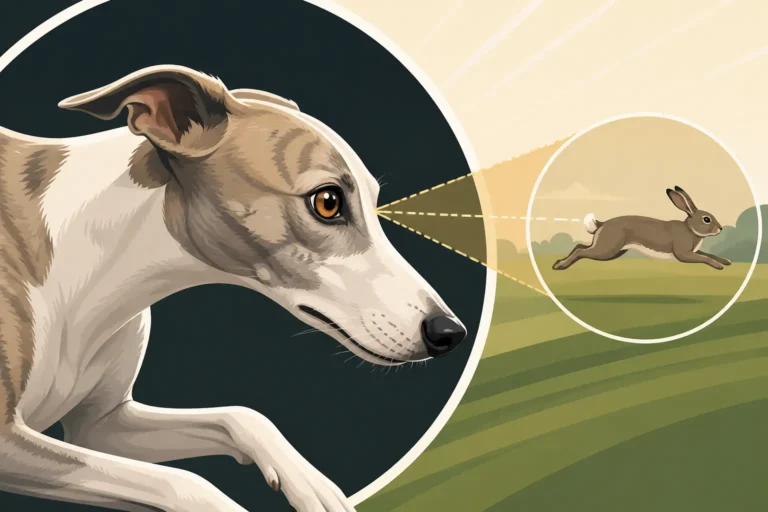
A Whippet’s chase instinct can take over quickly when a rabbit, squirrel, or running dog appears. Greyhounds can also be highly motivated by movement. Even a dog with a reliable response at home may not come back when it is in full pursuit, so exercise planning should start with containment and supervision rather than confidence in recall.
A secure, appropriately maintained fence is usually the safest place for an unrestricted run. Public dog parks can be unpredictable: unfamiliar dogs, open gates, uneven ground, and sudden collisions are all worth considering. A calm, fenced field used with permission may be a better fit than a busy off-leash area.
Do not treat recall as the only safety plan
Training recall is valuable, but it should not be the sole barrier between a sighthound and a road. A Whippet can cover ground quickly, and its attention may lock onto movement before a cue has a chance to compete. For this reason, keep the dog leashed in unfenced spaces, even if it usually responds well.
A long line can give a dog room to explore while preserving a connection to the handler. Use it in a clear area, keep it away from other dogs and obstacles, and avoid wrapping it around hands or limbs. Long lines can tangle or tighten suddenly, so they are best used for controlled walking and training—not as a way to imitate unrestricted sprinting.
For walks, some owners compare walking equipment from shops such as Chewy, but fit is more important than the retailer. A Whippet’s narrow head and deep chest can make ordinary equipment easier to slip out of if it is poorly adjusted. Check that the dog cannot back out of the harness or collar, and inspect the fit again after grooming, weight changes, or a puppy’s growth.
Warm up, choose footing, and allow recovery
A dog that has been resting indoors should not go directly from the sofa into an all-out sprint. Begin with a few minutes of easy walking and relaxed movement, then allow faster activity if the dog is comfortable. After running, give it a chance to cool down with gentle walking and access to water rather than immediately asking it to lie still while excited.
Footing can change the risk. Wet grass may be slippery; hard or uneven ground can be unforgiving; and hidden holes or debris can cause a sudden injury. Check the area before unclipping the lead, especially if the dog tends to turn sharply while chasing. Stop if the Whippet begins limping, favoring a leg, or moving differently.
Recovery deserves as much attention as exertion. Offer a warm, soft place to rest, particularly after a cool-weather outing. Whippets have little body fat and a short coat, so they may become chilled while waiting around outdoors even if they were comfortable while running. A coat can help in cold or wet conditions; Chewy is one place owners may look for dog outerwear, but choose a cut that allows free shoulder and leg movement and does not rub the skin.
Adjust Exercise for Age, Health, and Weather
A healthy adult Whippet’s routine will not suit every dog. Puppies are still growing, older dogs may have less endurance or stiffness, and dogs recovering from injury need a plan tailored to their condition. When exercise changes noticeably—especially if a dog becomes reluctant to walk, tires much sooner, coughs, limps, or struggles to recover—check with a veterinarian rather than assuming it is simply getting lazy.
Puppies and older dogs need a different pace
A Whippet puppy can be lively without being ready for repetitive, high-impact exercise. Let puppies move and play at a comfortable pace, provide rest, and avoid pushing them to run alongside a bicycle or keep up with a long-distance jog. Their bodies are still developing, and structured running should wait until they are mature enough and a veterinarian or knowledgeable breeder can advise on suitability.
Older Whippets may still enjoy a dash in a safe place, but their activity may need to be shorter, gentler, or divided into several outings. A dog that once raced eagerly might now prefer a slow walk and a warm bed. Watch for a change in stride, difficulty getting up, reluctance to jump, or a longer recovery period. Those signs deserve attention rather than a tougher exercise routine.
If you are comparing two adult dogs, avoid assuming the Greyhound is automatically the more fragile or the Whippet the more energetic one. The history of each dog and its current physical condition are more useful guides than breed stereotypes. A carefully managed routine for an older Greyhound may involve less sprinting than a fit adult Whippet’s, but a young or unconditioned Whippet may need less intense work than a healthy adult Greyhound.
Heat, cold, and surface conditions change the plan
Weather can make the same route easy one day and uncomfortable the next. Whippets may feel the cold quickly, especially when standing still, while hot or humid conditions can make vigorous exercise more taxing for any dog. In hot weather, choose cooler parts of the day, keep activity moderate, and stop if the dog seems distressed. In cold weather, shorten outdoor waits and use suitable layers if the dog appears chilled.
Surface and surroundings count as much as temperature. Avoid hard sprints on slippery ground, and be cautious around busy paths where cyclists, cars, and wildlife can trigger sudden movement. If the only available option is a crowded or unsafe space, a sniff-focused walk and a few indoor games can be a better choice than forcing a run.
The most dependable answer to “Does a Whippet need more exercise than a Greyhound?” is that neither breed has a fixed daily quota that applies to every dog. Both usually need regular movement, enrichment, opportunities to use their bodies safely, and plenty of recovery. A Whippet may need more than a particular Greyhound—or less—depending on the dog in front of you. For a broader comparison of temperament and everyday life, see How a Whippet's Temperament Compares With a Greyhound's. You may also find How Much Exercise a Whippet Really Needs, Whether a Whippet Needs a Daily Sprint, and How Far a Whippet Can Jog With You useful when shaping a routine.
Disclaimer
This article is for general informational purposes only and does not constitute professional advice. Laws, prices and regulations vary by location and change over time. Consult a qualified professional for guidance on your specific situation.