Where American Whippet Racing Started
Whippet racing in the United States did not begin with one famous track or a single official first race. It grew from informal contests among working people, especially in New England mill communities, where British traditions and fast little sighthounds traveled together. This guide explains where the sport took root, how early races worked, and how those contests developed into organized American racing.
The New England roots of American Whippet racing
Mill towns helped the sport take hold
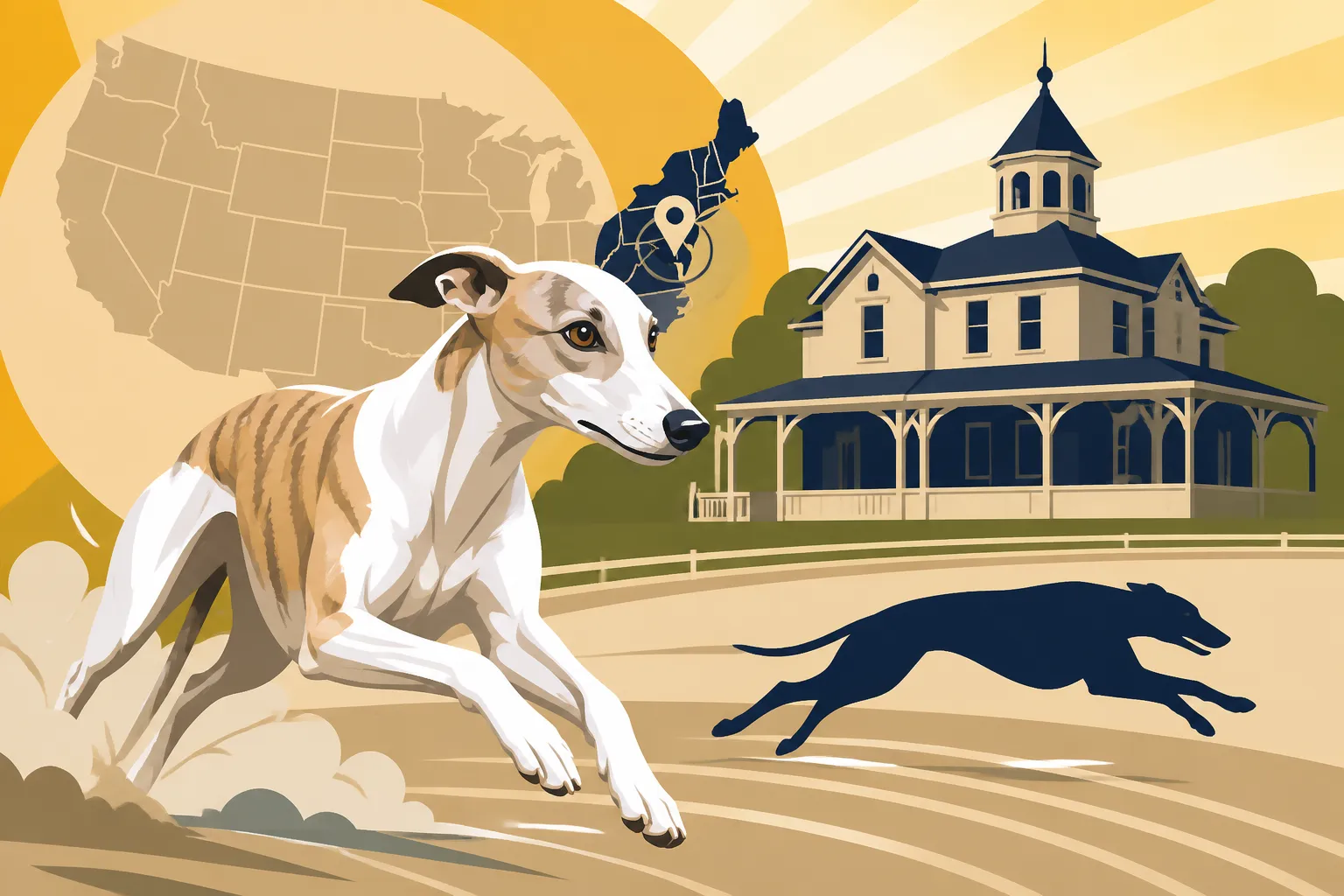
American Whippet racing is most closely associated with the textile towns of Massachusetts and the wider New England region. In communities built around mills, workers gathered after shifts and on days off to race dogs. The Whippet suited this setting: it was small enough to keep in a modest home, quick over a short distance, and already linked to racing traditions in Britain.
Many accounts connect early American Whippet racing with British immigrants who brought their dogs and customs across the Atlantic. That does not mean every early race can be traced to a named immigrant or a dated event. Records of informal local contests are patchy, and “where it started” is better understood as a regional story than as a precise founding moment. The history of The Massachusetts Mill Workers Who Raced Whippets helps explain why the sport became part of working-class life in that corner of the country.
The dogs themselves had already crossed the ocean before American racing became organized. People arriving from Britain brought familiar ideas about racing Whippets, including the use of a moving rag as a lure and the excitement of watching dogs sprint toward a handler. The wider journey is explored in How the Whippet Reached America. Once the dogs were in American homes, local owners could adapt familiar contests to the fields, roadsides, and open spaces available to them.
Why the mill-town setting mattered
Mill communities brought together people who worked long hours, lived near one another, and had shared leisure time. A race did not require an elaborate stadium. Owners needed a stretch of ground, a start line, a finish point, and someone to act as the lure. Friends and neighbors could gather to watch, talk dogs, and compare their racers.
The Whippet also fit the economics of the setting. Compared with a larger racing dog, a Whippet was easier to house and feed, yet it offered the same thrilling sight of a sighthound accelerating after a lure. Its speed made a brief race feel like an event, even when the course and equipment were simple. That combination of accessibility and spectacle helped the sport spread through local circles.
It is tempting to name one Massachusetts town as the unquestioned birthplace of American Whippet racing. The evidence does not support a neat, universally agreed “first.” The safer conclusion is that New England mill towns were an important early center, with Massachusetts especially prominent in the stories of the sport. The distinction matters: local racing could be well established before clubs, rules, or written records made it easy to identify a formal beginning.
How early American Whippet races worked
The rag lure and the straight sprint
Early Whippet racing drew on a simple idea: send the dogs after something they wanted to catch. A handler or “ragger” held a piece of cloth and moved it toward the finish, encouraging the Whippets to run after it. In a typical rag race, dogs started at one end of a straight course while the lure and the people calling them waited ahead. The excitement came from watching each dog launch into a sprint and try to reach the finish first.
The lure was not merely a decoration. Whippets are sight-driven dogs, and movement can capture their attention more effectively than a shouted instruction alone. The handler’s voice, the fluttering cloth, and the crowd’s noise all helped bring the dogs forward. The details varied by place and period, but the basic picture is recognizable: a short, direct race and a lure that gave the dogs a reason to run hard. How a Whippet Rag Race Was Run goes deeper into the mechanics of that contest.
The finish could be lively and a little chaotic. Dogs might arrive together, veer toward the rag, or hesitate if they lost sight of the lure. The ragger’s job was to keep the target visible and draw the dogs through the finish. The tradition of waving cloth at the line was practical as well as theatrical, and Why Whippet Owners Waved Cloth at the Finish Line explains that role in more detail.
Rules, weights, and local variation
Informal races did not necessarily follow one shared rulebook. Owners might arrange contests among dogs they considered comparable, while more organized events developed ways to make racing fairer and easier to judge. Weight was one factor used in some racing traditions. Weighing dogs helped organizers group or handicap racers rather than treating every contest as a simple open sprint. How Whippets Were Weighed Before a Race describes why that detail became part of the sport’s culture.
Local variation is important when picturing the early years. A neighborhood race organized by a handful of owners was not automatically the same as a club event with agreed procedures. Course length, the way dogs were grouped, and how a winner was determined could differ. Over time, shared rules helped the sport travel beyond one town or circle of acquaintances.
| Part of the race | What it involved | Why it mattered |
|---|---|---|
| Course | A clear, generally straight stretch of ground | Gave dogs room to sprint toward the lure |
| Lure | Often a rag or piece of cloth moved by a handler | Encouraged the dogs to chase toward the finish |
| Start | Dogs were lined up or released together | Made the contest exciting and easier to follow |
| Weight or grouping | Used in some organized forms of racing | Helped make comparisons between dogs more deliberate |
| Local rules | Varied between informal and organized events | Reflects how the sport developed before common standards |
That shift from informal contests to organized racing did not happen overnight. People first needed a shared interest, dogs suited to the sport, and occasions to race. Only then could clubs and written procedures give the activity a more durable structure.
From local contests to organized American racing
Clubs gave racing a longer life
Clubs helped turn racing from a local pastime into an activity with a recognizable community. They could arrange events, set expectations for participants, and preserve information about dogs and competitions. The American Whippet Club’s early history belongs to this wider story of people formalizing their interest in the breed. The Year the American Whippet Club Formed offers a closer look at that milestone.
A club and a racing organization are not necessarily the same thing, and the growth of Whippet racing cannot be reduced to one group. Breed clubs may support several interests, including conformation, health, and performance, while racing communities develop their own event structures. As Whippet enthusiasts became more organized, the sport could continue even as its participants and venues changed.
Formalization also changed what a race meant to the people involved. A contest among neighbors could be spontaneous; an organized meet asked owners to follow agreed procedures and brought together competitors who might not know one another. That gave racing a broader reach, while preserving the central appeal: a Whippet seeing the lure and opening into a sprint.
Racing and showing became related but distinct
Whippets have long appealed to people for more than one reason. Some value the breed’s performance and racing heritage; others focus on conformation, companionship, or a combination of interests. As organized breed activities developed, racing and showing became distinct paths within the same breed community. The Split Between Racing and Show Whippets looks at how those paths diverged.
That distinction should not be mistaken for a simple divide between two kinds of dog. A Whippet’s physical traits, temperament, and background can reflect many influences, and individual dogs vary. Some owners enjoy several activities with the same dog, while others choose the events best suited to their Whippet’s interests and abilities. The history of racing is one important part of the breed’s story, not the whole story.
The move toward organized events also helped racing survive changes in work, leisure, and where people lived. As mill communities changed, owners could carry the sport into new clubs and regions. The setting shifted, but the sight of dogs sprinting after a lure remained familiar.
What the early history means for Whippet racing today
A tradition that adapted rather than disappeared
American Whippet racing is not only a historical curiosity. Organized forms of Whippet racing and lure-based activities continue to connect owners with the breed’s athletic instincts. The events and rules may differ from informal mill-town contests, but the core experience—watching a Whippet run with focus and speed—still draws people in. For a broader view of modern participation, see Whether Whippet Racing Still Happens.
Today’s events also ask owners to think about preparation, travel, and the individual dog. A Whippet may love chasing a lure, but enthusiasm alone does not tell an owner whether a particular event is suitable. Age, fitness, experience, weather, footing, and recovery all matter. A dog that is new to racing needs patient introductions and sensible conditioning rather than pressure to match a seasoned competitor.
For modern owners preparing for a day out, the practical details are different from those of early mill-town races. They may pack water, a travel bowl, a blanket, and ordinary cleanup supplies. Retailers such as Chewy are one place owners may look for routine pet supplies; the important point is to choose items that fit the dog and the outing, rather than assuming that a shopping list can substitute for safe event planning.
The everyday Whippet behind the racing story
The history can make Whippets seem like dogs built only for speed. In real homes, many are just as well known for curling up under blankets after a short burst of activity. Racing history helps explain their powerful chase response, but it does not mean every Whippet needs to race or should be encouraged to sprint without preparation.
Owners who do attend events often bring the same comforts they rely on at home. A warm layer, familiar bedding, and a secure lead can make a long day easier, especially for a lean dog waiting between runs. Some people find ordinary supplies through Chewy or other pet retailers, but fit, comfort, and the dog’s needs matter more than the name on the packaging.
A small first-aid kit and a plan for rest are useful parts of responsible participation, too. That does not mean expecting an injury; it means being ready for the ordinary unpredictability of travel and outdoor activity. Owners may use stores such as Chewy for basic supplies, while seeking veterinary guidance for injuries or health concerns rather than trying to manage serious problems with retail products.
How to read the origin story carefully
The most useful way to understand where American Whippet racing started is to hold two ideas together. First, New England’s mill communities—especially those in Massachusetts—played a central role in the sport’s early American life. Second, no single race or location can confidently claim to be the one definitive starting point for every version of the sport.
That caution does not make the history less interesting. It makes the story more believable. Whippet racing spread through people, dogs, and local traditions before it was neatly recorded. Workers carried customs across the Atlantic; neighbors organized races; clubs later gave parts of the sport shared structures. The result was not a single founding day, but a regional culture that grew into a continuing American pastime.
Disclaimer
This article is for general informational purposes only and does not constitute professional advice. Laws, prices and regulations vary by location and change over time. Consult a qualified professional for guidance on your specific situation.