Whether a Whippet Wound Can Be Glued Instead
It's every whippet owner's nightmare: you look down and there it is – a fresh cut on your beloved hound's impossibly thin skin. Instantly, your mind races to the vet, the potential for stitches, the cost, and the worry about recovery. But what if there was another option for smaller, cleaner wounds? This guide will dive deep into whether skin glue, rather than traditional stitches, can be a viable and effective solution for closing some of those common whippet lacerations, exploring the pros, cons, and essential aftercare.
Understanding Whippet Skin and Wound Healing
Whippets are magnificent creatures, renowned for their sleek lines and incredible speed. However, their unique physique also comes with specific vulnerabilities, especially when it comes to their skin. It's a fact of whippet life that cuts and scrapes are, unfortunately, a relatively common occurrence.
Why Whippet Skin is So Delicate
If you've ever felt a whippet, you know their skin is exceptionally fine and almost tissue-paper thin. This isn't just an aesthetic trait; it's a physiological reality. Unlike many other breeds with dense fur and a thick layer of subcutaneous fat, whippets have minimal padding. Their short, fine coats offer little protection, and their lean bodies mean there's very little fat cushioning beneath the skin. This lack of insulation and padding is why they feel the cold so much and why A Whippet Has No Insulation and No Padding is a truth we live with daily.
This delicate nature means their skin can tear or lacerate far more easily than a dog with a thicker hide. A brush against a thorny bush, a playful collision with another dog, or even catching themselves on a crate door can result in a surprising cut. It's why The Thin Skin That Sends a Whippet to the Vet for Stitches is a phrase most whippet owners have become familiar with. This fragility significantly impacts how wounds are approached and treated.
The Natural Healing Process and Its Challenges in Whippets
The body's natural healing process is remarkable, involving several complex stages from inflammation and tissue repair to remodeling. For most dogs, a healthy immune system and robust skin can make this a relatively straightforward journey. However, for whippets, there are often added challenges.
Because their skin is so thin and often under tension, especially over bony prominences like hips, elbows, or legs, wounds can struggle to stay closed. Even a well-stitched wound can sometimes reopen if the whippet stretches, jumps, or even just moves in an awkward way. The limited amount of tissue to "pull" together for stitching can also make surgical closure tricky for vets, leading to concern about whether the wound will hold. Furthermore, the sheer athleticism of a whippet means that restricting their activity during healing can be a Herculean task, increasing the risk of stitches pulling out or a glued wound breaking down. This is where the choice of closure method becomes critical, influencing not only the immediate repair but also the long-term success of healing. You really have to be vigilant in the aftercare to give them the best chance.
When is Skin Glue an Option for Whippet Wounds?
So, with all these considerations about delicate whippet skin, when might skin glue actually be a good choice over traditional stitches? It's not a one-size-fits-all solution, but there are definitely situations where it shines.
Ideal Wound Characteristics for Glue Application
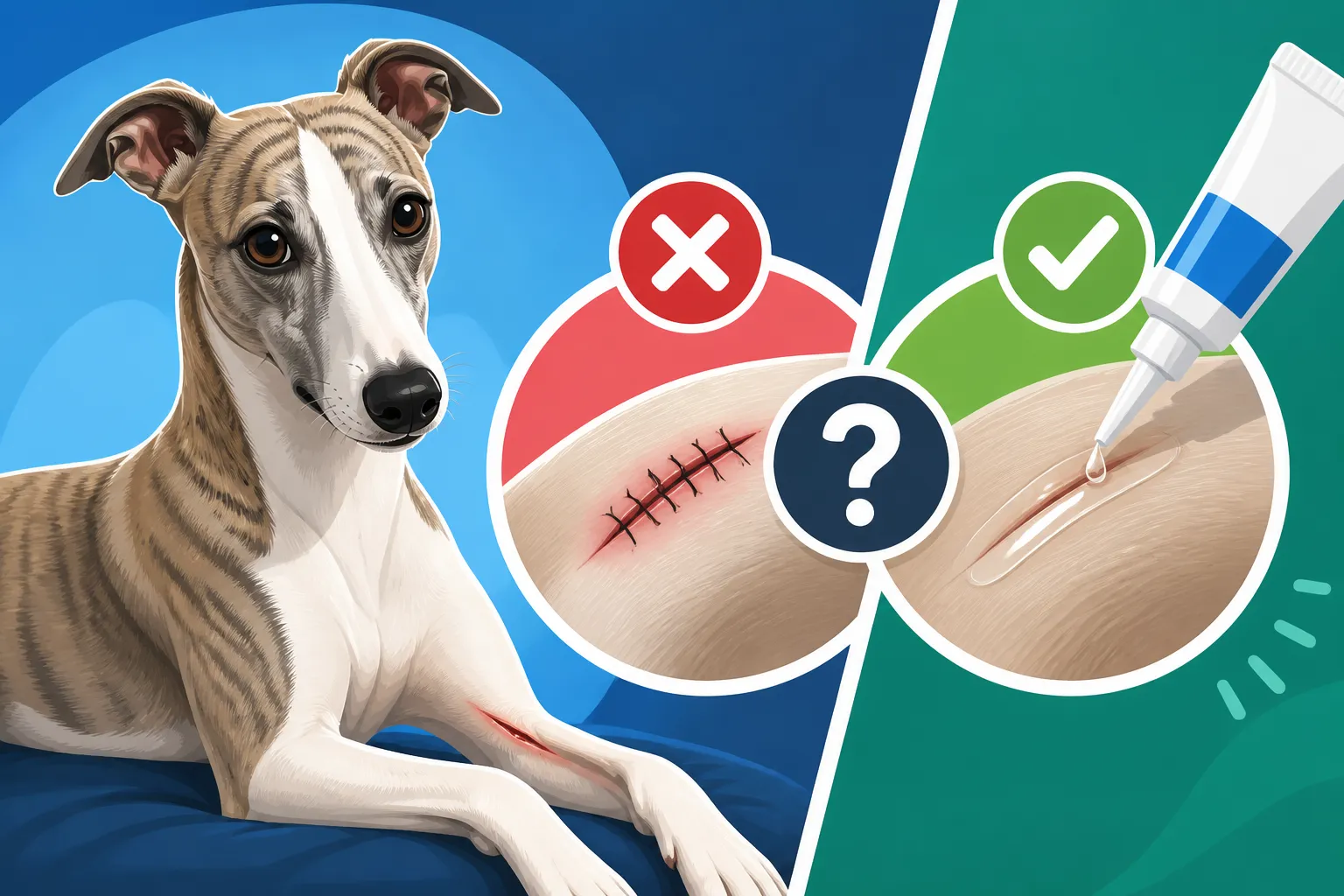
Skin glue, often called veterinary tissue adhesive or medical superglue, is best suited for a very specific type of wound. Think of those unfortunate shallow cuts, perhaps from catching a nail on something or a minor brush with a sharp edge.
Here’s what typically makes a wound a good candidate for glue:
- Clean and Fresh: The wound should be relatively new – ideally seen by a vet within hours of the injury – and free from dirt, debris, or any signs of infection. If it's been festering for a while or picked up grime, glue isn't going to seal it effectively or safely.
- Shallow and Superficial: We're talking about cuts that only affect the top layers of the skin, not those that penetrate deeply into muscle or expose fat. If you can see anything beyond the skin itself, glue is usually off the table.
- Straight Edges that Meet Easily: The wound edges should be clean-cut and able to be brought together without any significant tension or pulling. Imagine a neat slice rather than a jagged tear. The glue works by holding these edges together until the natural healing process can bridge the gap.
- Minimal Gaping: If the wound is wide open and gaping, it means there's too much tension for glue to hold it securely. Glue simply isn't strong enough to resist significant pulling forces.
- Located in Low-Movement Areas: A cut on a relatively flat, less mobile part of the body, like the side of the chest or a flank, might be a candidate. Areas around joints (knees, elbows, hocks) are usually too high-tension for glue to hold.
The primary advantage here is often a quicker, less invasive procedure. For a calm whippet with a small, clean cut, a vet might be able to apply glue without the need for sedation, which is always a bonus, especially given Why Anesthesia Is Riskier in a Whippet.
When Glue is Definitely NOT the Answer
While glue can be a fantastic tool, it's absolutely crucial to understand its limitations. Using glue inappropriately can lead to infection, delayed healing, or even more severe complications. Always, always consult your veterinarian. Never try to glue a wound at home with household superglue; this is entirely different and not sterile or designed for living tissue.
Here are scenarios where skin glue is generally not appropriate for a whippet's wound:
- Deep Lacerations: Any wound that goes through the skin layers into muscle, fat, or involves tendons or ligaments requires sutures. Glue simply won't provide the structural support needed for these deeper tissues to heal correctly.
- Contaminated or Infected Wounds: If a wound is dirty, has foreign material embedded in it, or shows any signs of infection (redness, swelling, pus), it needs thorough cleaning and likely antibiotics before closure. Gluing bacteria inside a wound is a recipe for disaster.
- Puncture Wounds or Bites: Puncture wounds, even if they look small on the surface, can be deep and trap bacteria. Bite wounds are notoriously prone to infection due to the bacteria from the other animal's mouth. These typically need to be cleaned thoroughly, and often left open to drain, or carefully stitched.
- Wounds Under High Tension: As mentioned, areas over joints or major muscle groups that move constantly are poor candidates. The glue won't withstand the constant stretching and will likely break down, leading to the wound reopening.
- Large Wounds or Wounds with Tissue Loss: If a significant amount of skin has been lost or the wound is extensive, glue cannot bring the edges together. Surgical closure, potentially with skin flaps, would be necessary.
- Crush Injuries: Wounds from crushing forces often have damaged tissue that needs to be removed before closure. Glue can't address this underlying trauma.
- Wounds with Bleeding: While minor oozing might be manageable, active bleeding needs to be controlled before any form of closure. Glue is not a hemostatic agent.
When in doubt, err on the side of caution and let your vet assess the situation. They have the expertise to determine the best course of action and can offer solutions like Treating a Whippet's Skin Tear with the right method.
The Pros and Cons of Skin Glue vs. Stitches for Whippets
Deciding between skin glue and stitches isn't always straightforward, even for a vet. Both methods have their place in wound care, and understanding their respective advantages and disadvantages can help you feel more informed, though the final decision rests with professional advice.
Advantages of Using Skin Glue
For the right type of whippet wound, skin glue offers some compelling benefits:
- Less Invasive Procedure: This is perhaps the biggest draw. For small, clean, superficial cuts, glue application is quick and usually doesn't require general anesthesia or even heavy sedation. This reduces risks, stress for your whippet, and often, the overall time spent at the veterinary clinic. Avoiding anesthesia is a huge plus for sighthounds generally, as Why a Whippet Needs a Sighthound Anesthesia Protocol highlights the specific considerations for their breed.
- No Stitch Removal: With glue, there's no follow-up appointment needed to remove stitches. The glue simply sloughs off as the skin heals, typically within 5-10 days. This saves you another trip to the vet and the potential stress for your dog of another procedure.
- Potentially Less Scarring: Because glue holds the skin edges together very precisely without piercing the skin, some argue it can result in a finer, less noticeable scar compared to stitches, which can sometimes leave tiny "railroad track" marks. For a whippet's thin skin, this can be a consideration.
- Quicker Application: Once the wound is prepped, applying glue takes mere moments, especially compared to the time it takes to meticulously place multiple stitches.
- Cost Efficiency (Sometimes): While we can't discuss specific prices, generally, a simple glue closure might be less expensive than a full suturing procedure, especially if sedation or follow-up stitch removal appointments are factored in. However, remember that Emergency Stitches: the Whippet Bill Nobody Budgets For can vary wildly, and the most cost-effective option is the one that leads to the best healing and prevents complications.
Disadvantages and Potential Risks of Skin Glue
It's not all sunshine and rainbows with skin glue, and being aware of the drawbacks is just as important.
- Not Suitable for All Wounds: As discussed, glue has strict criteria. Many whippet wounds, especially those deep or on mobile areas, simply aren't appropriate. For these, Whether a Whippet's Cut Always Needs Stitches often finds the answer is a resounding "yes."
- Less Secure Than Sutures: Stitches provide a much stronger, more reliable closure, especially for deeper wounds or those under tension. Glue relies on the wound edges staying perfectly aligned and still for the initial bond to form and hold.
- Risk of Re-opening: Because of the whippet's delicate skin and active nature, there's a higher chance of a glued wound breaking down or reopening if your dog is too active, bumps the area, or the glue simply doesn't hold as expected. If this happens, you're back to square one, possibly needing stitches anyway, or dealing with a more complicated, open wound.
- Proper Application is Crucial: The glue needs to be applied correctly to form a strong bond. If too much is used, or it's applied improperly, it can irritate the skin or not hold effectively. It's a skill, and why it's a veterinary procedure.
- Potential for Skin Irritation: While rare, some dogs can have a mild reaction to the glue itself, leading to redness or itching. If your whippet has particularly sensitive skin, this is a factor. Also, if the glue gets onto the surrounding fur or healthy skin, it can pull and be uncomfortable.
- Aftercare Still Essential: Just because there are no stitches doesn't mean you can slack off on aftercare. Protecting the wound from licking, dirt, and trauma is still paramount. Ignoring aftercare is a quick route to complications.
The Role of Veterinary Expertise
Ultimately, the choice between skin glue and stitches is a professional medical decision that should only be made by a qualified veterinarian after a thorough examination of the wound and consideration of your individual whippet's temperament and lifestyle. They'll assess the depth, location, cleanliness, and tension of the wound, and discuss the best approach with you. They might even opt for a combination of methods, or suggest alternative treatments like a pressure bandage or even just keeping the wound clean and letting it heal by secondary intention in some cases. Don't hesitate to ask questions and discuss your concerns about How Much a Whippet Skin Tear Costs to Close or What Sedation Adds to a Whippet's Wound Repair.
Aftercare for Glued Whippet Wounds
Whether your whippet's wound is glued or stitched, proper aftercare is absolutely critical for successful healing. For those delicate whippet bodies, a bit of extra vigilance can prevent a minor issue from becoming a major headache.
Keeping the Wound Clean and Dry
Once the veterinary tissue adhesive is applied, the most important thing you can do at home is to keep the wound site impeccably clean and perfectly dry. This sounds simple, but it can be a challenge with an active whippet!
- No Baths or Soaks: For at least 7-10 days, or as long as your vet advises, avoid bathing your whippet. The glue needs to stay dry to maintain its bond and prevent premature softening and dissolution. If the wound gets wet, the glue can break down, potentially reopening the wound and creating an entry point for bacteria.
- Gentle Cleaning (if recommended): Your vet might give you specific instructions for cleaning around the wound, perhaps with a dilute antiseptic solution or just warm water. If they do, always blot gently with a clean cloth, never rub. Avoid getting any solutions directly on the glue unless specifically instructed, as some can weaken it.
- Monitor for Debris: Keep an eye out for any dirt, grass, or other foreign material that might stick to the wound or the surrounding glued area. Gently remove it if possible, or contact your vet if it's stubborn.
- Protect from Moisture: If it's raining or damp outside, make sure your whippet wears a raincoat or a protective covering to keep the wound dry during potty breaks. Whether a Whippet Needs a Different Coat for Rain and Snow might suddenly become a very pertinent question! This is especially important for whippets who refuse to toilet in the rain, as they might be reluctant to go out, leading to accidents indoors and potentially compromising wound hygiene.
Preventing Re-Injury and Monitoring Healing
This is where your whippet's natural zest for life can work against the healing process. Whippets, even when injured, often have boundless energy, and their thin skin means re-injury is a constant risk.
- Activity Restriction: This is paramount. Your vet will likely advise strict leash walks only, no running, jumping, or rough play for a set period. This can be agonizing for both you and your whippet, who probably still wants to zoom around, but it's essential to prevent tension on the wound that could cause the glue to fail or stitches to pop.
- E-Collar or Protective Clothing: Your whippet will want to lick, chew, or scratch at the wound. This is natural but can lead to infection and tear the wound open. An Elizabethan collar (the "cone of shame") or an inflatable collar is often necessary. Alternatively, protective clothing like a soft surgical suit or a tight-fitting t-shirt over the wound can sometimes deter licking, provided it doesn't rub the area. Consider Whether a Whippet Should Wear a Cone After Stitches for more detail, as the principles apply to glued wounds too.
- Observe for Signs of Complication:
- Redness or Swelling: Some mild redness is normal in the early stages of healing, but excessive or increasing redness and swelling could indicate infection.
- Discharge: Any pus, foul odor, or excessive fluid coming from the wound is a red flag.
- Fever: Your whippet might seem lethargic, have a reduced appetite, or feel warm to the touch.
- Pain: Increased vocalization, limping (if applicable), or reluctance to be touched near the wound are signs of pain.
- Wound Breakdown: If the glue starts to lift, or the wound edges separate, contact your vet immediately. How Slowly a Whippet's Skin Heals can be frustrating, and any setback means a longer recovery.
Remember to keep your vet's contact information handy. If you notice any of these signs, don't wait. Early intervention can prevent minor issues from escalating. Having a well-stocked first aid kit, perhaps with items from Chewy, can be helpful for minor issues, but serious concerns always warrant professional attention. Insurance providers like Healthy Paws can certainly ease the financial burden if a complication arises and necessitates further veterinary care.
Caring for a whippet means being prepared for these little emergencies. While glue can be a fantastic, less invasive option for the right wound, it's never a substitute for veterinary assessment and diligent aftercare. Your commitment to following vet instructions will give your whippet the best chance at a swift and uneventful recovery.
| Feature | Skin Glue (Tissue Adhesive) | Traditional Stitches (Sutures) |
|---|---|---|
| Wound Type | Clean, shallow, fresh, straight-edged, low tension | Deep, gaping, irregular, high tension, infected (after cleaning) |
| Invasiveness | Less invasive, often no sedation needed | More invasive, often requires sedation or anesthesia |
| Application Time | Very quick | Longer, meticulous placement |
| Security | Less secure, prone to breakdown if tension/activity | More secure, stronger closure |
| Scarring | Potentially finer, less noticeable | Can leave "railroad track" marks, but generally good |
| Removal | No removal needed, dissolves naturally | Requires follow-up vet visit for removal |
| Aftercare | Must be kept dry, activity restricted, monitored | Must be kept dry, activity restricted, monitored |
| Licking Prevention | Essential (e-collar/clothing) | Essential (e-collar/clothing) |
| Cost | Potentially less expensive for simple cases | Generally more involved, potentially higher cost |
Disclaimer
This article is for general informational purposes only and does not constitute professional advice. Laws, prices and regulations vary by location and change over time. Consult a qualified professional for guidance on your specific situation.