Whether a Whippet Needs a Sighthound Collar
The moment your beloved Whippet slips out of their collar is enough to send shivers down any owner's spine. That split second of panic, watching them dart off with their unique speed and single-minded focus, is a nightmare scenario many of us have faced or constantly fear. This guide is all about tackling that very real problem, delving into why traditional collars often fail our long-necked friends and exploring the vital role a sighthound collar plays in keeping them safe and sound.
Understanding the Whippet's Unique Neck Anatomy
If you've spent any time around Whippets, you've probably noticed something immediately distinctive about their build: that elegant, long, and slender neck, coupled with a head that's often surprisingly narrow compared to the widest part of their neck. It's beautiful to behold, but it also presents a unique challenge for standard dog collars.
The Tapered Head and Neck Challenge
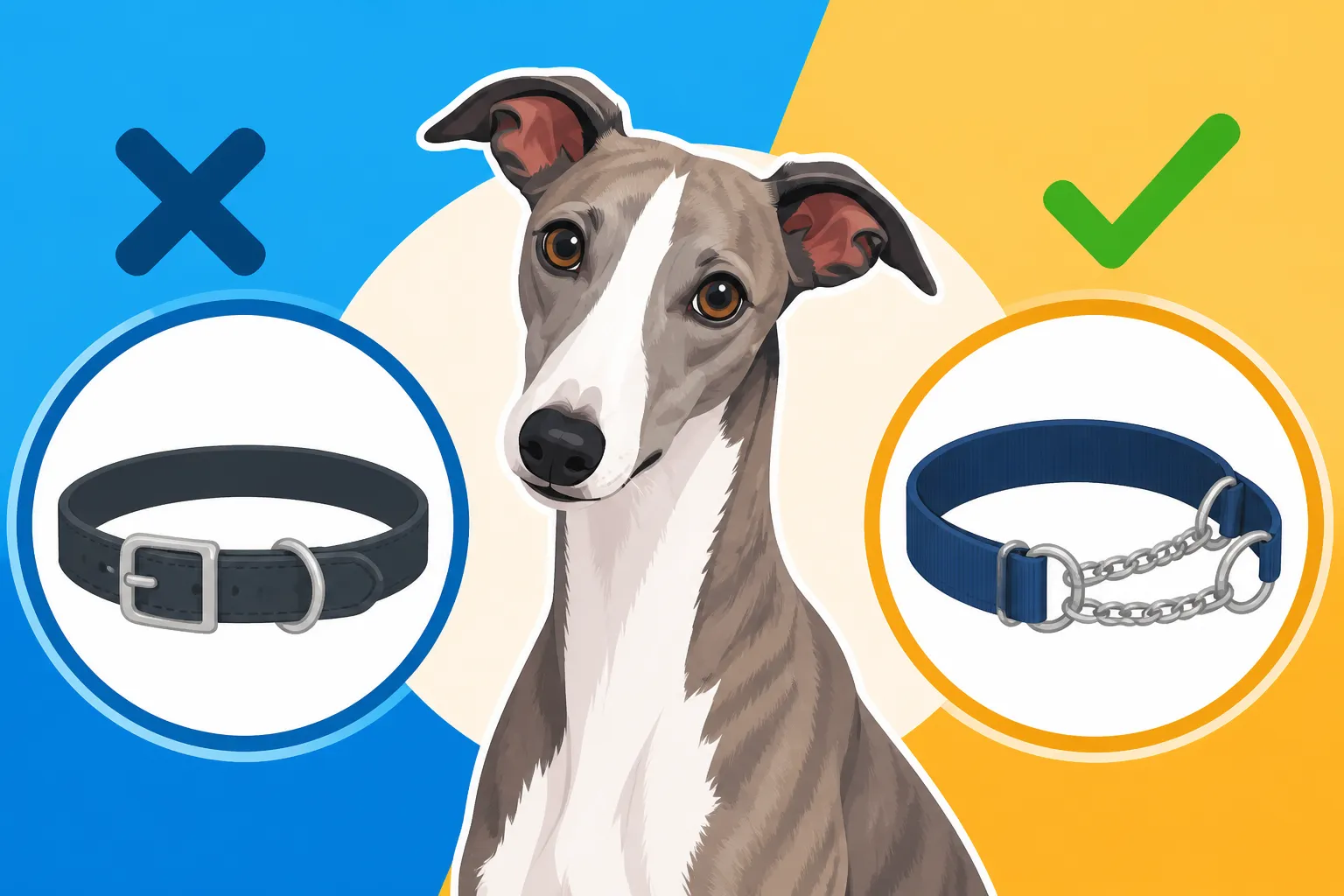
Unlike many other breeds with broad heads and thicker necks, a Whippet’s skull tapers significantly. Imagine drawing a sleek, aerodynamic line from their nose all the way down their neck – it’s designed for speed and flexibility, not for holding a standard collar firmly in place. This means that a flat buckle collar, which works perfectly for a Labrador or a bulldog, can quite literally slide right over a Whippet’s ears with minimal effort. They don't even have to try very hard; a quick shake, a sudden backing up, or a determined tug can see them free in an instant. This anatomical reality is why the common flat collar often disappoints and can be downright dangerous for our sensitive sighthound companions. It's a common frustration for owners who just want to take their dogs on a safe walk without constantly worrying about an escape act. Many an owner has learned this the hard way, often during an unexpected moment of excitement or fear. Why a Flat Collar Slides Off a Whippet's Neck goes into even more detail about this particular design flaw for the breed.
The Danger of a Slipping Collar
The consequences of a collar slipping off a Whippet can be devastating. We're talking about a dog breed that can hit speeds of up to 35 miles an hour in a flash, and their prey drive is legendary. That squirrel, rabbit, or even a blowing plastic bag can become an irresistible target, overriding all training in an instant. If their collar slips, they're not just going for a casual wander; they're in pursuit, often with no regard for traffic, other dogs, or any other hazards in their path. The panic of watching your Whippet disappear over the horizon, heading straight for a busy road, is a feeling no one wants to experience. Beyond the immediate physical dangers of being hit by a car or getting lost, there's the emotional trauma. A lost or injured Whippet can suffer immense stress, and even a near-miss can make a naturally shy or sensitive Whippet even more nervous and fearful on future walks. Their trust in you can be shaken, and rebuilding that confidence takes time and patience. It's why prevention, in this case, isn't just about convenience; it's about life and limb.
What Makes a Sighthound Collar Different?
Given the unique anatomy and swift nature of a Whippet, it becomes clear that a specialized collar isn't just a fancy accessory – it's often a necessity. This is where the sighthound collar, particularly the martingale style, truly shines.
The Martingale Design Explained
At its core, a sighthound collar, often a martingale, is ingeniously designed to prevent your Whippet from backing out of it. Instead of a single, fixed loop like a standard buckle collar, a martingale collar has two loops. The main loop goes around your dog's neck, and a smaller secondary loop, typically made of chain or fabric, connects the two ends of the main loop. When your Whippet pulls on the leash or tries to back out, the smaller loop tightens the larger loop gently and evenly around their neck, preventing escape without choking them. It's a "limited slip" action, meaning it tightens just enough to be secure, but no further. This is a crucial distinction from a choke chain, which can continue to tighten indefinitely and cause harm. A properly fitted martingale will tighten just until it's snug, stopping well before it causes any discomfort or damage. It provides that essential peace of mind, allowing you to focus on enjoying your walk rather than constantly checking if your dog is still securely leashed. To learn more about this specific type of collar, check out Whether a Whippet Needs a Martingale.
Width and Comfort for a Whippet's Neck
Another key feature that sets sighthound collars apart is their width. You'll notice that many sighthound collars are significantly wider than typical dog collars, especially across the front of the throat. This isn't just for aesthetics; it serves a vital functional purpose. Whippets have delicate tracheas and very little in the way of natural padding or fat around their necks, unlike breeds with thicker skin and more muscle. A Whippet Has No Insulation and No Padding really drives this point home when it comes to their overall body structure. A wider collar distributes pressure much more evenly across the neck, minimizing the risk of injury or discomfort to the trachea if your dog pulls. Imagine a thin string digging into your neck versus a broad scarf – the difference in comfort and safety is immense. This wider design is also just more comfortable for a Whippet. With their fine, short coats and lack of subcutaneous fat, rubbing from a narrow collar can quickly become irritating. The broad, often padded, design of a good sighthound collar ensures that even during moments of tension or excitement, your Whippet remains comfortable and protected.
When a Sighthound Collar is Essential (and When It's Not)
Deciding when and where to use a sighthound collar is just as important as understanding its design. While it's a fantastic tool for safety, it's not always the best choice for every situation.
Everyday Walks and Training
For everyday walks, especially in public areas, a sighthound collar is an absolute must for a Whippet. This is where the potential for escape is highest, whether due to a sudden prey sighting, an unexpected loud noise, or simply a moment of puppy exuberance. The security a martingale provides means you can walk with confidence, knowing that a quick tug on the leash won't result in a loose dog. This security is also invaluable during training. Whippets are intelligent and sensitive, but their prey drive can be incredibly powerful. Imagine trying to teach a "stay" or a "heel" when you're constantly worried your dog will back out of their collar if they see something tempting. A secure collar allows for clear, gentle communication with the leash, reinforcing good habits without the underlying anxiety of a potential escape. Thirty Five Miles an Hour and No Brakes on a Whippet's Recall really highlights how critical reliable equipment is when dealing with their speed and focus. Even the most well-trained Whippet can have a moment where instinct takes over, and a secure collar provides that essential safety net.
Special Considerations: Home and Play
While sighthound collars are vital for walks, they aren't always ideal for 24/7 wear, especially in the home. The extra loop of a martingale can potentially snag on furniture, crate bars, or even another dog during rough play, leading to injury. For identification purposes, if your Whippet must wear a collar indoors, a lightweight, flat buckle collar with ID tags is often a safer choice, provided it's used only when supervised and removed for play or when crated. When considering general pet supplies, checking retailers like Chewy can offer a wide range of options for both martingales and other types of collars, allowing you to pick the best for each specific need.
Harnesses are another alternative, especially for very young puppies or for activities like car travel where a seatbelt attachment is needed. However, be cautious with harnesses for Whippets; many designs allow them to easily back out, especially if they are fearful or determined. A badly fitting harness can also restrict their natural running stride, impacting their shoulder movement. For information on common harness issues with this breed, see The Harness a Whippet Backs Out Of. Ultimately, for most walking and training situations, the specialized sighthound collar remains the superior choice for security and comfort.
Choosing the Right Sighthound Collar for Your Whippet
With the understanding of why a sighthound collar is essential, the next step is choosing the right one for your individual Whippet. There are many options out there, and a little careful consideration can make a big difference in comfort and longevity.
Material and Durability
Sighthound collars come in a variety of materials, each with its own benefits. Nylon is a popular choice for its durability, ease of cleaning, and affordability. It's often weather-resistant and comes in a huge range of colors and patterns. Leather collars offer a classic, sophisticated look and tend to soften beautifully over time, molding to your Whippet's neck. However, leather requires more care and can be more susceptible to water damage. For special occasions or a touch of flair, you might find collars made from luxurious fabrics like velvet or brocade, often lined with satin for comfort.
Regardless of the material, pay close attention to the hardware. Look for strong, welded D-rings and sturdy buckles or sliders that won't easily bend or break. These small components are crucial for the overall safety and longevity of the collar. Investing in a well-made collar from a reputable brand ensures that it can withstand daily wear and tear and provide reliable security for years to come. Think of it as a key part of their overall wellness, much like choosing quality food from a brand like Ollie; the details matter for their health and happiness.
Sizing and Fit
Getting the correct size is paramount for a sighthound collar to function properly and comfortably. Here’s how to measure:
- Neck Measurement (Widest Part): Use a soft tape measure to measure the circumference of your Whippet's neck directly behind their ears, where the collar will naturally sit when tightened.
- Neck Measurement (Snuggest Part): Measure around the narrowest part of their neck, typically closer to the jawline.
- Head Measurement: Measure the circumference of their head at its widest point, usually around their ears and under their chin. This helps ensure the tightened martingale can't slip over their head.
A correctly fitted martingale should be snug enough when tightened that it cannot slip over their head, but loose enough when relaxed that you can easily fit two fingers under the main loop. When the control loop is fully tightened, the two metal slides (or fabric loops) on the main collar should not touch. There should still be a gap of at least two fingers between them. This ensures the collar is tightening correctly and not becoming a choke hazard. What a Martingale Collar for a Whippet Costs might also be helpful in understanding the value of proper sizing.
Alternatives and Supplements to a Sighthound Collar
While the sighthound collar is a staple, it's not the only piece of equipment you might use, nor does it replace the need for good training. For certain activities, a well-fitting harness can still be beneficial, particularly if your Whippet is prone to tracheal issues or for specific dog sports where a harness is required. Always choose a harness designed for sighthounds, or one with multiple adjustment points, to ensure a secure and comfortable fit that doesn't restrict their movement.
Crucially, no amount of specialized gear can fully compensate for a lack of training. Working on a solid Teaching a Whippet an Emergency Recall is invaluable, even if you never plan to let them off-leash. Positive reinforcement methods are highly effective with sensitive Whippets, building a strong bond and teaching them to respond to your cues, regardless of distractions. Understanding How a Whippet Reacts to a Raised Voice and How Quickly a Whippet Learns can help tailor your training approach to their unique temperament. Accidents can happen despite the best equipment and training, so having pet insurance from providers like Healthy Paws can also offer a vital safety net for unexpected vet bills related to slips or injuries. Remember, a comprehensive approach combines smart equipment choices with consistent, kind training and responsible ownership.
| Feature | Sighthound Collar (Martingale) | Standard Flat Collar | Harness (Sighthound-Specific) |
|---|---|---|---|
| Primary Use | Walking, training, preventing escapes | ID tags, minimal restraint | Car safety, specific sports, some walking |
| Security (Escape) | Excellent, prevents backing out securely | Poor, easily slips over head/neck | Good, if properly fitted to sighthound shape |
| Comfort | Good, wide design distributes pressure | Variable, can rub, less secure | Good, if allows full range of motion |
| Risk of Choking | Low, limited slip prevents excessive tightening | Low, but offers no escape prevention | Low, if fitted correctly |
| Pressure Distribution | Even across wider neck area | Concentrated on narrower neck area | Across chest and shoulders |
| Ideal For Whippets | Yes, highly recommended for walks | No, high escape risk for walks | Situational, ensure proper fit |
Disclaimer
This article is for general informational purposes only and does not constitute professional advice. Laws, prices and regulations vary by location and change over time. Consult a qualified professional for guidance on your specific situation.