Whether a Whippet Suits a Runner
A Whippet running companion requires matching pace and distance to the dog’s age, health, conditioning, and comfort.
Is this the right one for you?
Origins and temperament, size and coat, what living with one is actually like, and how it compares to the breeds people weigh against it.

A Whippet running companion requires matching pace and distance to the dog’s age, health, conditioning, and comfort.

A Whippet companion for a retired owner requires safe exercise, warmth, company, and plans for sudden illness.

Whippets and small children require careful household management and safe resting spaces to thrive together peacefully.
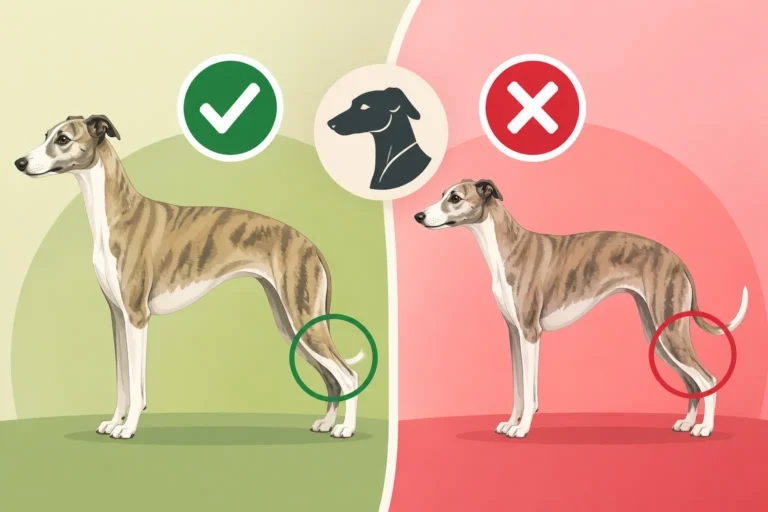
Whippet tail length explained through breed descriptions, how to assess carriage at home, and when vet attention is needed.

Whippet ear movement explains why rose-shaped ears stand up during alert moments, highlighting normal variation and health checks.

Whippet ear shape, normal variation, and rose ears are explained, helping readers identify what proper ear carriage looks like.

Whippet foot shape details oval paws with arched toes, firm pads, and how this structure supports running movement.

Whippet chest width, shoulder placement, and foreleg movement determine whether a narrow front outline is structurally correct.

A Whippet’s arched loin and spine mechanics explain how its physical structure affects running speed and stride.
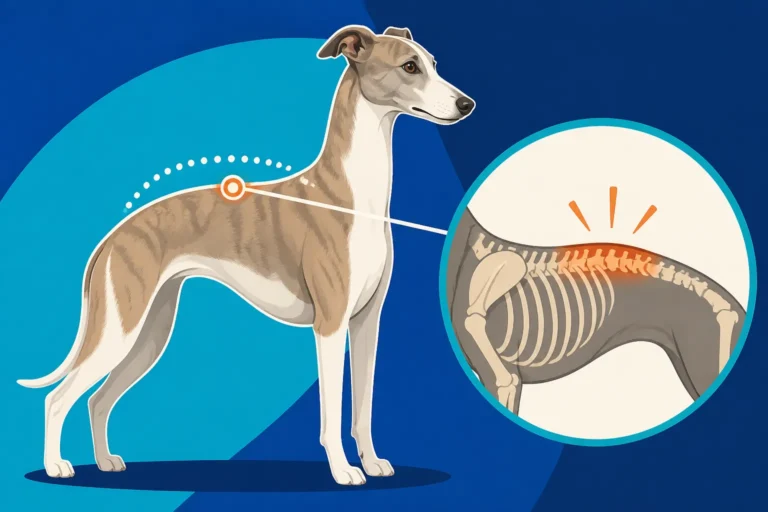
A Whippet arch begins where the rib cage ends and the loin starts, rising gradually into a smooth, balanced curve.