Why a Whippet’s Creatinine Runs High
It can be incredibly nerve-wracking to get bloodwork results back for your beloved Whippet, only to see a number like "creatinine" flagged as high. Your heart might sink, imagining all sorts of scary kidney problems, especially when your Whippet seems perfectly healthy, zooming around the yard one minute and curled up on the sofa the next. This guide is here to walk you through exactly why a Whippet's creatinine levels often appear elevated compared to other breeds, what's normal for them, and when you truly need to worry.
Understanding Creatinine: The Basics for Whippet Owners
When your vet runs blood tests, they're looking for a whole panel of markers that give insight into your dog's internal health. Creatinine is one of those key markers, and it's something many Whippet owners find themselves puzzling over. Let's demystify it a bit, so you feel more confident next time those lab results land in your inbox.
What Exactly is Creatinine?
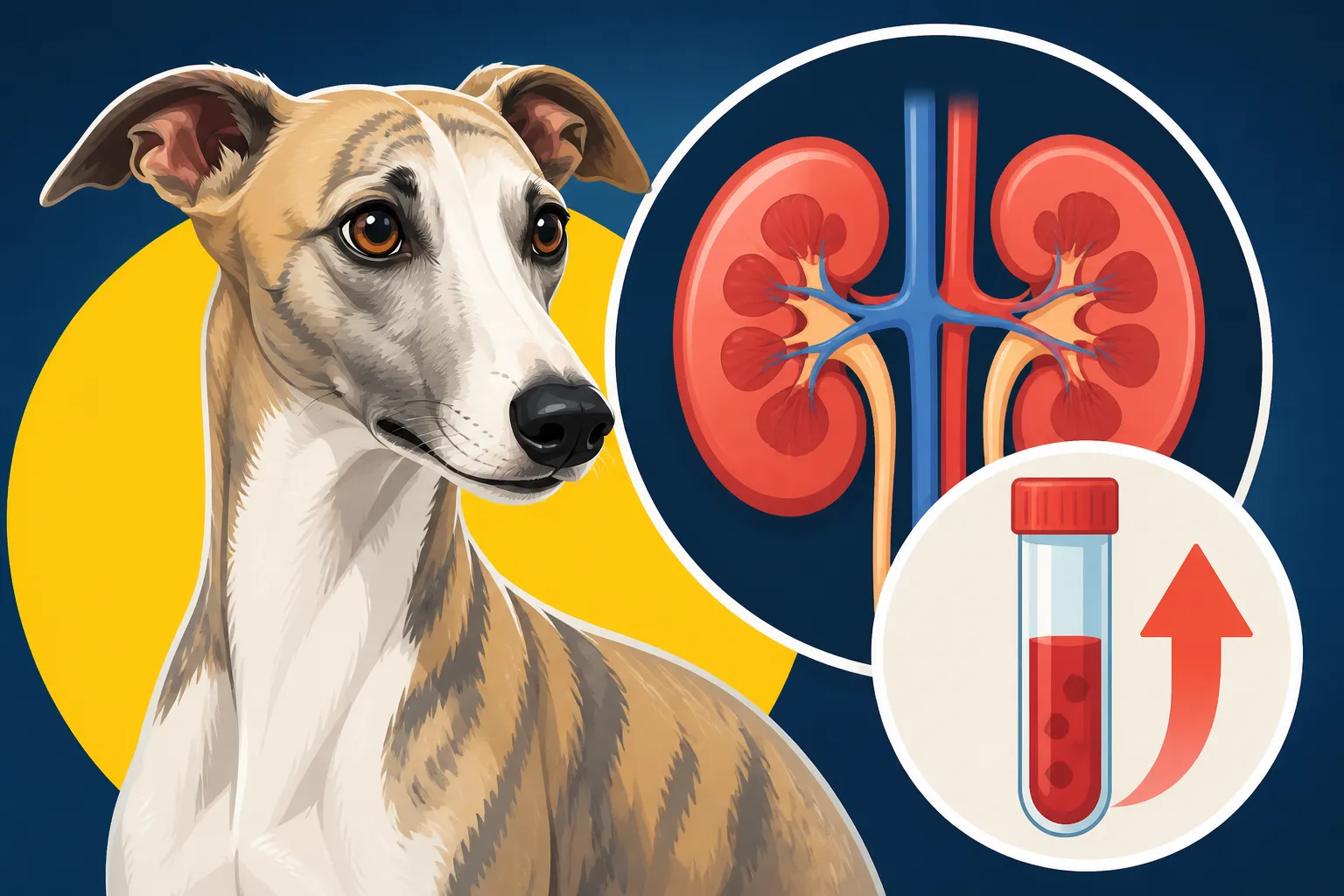
Creatinine is essentially a waste product that comes from the normal breakdown of creatine phosphate in muscle tissue. Our bodies, and our dogs' bodies, use creatine to provide energy to muscles for contraction. As creatine is used up, it converts into creatinine, which then enters the bloodstream. From there, it's the kidneys' job to filter this creatinine out of the blood and excrete it through urine. Because it's produced at a fairly constant rate (depending on muscle mass) and almost exclusively eliminated by the kidneys, creatinine levels are a super useful indicator of how well those kidneys are functioning. A high creatinine level can suggest that the kidneys aren't clearing waste effectively.
Why Vets Test Creatinine Levels
Vets rely on creatinine as a primary screening tool for kidney health. If kidneys aren't doing their job, waste products like creatinine build up in the blood. This accumulation can point to various issues, from dehydration to severe kidney disease. It's often tested alongside other markers like BUN (Blood Urea Nitrogen) and SDMA (Symmetric Dimethylarginine) to get a comprehensive picture of renal function. For most dogs, an elevated creatinine reading is a red flag that warrants further investigation, but this isn't always the case for our sleek, muscular Whippets.
The Unique Challenge of Whippets
Here's where the Whippet difference comes in. They are, by nature, athletic and incredibly lean, packed with dense muscle. This physical characteristic, which makes them such magnificent runners, also influences their baseline creatinine levels. If your vet isn't familiar with sighthound physiology, they might glance at a standard reference range and mistakenly flag your Whippet as having kidney issues. It's a common point of confusion and a source of unnecessary worry for many Whippet parents, especially when it feels like "The Bloodwork Numbers That Look Wrong on a Healthy Whippet" are a constant concern.
The Athletic Whippet: Why Their Muscles Influence Creatinine
It’s easy to look at a Whippet’s slim build and assume they don't have much muscle, but that couldn't be further from the truth. These dogs are finely tuned athletes, and their physiology is quite distinct, particularly when it comes to muscle mass and its impact on blood chemistry.
More Muscle, Higher Creatinine
Think of creatinine production as directly proportional to muscle mass. A heavily muscled dog naturally produces more creatinine through daily muscle metabolism than a less muscled dog of the same size. Whippets, despite their elegant appearance, are incredibly muscular. Their strong hindquarters, powerful chest, and overall athletic build mean they have a higher volume of lean muscle mass compared to many other breeds. This simply translates to more creatine phosphate breaking down and, consequently, higher baseline creatinine levels in their blood. It's not a sign of disease; it's a reflection of their incredible physique. This is a point often misunderstood, and why it's so important that your vet understands unique sighthound physiology. You might also notice that "Why a Whippet's Red Cell Count Runs High" is another area where their athletic nature impacts blood test results.
The "Lean Machine" Effect
Whippets are often called "lean machines" for a reason. They have very little body fat, especially compared to breeds with thicker coats or stockier builds. This low body fat percentage further accentuates their muscle mass. When you look at their body condition, you can often see a few ribs, their hip bones, and a prominent tuck-up, which is perfectly healthy. It signifies that their muscle is dense and efficient. Because there's less fat to cushion or "hide" the muscle, its contribution to creatinine levels becomes even more pronounced. It's just how they're built – efficient, fast, and powerful. Trying to put extra weight on a Whippet, beyond what's healthy for its athletic frame, isn't beneficial and won't change this fundamental physiological reality.
Exercise and Creatinine Spikes
Have you ever noticed your Whippet has bursts of incredible energy, sprinting at top speeds before collapsing into a deep nap? That intense, short-burst exercise can also temporarily elevate creatinine levels. When muscles work hard, they burn through creatine phosphate at a faster rate, leading to a temporary increase in creatinine production. If bloodwork is done shortly after a vigorous run, a lure coursing event, or even an exciting play session, those creatinine numbers might be slightly higher than usual. It's a transient elevation, not indicative of kidney disease, but rather a reflection of recent muscle activity. If you know your Whippet is due for bloodwork, it might be worth scheduling their last energetic sprint a day or two before the vet visit to ensure the most accurate baseline readings possible.
Here's a quick comparison of average creatinine ranges:
| Breed Type | Typical Creatinine Range (mg/dL) | Considerations for Whippets |
|---|---|---|
| Most Dog Breeds | 0.5 – 1.5 | Standard reference range, often used as a general guide. |
| Sighthounds (e.g., Whippets) | 0.8 – 2.0+ | Naturally higher due to increased muscle mass; often requires breed-specific interpretation. |
| Kidney Disease (Any Breed) | > 2.0+ (often significantly higher) | Coupled with other symptoms and blood markers like BUN and SDMA. |
Note: These ranges are approximate and can vary slightly between laboratories. Always consult your veterinarian for specific interpretation of your dog's results.
Normal vs. Concerning: When to Worry About High Creatinine in Whippets
The key to interpreting your Whippet's creatinine levels is understanding what's "normal for a Whippet" versus what would be genuinely concerning for kidney health. This often requires a vet who truly understands sighthound physiology.
Sighthound Reference Ranges
This is perhaps the most critical piece of information for any Whippet owner: Many standard veterinary lab reference ranges for creatinine are based on a broad population of dog breeds, not specifically on sighthounds. As we've discussed, Whippets have higher muscle mass, which naturally leads to higher baseline creatinine. What might be considered mildly elevated or "borderline high" for a typical Labrador Retriever could be perfectly normal for a healthy Whippet.
Some veterinary laboratories, particularly those specializing in sighthound health, now offer breed-specific reference ranges. If your vet uses a lab that provides these, it can save a lot of unnecessary worry. If not, it's crucial for your vet to be aware of this physiological quirk. Don't be afraid to ask your vet if they are familiar with sighthound bloodwork values, or if "Whether a Whippet Needs a Vet Who Knows Sighthounds" is a question you've pondered, this is one of those times it truly matters. A knowledgeable vet will consider a Whippet's creatinine in the context of its breed and other diagnostic markers.
Beyond the Number: Other Kidney Indicators
While creatinine is a vital indicator, it's rarely the only one your vet should consider when evaluating kidney health. A truly accurate assessment requires looking at the bigger picture, especially for a Whippet.
- BUN (Blood Urea Nitrogen): Like creatinine, BUN is a waste product filtered by the kidneys. High BUN combined with high creatinine is more indicative of kidney dysfunction. However, BUN can also be affected by diet (high protein), gastrointestinal bleeding, or dehydration.
- SDMA (Symmetric Dimethylarginine): This is a newer, more sensitive kidney biomarker that can detect kidney disease earlier than creatinine alone, sometimes even before 75% of kidney function is lost. SDMA is less influenced by muscle mass, making it a particularly valuable test for muscular breeds like Whippets. If your Whippet's creatinine is a bit high but their SDMA is normal, it leans heavily towards a healthy, muscular dog rather than kidney disease.
- Urinalysis: This simple test provides immense information about kidney function, including urine specific gravity (how concentrated the urine is), presence of protein, glucose, or abnormal cells. A diluted urine specific gravity (meaning the urine isn't concentrated enough) along with high creatinine and BUN is a strong indicator of kidney disease. If your Whippet's urine is appropriately concentrated (typically above 1.030), even with slightly elevated creatinine, it suggests their kidneys are likely doing their job well.
- Physical Exam and Hydration: A thorough physical exam and assessing your Whippet's hydration status are also crucial. A dehydrated dog can have temporarily high creatinine and BUN.
The presence of clinical signs of illness, such as increased thirst and urination, lethargy, vomiting, or poor appetite, combined with elevated bloodwork, is far more concerning than an isolated high creatinine reading in an otherwise healthy Whippet.
When to Seek a Second Opinion
If your veterinarian is concerned about your Whippet's elevated creatinine but doesn't seem to be considering breed-specific norms, or if they recommend invasive and costly treatments based solely on a slightly elevated creatinine without other confirming markers, it's absolutely okay to seek a second opinion. Many Whippet owners have experienced this initial scare, only to find peace of mind with a sighthound-savvy vet who understands that "Whether a Whippet Needs Sighthound Reference Ranges" is not just a preference, but a necessity. You might also want to consult with a veterinary internal medicine specialist who has a deeper understanding of complex cases and breed variations. It’s about being an advocate for your unique dog and ensuring they get care tailored to their specific needs.
Beyond Muscle: Other Factors Affecting Creatinine Levels
While a Whippet's muscle mass is the primary reason for their typically higher creatinine levels, there are other factors that can influence these readings. Understanding these can help you and your vet interpret results more accurately.
Dehydration: A Quick Fix
One of the most common non-kidney-related reasons for elevated creatinine (and BUN) is dehydration. If your Whippet hasn't had enough water to drink, or if they've recently been vomiting or had diarrhea, their blood becomes more concentrated. This means that even if their kidneys are functioning perfectly, the higher concentration of waste products in a smaller volume of blood will result in higher readings.
Symptoms of dehydration can include dry, tacky gums, sunken eyes, and decreased skin elasticity (when you gently pull up the skin on their back, it should snap back quickly). If dehydration is suspected, your vet might recommend administering fluids, and then re-testing the bloodwork once your Whippet is properly hydrated. Often, this simple intervention brings the numbers right back into a healthy range. Adequate hydration is important for all aspects of a Whippet's health, impacting everything from energy levels to joint health.
Dietary Influence
What your Whippet eats can also have an impact on their creatinine and BUN levels, though typically less dramatically than muscle mass or dehydration. Diets very high in protein, for example, can lead to slightly elevated BUN levels. Since creatinine is a byproduct of muscle metabolism, and protein intake supports muscle growth and repair, a consistently high-protein diet might contribute to a slightly higher baseline.
Most commercial dog foods are formulated to provide appropriate protein levels for active dogs. For a Whippet that sprints and then sleeps, their diet usually doesn't need to be overly specialized unless there are specific health concerns. However, if your Whippet is on a performance diet or a particularly high-protein raw diet, it's something to discuss with your vet. They can help you determine if the diet might be influencing the results and if any adjustments are necessary, though for most healthy Whippets, dietary changes aren't the primary solution to a high creatinine reading. When considering "Feeding a Whippet That Sprints and Then Sleeps," ensure their diet supports their athletic needs without overdoing it on any single nutrient.
Lab Errors and Sample Handling
It's an uncomfortable truth, but sometimes, laboratory errors or improper sample handling can lead to inaccurate bloodwork results. This isn't common, but it can happen. For instance:
- Hemolysis: If a blood sample is collected roughly, it can cause red blood cells to break open (hemolysis), which can interfere with certain test results.
- Contamination: Improper collection or handling can lead to contamination of the sample.
- Delayed Processing: If a sample isn't processed quickly enough or stored correctly, certain values can change.
If your Whippet's bloodwork shows unexpectedly high creatinine levels, especially if it contradicts their otherwise robust health and lack of symptoms, it's perfectly reasonable to ask for a re-test. Sometimes, repeating the test at a different lab or with fresh blood can yield different, more accurate results. This is especially true if you had "Whether a Whippet Needs Pre Anesthetic Bloodwork" done and the results seemed off before a procedure. It’s always best to be cautious and confirm, rather than jump to conclusions based on a single potentially flawed result. Remember, your Whippet relies on you to be their advocate! If you have pet insurance like Healthy Paws, make sure you understand what tests and re-tests are covered, should you need them.
In conclusion, while a high creatinine reading on your Whippet's bloodwork can be alarming, it's often a normal physiological characteristic of this wonderfully athletic breed. Always ensure your veterinarian is aware of sighthound-specific blood values, and don't hesitate to ask for a comprehensive evaluation that includes other kidney markers and a thorough physical exam. A healthy, happy Whippet with slightly elevated creatinine is typically just showing off their magnificent muscle!
Disclaimer
This article is intended for informational purposes only and does not constitute veterinary advice. Always consult with a qualified veterinarian for any health concerns or before making any decisions about your pet's medical care.