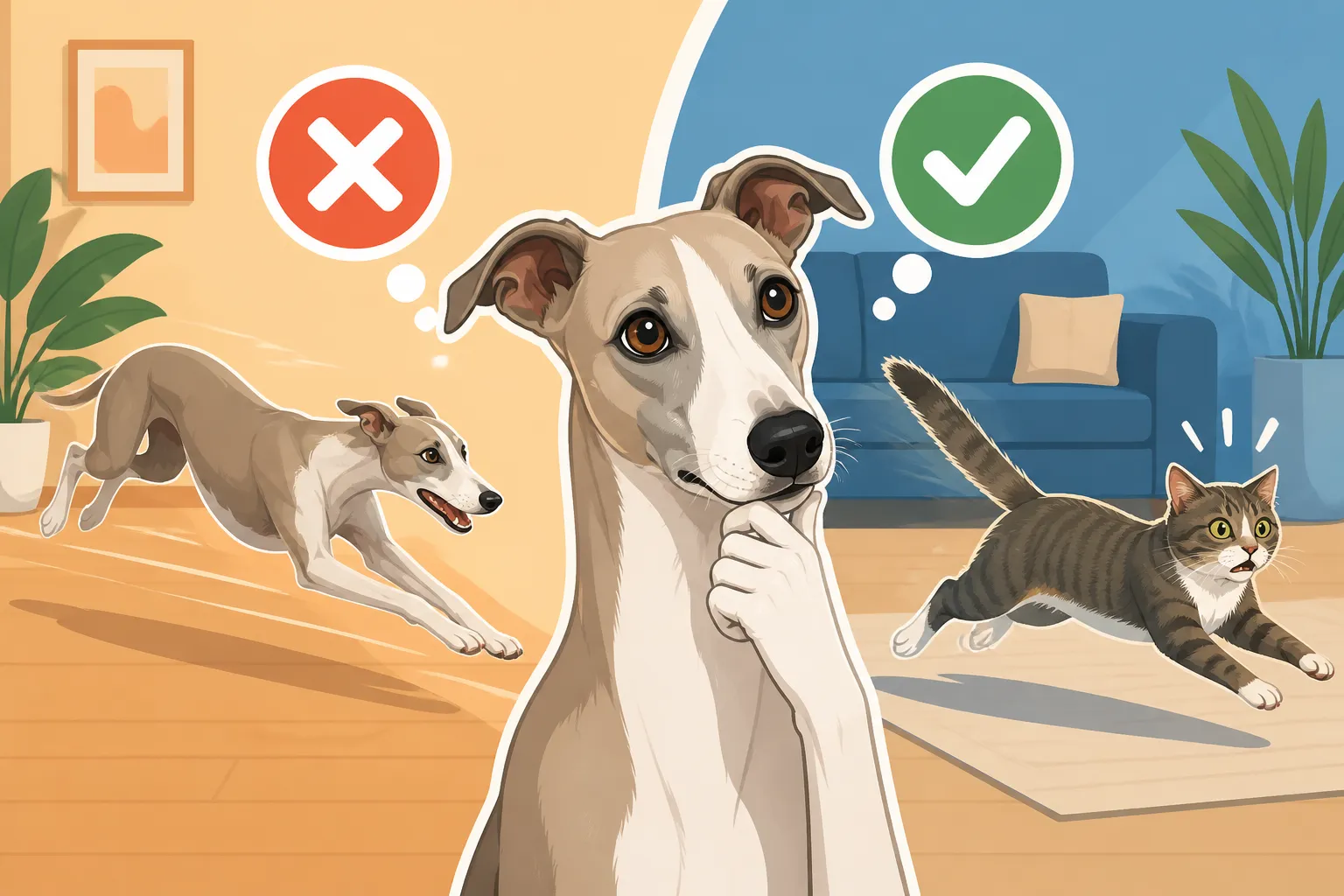
Whether a Whippet Chases the Cat Indoors
It’s a common scenario that keeps many potential Whippet owners up at night: you’ve fallen in love with the elegance and gentle nature of a Whippet, but you already share your home with a beloved feline. The thought of a sighthound’s legendary prey drive interacting with your cat can be truly daunting, conjuring images of frantic chases and stressed-out pets. This guide is here to tackle that very real anxiety head-on, exploring whether a Whippet will chase your cat indoors, the nuances that influence their interactions, and most importantly, how to foster a peaceful, multi-species household.
Understanding the Whippet's Instinctual Drive
Let's start with the elephant in the room – or rather, the swift, sleek sighthound in the living room. Whippets are, at their core, hunting dogs bred for speed and sight. Their entire physique, from their deep chest to their flexible spine and keen eyes, is designed to spot, chase, and capture small, fast-moving prey. This isn't a behavior they choose; it's deeply ingrained instinct. When a Whippet sees something small and moving quickly, particularly if it's darting away, that powerful prey drive kicks in. It’s not malice, it’s biology.
Many new Whippet owners mistakenly believe that because their dog is sweet and cuddly indoors, this instinct can simply be reasoned away or that their particular Whippet won't have it. This is a dangerous assumption. While individual temperaments vary, the fundamental drive is almost always present to some degree. For a sighthound, a sudden movement from a small animal, like a cat streaking across the floor, can flip a switch. It's an automatic response, often happening before the dog even "thinks" about it. This is precisely Why a Whippet's Chase Instinct Overrides Its Recall in outdoor settings, and it applies indoors too, albeit with different risks.
The indoor context significantly changes the dynamic. Outside, a chased rabbit might escape into a burrow, or a squirrel up a tree. Inside, your cat doesn't have endless open fields or tall trees. They're confined to your living space, which can quickly become a high-stakes arena if the Whippet's chase drive is unchecked. A cat running from one room to another, jumping onto furniture, or even just flicking its tail can trigger that instinct. The danger isn't necessarily that the Whippet wants to harm the cat in a predatory way (though that can happen in extreme cases), but that the sheer speed and intensity of the chase can lead to accidents, injuries, or severe stress for the cat, making your home a battleground rather than a haven. It's vital to recognize that this is a powerful, primal urge, and managing it is about careful planning and consistent training, not just hoping for the best.
Factors Influencing Whippet-Cat Dynamics Indoors
The potential for a Whippet to chase a cat isn't a simple yes or no answer; it's a complex interplay of several factors, some within your control and others requiring careful management. Understanding these variables is key to assessing your specific situation and developing an effective integration strategy.
The Power of Early Socialization and Exposure
This is, without a doubt, one of the most significant influences. A Whippet puppy raised from a very young age with cats often learns to view them as part of the family, not as prey. The critical window for socialization in dogs is generally before 16 weeks. During this time, positive, supervised exposure to various sights, sounds, people, and other animals, including cats, can help shape their perception. If a Whippet puppy grows up seeing cats as housemates, engaging in calm interactions, and learning that chasing is not allowed, they are far more likely to coexist peacefully.
Think of it like this: if a tiny Whippet puppy snuggles with the resident cat from day one, those early positive associations can be incredibly strong. The cat becomes "normal" — just another creature sharing the sofa. This is why when you're Introducing a Whippet Puppy to a Resident Cat, it’s often a smoother process than later in life. However, even with early exposure, constant supervision and gentle guidance are still necessary to ensure safe boundaries are established and respected by both parties.
Individual Temperament of Both Pets
Just like people, dogs and cats have unique personalities. Some Whippets are naturally more mellow, less driven by prey instinct, and more inclined to be gentle. Others, even with the best socialization, might possess a higher innate drive. Similarly, cats vary wildly. A bold, confident cat who stands their ground, perhaps even swatting a curious puppy on the nose (gently, of course!), can often teach a young Whippet better manners than any human could. This kind of interaction, where How a Cat Teaches a Whippet Manners, can be invaluable. A terrified cat, on the other hand, who constantly flees, inadvertently reinforces the chase behavior, making the Whippet-cat relationship much harder to manage.
Consider your cat's history. Is your cat a seasoned veteran of living with dogs, or are they a timid rescue who’s never encountered a canine? Similarly, what do you know about your Whippet's individual personality? Are they easily excited, or do they have a more relaxed demeanor? These individual characteristics will profoundly impact how they interact and how you should approach their integration.
The Cat's Behavior: Running Triggers Chasing
It sounds obvious, but it's worth stating clearly: a cat that runs is almost always more likely to be chased. The movement itself is the primary trigger for a sighthound. If your cat is prone to darting, playing chase games with other cats, or panicking and bolting when startled, this will present a significant challenge. A cat that walks calmly, ignores the dog, or even holds its ground, is far less likely to activate the Whippet's chase response.
This doesn't mean it's the cat's "fault" if they are chased, but understanding this dynamic is crucial for prevention. Your goal will be to minimize opportunities for the cat to run in front of the Whippet, especially during initial introductions or when the Whippet is particularly excited. This could involve managing their paths, using barriers, or ensuring the cat has elevated escape routes.
Home Environment and Management
The physical layout of your home plays a critical role. A small, open-plan apartment with nowhere for the cat to escape or get vertical will be much more challenging than a larger house with multiple rooms, cat trees, and shelves. Cats thrive on vertical space; it makes them feel safe and allows them to observe their environment from a secure vantage point.
Adequate management also means ensuring that essential resources (food, water, litter boxes, beds) are placed in areas accessible only to the cat. This prevents any potential resource guarding issues and gives the cat a sense of security and ownership over their personal spaces. A thoughtful home setup can significantly reduce stress for both animals and prevent unwanted interactions.
Strategies for Successful Whippet-Cat Integration
Bringing a Whippet and a cat together, especially if they haven't grown up with each other, requires patience, foresight, and a consistent strategy. This isn't a quick fix, but a gradual process built on positive reinforcement and smart management.
Controlled Introductions: Slow and Steady Wins the Race
Never, ever just throw a Whippet and a cat into a room together and hope for the best. This is a recipe for disaster. Successful integration relies on a slow, structured introduction process.
- Scent Swapping: Before they even see each other, let them get used to each other's scent. Rub a cloth on your cat and put it near your Whippet's bed, and vice-versa. This helps them learn about each other in a non-threatening way.
- Visual but No Contact: Use baby gates or crates to allow them to see each other without direct interaction. This could be feeding them on opposite sides of a gate, letting them observe each other while the Whippet is leashed or crated, or even through a glass door if you have one. Keep these sessions short and positive, rewarding calm behavior from both animals. For effective and sturdy baby gates, many options are available on Amazon that can help create these safe visual boundaries.
- Supervised Short Sessions: Once they're comfortable with visual contact, introduce them in the same room, but with the Whippet on a leash and muzzle (if necessary, especially for an adult with a strong prey drive). Keep these sessions very short, just a few minutes. Reward the Whippet for ignoring the cat or for calm, gentle curiosity. If the cat approaches, praise both. If the Whippet shows any inclination to chase or fixate, calmly redirect them away. End on a positive note, even if it's just a moment of calm.
This process can take weeks or even months. Do not rush it. The goal is to build positive associations, not to force friendship.
Creating Safe Zones and Vertical Space for the Cat
Cats need to feel secure in their own territory. This means providing plenty of escape routes and vertical spaces where the Whippet cannot reach them.
- Cat Trees and Shelves: Invest in tall cat trees, wall-mounted shelves, or cat-friendly furniture that allows your feline friend to survey their domain from above. This is crucial for their sense of security.
- Baby Gates: Strategically place baby gates to restrict the Whippet's access to certain "cat-only" rooms, like where the litter boxes and food bowls are. Ensure the gates allow the cat to slip through or jump over, but block the dog.
- High Perches: Clear off bookshelves or window sills for cat perches. The more options your cat has to get away and feel safe, the less stressed they will be, and the less likely they are to engage in fear-induced running that triggers the Whippet.
A truly harmonious home means both pets have spaces where they feel completely secure and undisturbed.
Channeling the Whippet's Prey Drive Through Enrichment
Your Whippet’s prey drive isn't going to disappear, so it's essential to give them appropriate outlets for it. This can actually strengthen your bond with your Whippet and reduce their inclination to view your cat as a fun chase object.
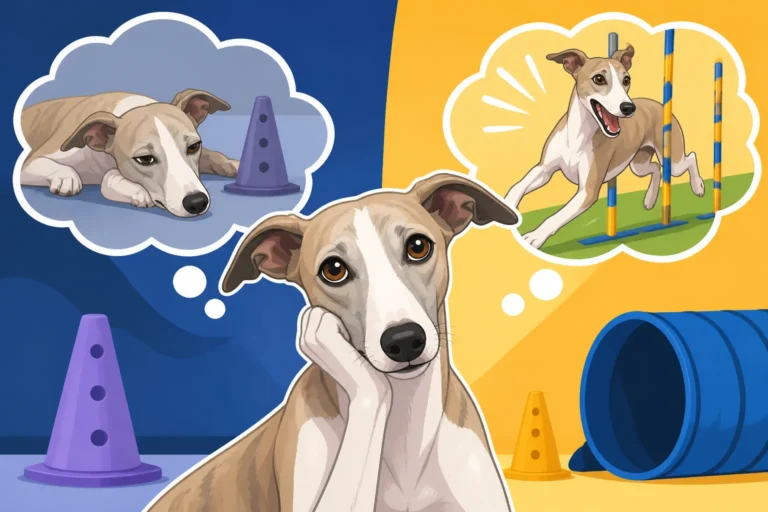
- Lure Coursing and Fast CAT: These activities are tailor-made for sighthounds! Lure coursing involves chasing an artificial lure across a field, mimicking the hunt. Fast CAT is a timed 100-yard dash. Both allow your Whippet to engage their natural instincts safely and productively. It's an incredible way to channel their immense speed and drive, leaving them physically and mentally satisfied. You can learn more about these exciting sports in posts like How Lure Coursing Channels a Whippet's Drive and Whether Fast CAT Suits a Whippet.
- Interactive Toys: Use toys that mimic prey movement, like flirt poles, but only for supervised play outside or in a dedicated area away from the cat. Puzzle toys can also provide mental stimulation.
- Plenty of Exercise: A tired Whippet is a good Whippet. Ensure your dog gets adequate exercise appropriate for their age and physical condition. While they are couch potatoes indoors, they do need regular opportunities for a good sprint in a safely enclosed area. Consider places Where a Whippet Can Safely Run Off Leash if available, such as a fully fenced dog park (only if safe with other dogs) or a private yard.
Training and Management: Building a Foundation of Control
Even with careful introductions and enrichment, solid training is indispensable.
- "Leave It" Command: This command is your absolute best friend. Teach your Whippet to disengage from anything you ask them to, including staring at the cat. Practice it diligently with various distractions.
- Strong Recall (Indoors): While outdoor recall can be tricky for sighthounds, an emergency recall indoors is vital. Practice calling your Whippet away from the cat and rewarding them generously. A great resource for positive reinforcement training, including recall, can be found through online puppy programs like BAXTER & Bella, which focus on building a strong foundation and communication with your dog.
- Leash Management: During early stages, even indoors, keeping your Whippet on a light leash attached to you can provide immediate control and prevent any unwanted chase attempts.
- Reward Calmness: Actively seek out moments when your Whippet is calm around the cat or ignoring them. Lavishly praise and reward this behavior. You want them to associate the cat's presence with good things. Remember, How a Whippet Reacts to a Raised Voice is often with sensitivity, so positive reinforcement is always the best approach.
Preventing Resource Guarding
Ensure that all valuable resources are managed separately to avoid any conflict between your Whippet and cat.
- Separate Feeding: Feed your pets in different rooms or at different times. Cats' food bowls should be in high places or behind a cat-only gate.
- High-Value Treats and Toys: Give high-value items when the animals are separated. This prevents any tension over prized possessions.
- Sleeping Areas: Ensure both animals have their own comfortable, undisturbed sleeping spots. Whippets love to burrow under blankets, and cats love warm, quiet perches.
By meticulously managing resources, you remove a common source of friction and allow each pet to feel secure in their ownership.
When Things Go Wrong and Ensuring Safety
Despite your best efforts, sometimes interactions don't go as planned. It's crucial to know how to recognize warning signs, intervene safely, and understand when professional help is necessary to maintain a safe home for everyone.
Recognizing Warning Signs
Being observant is your first line of defense. Both your Whippet and your cat will give off signals that indicate their comfort level and potential for conflict.
For your Whippet, look for:
- Fixation: Intense staring at the cat, often with a stiff body, ears forward, and a low, still tail. This is a strong indicator that their prey drive is activating.
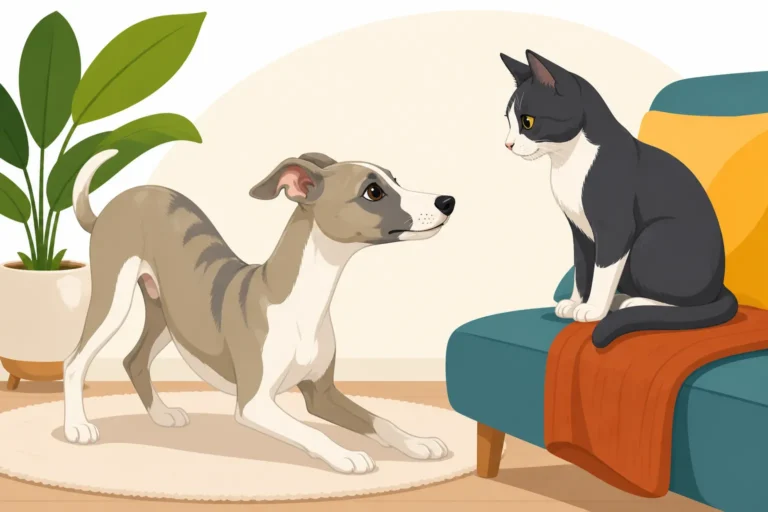
- Stalking Behavior: Crouching low, moving slowly and deliberately towards the cat, as if preparing to pounce.
- Whining or Whimpering: Can indicate excitement that might escalate into a chase.
- Ignoring Commands: If your Whippet is so focused on the cat that they are unresponsive to your voice or commands, this is a red flag.
For your cat, look for:
- Hissing or Spitting: Clear signs of fear, anger, or feeling threatened.
- Arched Back and Puffed Tail: A classic defensive posture indicating extreme fear.
- Flattened Ears: Signifies apprehension or aggression.
- Constant Hiding: If your cat is spending all their time hiding, it's a clear sign of stress and fear, even if overt chases aren't happening.
Any of these signs mean you need to immediately and calmly intervene to de-escalate the situation.
Intervention and De-escalation
If you see warning signs or an actual chase unfolds, you need to intervene safely and effectively.
- Avoid Yelling or Panicking: Your stress will only amplify theirs. Stay calm and speak in a low, reassuring voice. Remember How a Whippet Reacts to a Raised Voice is often by shutting down or becoming more anxious, which isn't helpful.
- Use Verbal Cues: If your Whippet knows "leave it" or "come," use those commands calmly.
- Physical Interruption: If verbal cues fail, you might need to physically separate them. Do not grab the dog by the scruff or put your hands between them if they are actively engaged. Instead, step in front of the Whippet, use a body block, or gently guide them away with their leash.
- Noise Interruption: A loud clap or a sudden, sharp noise (like shaking a can of coins, used sparingly and not as punishment) can sometimes break the Whippet's focus long enough for you to intervene.
- Provide an Escape: Ensure the cat has a clear route to safety, ideally an elevated spot or another room they can access.
The goal is to stop the unwanted behavior without adding further stress or making either animal associate your presence with punishment related to the other pet.
When Professional Help Is Needed
Sometimes, despite all your efforts, the situation might not improve, or it might even worsen. This is not a failure on your part, but an indication that you need specialized assistance.
- Certified Professional Dog Trainer or Behaviorist: Seek out a trainer or behaviorist who specializes in positive reinforcement and inter-species integration. They can assess your specific situation, observe your pets' interactions, and develop a tailored plan. They can also help you hone your own training skills, particularly for crucial commands like Teaching a Whippet an Emergency Recall.
- Veterinary Consultation: Rule out any underlying medical issues that might be contributing to stress or behavioral changes in either your Whippet or your cat. A vet can also offer advice on managing anxiety if either animal is highly stressed.
Don't hesitate to seek professional guidance. It can make all the difference in achieving a peaceful multi-pet household.
Long-Term Management: Accepting Limitations
The reality is that some Whippets and cats may never become best friends, and that's perfectly okay. The goal is coexistence, not necessarily cuddles. You might need to accept a long-term management strategy that includes:
- Never Leaving Them Unsupervised: If there's any doubt about their safety together, do not leave them alone. Use crates, baby gates, or separate rooms when you're not actively supervising.
- Dedicated Time for Each Pet: Ensure both your Whippet and your cat receive individual attention and playtime. This reduces jealousy and helps them feel secure in their place in your family.
- Consistency is Key: Everyone in the household must be on the same page regarding rules and management strategies. Inconsistency will confuse your pets and undermine your efforts.
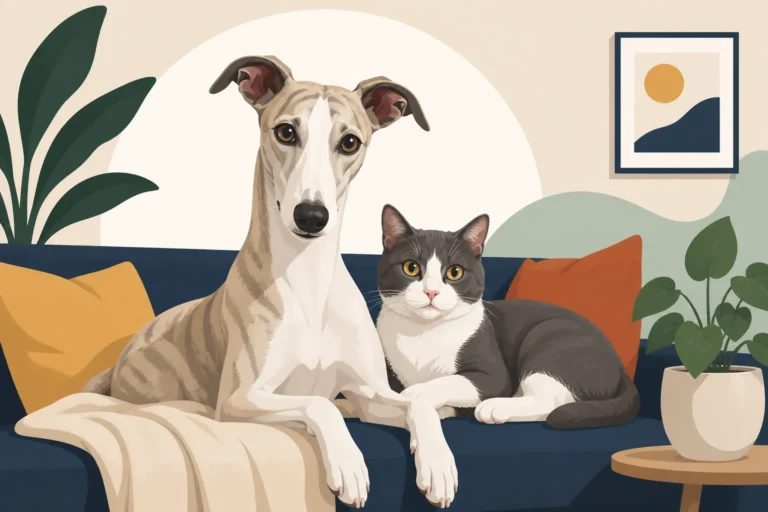
Remember, a happy household where everyone feels safe and loved is the ultimate goal. For a deeper look into the possibilities, consider exploring Living With a Whippet and a Cat as a source of further practical advice. Sometimes, even with every precaution, the inherent nature of the animals means a level of careful management will always be necessary.
This table provides a quick overview of key factors and strategies for successful Whippet-cat integration:
| Factor | Impact on Whippet-Cat Integration | Management Strategy |
|---|---|---|
| Whippet Age at Introduction | Younger puppies generally adapt better | Introduce early, supervise constantly |
| Cat's Personality | Confident/assertive cats often deter chases | Provide escape routes, reward cat's confidence |
| Whippet's Prey Drive | High drive needs careful management | Channel through activities (lure coursing), positive reinforcement |
| Home Environment | Small spaces increase tension, limited escape routes | Vertical spaces, baby gates, separate rooms |
| Owner's Consistency | Inconsistent rules lead to confusion | Clear boundaries, consistent training, constant supervision |
Ultimately, whether a Whippet chases a cat indoors depends heavily on individual circumstances, but with thoughtful planning, consistent training, and proactive management, many Whippets and cats can learn to live together, if not in harmony, then at least in peace.
Disclaimer
This article is for general informational purposes only and does not constitute professional advice. Laws, prices and regulations vary by location and change over time. Consult a qualified professional for guidance on your specific situation.