How Often a Whippet Owner Replaces a Bed
If you're a Whippet owner, you've probably faced the perplexing question of how often you should be replacing your dog's bed. It's a common dilemma – sometimes it feels like they last forever, and other times a new bed barely survives a few months of enthusiastic nesting or, let's be honest, vigorous destruction. This guide will walk you through the realities of Whippet bed ownership, helping you understand the factors that influence bed longevity and when it’s truly time for a refresh.
Why Whippet Beds Seem to Have a Short Life Span (Sometimes!)
Let's face it, Whippets are unique creatures. They might be sleek and delicate on the outside, but when it comes to their comfort, they can be surprisingly demanding – and sometimes, destructive. Their specific needs and natural behaviors often dictate how quickly a bed wears out, far more than with other breeds.
The Inherent Need for Comfort and Warmth
Whippets, with their famously thin skin and minimal body fat, are practically designed to seek out the softest, warmest spots in your home. This isn't just a preference; it's a survival instinct. They lack the natural insulation that many other breeds possess, meaning they can get cold easily, even indoors. This inherent need for comfort often translates into a lot of "nesting" behavior – digging, circling, and burrowing into their beds to create the perfect, cozy cocoon.
Think about it: your Whippet isn't just flopping down; they're meticulously arranging their space, often with their strong front paws. This constant manipulation puts a surprising amount of strain on a bed's fabric and internal stuffing. It's not malicious destruction, but rather an intense pursuit of warmth and security. The thinner the fabric or the less dense the stuffing, the quicker it will succumb to this daily ritual. This also means that beds that start off fluffy can quickly flatten out, losing their insulating properties and becoming uncomfortable, which then prompts more digging as your Whippet tries to fluff them back up. For more on this, you might find our article A Whippet Has No Insulation and No Padding quite insightful.
Whippet-Specific Wear and Tear Patterns
Beyond the nesting, Whippets also exhibit certain behaviors that contribute to wear and tear. One common issue is their tendency to "dig" at a bed before settling down. While some dogs just do a few turns, a Whippet might engage in a full-on excavation, especially if the bed isn't meeting their comfort criteria. This digging, often with sharp nails, can tear through softer fabrics in no time. I've seen countless beds with small rips that inevitably expand into gaping holes, all thanks to a determined Whippet trying to get just the right "fluff" level.
Then there's the sheer joy of a good stretch. Whippets love to splay out, and their long, lean bodies can put pressure on seams and edges, especially if they're trying to fit into a bed that's just a tad too small for their magnificent full stretch. Over time, these pressures can cause seams to burst or fabric to fray. And let's not forget the occasional happy "zoomie" that ends with a dramatic, sliding dive onto the bed, testing its durability to the max. If you’ve ever wondered Whether a Whippet Digs and Destroys Bedding, the answer is often a resounding yes!
Factors Influencing How Often You'll Replace a Whippet Bed
There's no one-size-fits-all answer to how often you'll need a new bed, because so many things play into it. Understanding these factors can help you make more informed decisions and perhaps even prolong the life of your current setup.
The Age and Activity Level of Your Whippet
A young Whippet puppy is a whirlwind of energy, curiosity, and often, chewing. During their teething phase, anything can become a chew toy, and a soft, inviting bed is often a prime target. Pups might rip, shred, or even ingest bits of their bedding, which is not only destructive to the bed but potentially dangerous for them. For these little land sharks, you might find yourself replacing beds or at least significant portions of them, quite frequently in the first year.
As your Whippet matures, the intense chewing usually subsides, but their activity level still matters. A Whippet that regularly races, lure courses, or just enjoys vigorous sprints in the yard will likely put more strain on their beds. They're jumping on and off, collapsing with a thud after a run, and generally using their beds with more gusto than a more sedate companion. An older Whippet, particularly one with arthritis or other mobility issues, might seem less destructive, but their need for consistent, pressure-relieving support means that a flattened or worn bed will need replacing sooner to prevent discomfort or The Pressure Sores a Whippet Gets From Sleeping on the Floor. They might not chew it to bits, but a saggy, unsupportive bed is just as useless to them.
Bed Quality, Design, and Materials
This is perhaps the biggest factor in bed longevity. A cheap, flimsy bed from a discount store might seem like a good deal initially, but it often has thin fabric, low-density stuffing that flattens quickly, and weak seams. These beds are usually designed for occasional light use, not the daily, intense nesting of a Whippet. You'll likely find yourself replacing these every few months.
On the other hand, investing in a high-quality bed, perhaps from reputable pet retailers like Chewy, can make a huge difference. Look for beds with:
- Durable Outer Fabrics: Think heavy-duty canvas, microsuede, or even some ballistic nylons if your Whippet is a serious destroyer. These resist tears and snags much better.
- High-Density Internal Fillings: Memory foam or orthopedic foam maintains its shape and support much longer than loose fiberfill. If it's fiberfill, look for channeled or baffled designs that prevent clumping.
- Reinforced Seams: Double-stitched seams are much harder for a determined digger or chewer to break through.
- Removable, Washable Covers: This isn't just about hygiene; it means you can wash the cover regularly without washing the entire bed, which can break down internal materials over time.
A well-constructed bed with quality materials can last anywhere from 2-5 years, or even longer, assuming no catastrophic chewing incidents. You might be interested in What a Whippet Bed Should Be Made Of for more details on material choices.
Number of Whippets and Household Traffic
It probably goes without saying, but if you have multiple Whippets sharing beds or constantly vying for the "best spot," the wear and tear will multiply. More dogs mean more digging, more shifting, more hair, and more general use. What might last two years for a single Whippet could only last one or even six months with a pair of them.
Also consider the bed's location. A bed tucked away in a quiet corner might last longer than one placed in a high-traffic area, like a hallway or living room where people are constantly stepping over it or bumping into it. The more interaction the bed has with both pets and people, the quicker it will show signs of wear. Sometimes the bed itself becomes a play item, dragged around during a game of chase, or used as a launchpad for zoomies. All these scenarios reduce the overall lifespan of the bedding.
Types of Whippet Beds and Their Expected Lifespan
The market is flooded with dog beds, and it can be overwhelming to choose. Knowing the general lifespan and characteristics of different types can help you decide where to invest your money.
Traditional Soft Beds and Cushions
These are your standard, pillow-style dog beds, often filled with poly-fiberfill or shredded foam. They're typically the most affordable upfront.
- Pros: Generally soft and inviting, easy to move, wide variety of colors and patterns.
- Cons: The stuffing often clumps and flattens quickly, losing its support and insulation. Fabrics can be thin and easily torn. They absorb odors readily.
- Expected Lifespan: 6 months to 2 years. For a Whippet that really digs, this might be on the shorter end. You'll likely notice it flattening out within a few months, becoming more like a glorified mat than a supportive bed. This type of bed is probably what you're replacing most often because it simply loses its comfort and shape.
Orthopedic and Memory Foam Beds
These beds are designed with dense foam layers, often similar to human mattresses, providing superior support. They're a fantastic choice for Whippets, especially as they get older or for dogs prone to pressure sores.
- Pros: Excellent joint support, maintains shape and loft, often comes with durable, washable covers. Can alleviate pressure points for a bony Whippet.
- Cons: Higher initial cost, can be heavier and less portable than soft beds. Some cheaper versions might have less dense foam that degrades faster.
- Expected Lifespan: 2 to 5+ years. A good quality memory foam bed is an investment, but it pays off in durability and consistent comfort for your Whippet. The foam itself will break down eventually, becoming less springy, but it takes significantly longer than fiberfill. If you're looking for lasting comfort, these are often the way to go.
Bolster Beds and Cave Beds
Bolster beds feature raised edges that provide a sense of security and a place for your Whippet to rest their head. Cave beds, or "snuggle beds," have a hooded top where your Whippet can burrow completely, which is absolute heaven for many Sighthounds.
- Pros: Meets a Whippet's natural desire to nest and feel secure. Bolsters provide good head and neck support. Cave beds offer ultimate warmth. Many Whippets absolutely adore the feeling of being completely tucked away.
- Cons: Bolsters can flatten or collapse over time, losing their shape. Cave bed hoods can lose their stiffness, making them harder for your dog to get into. The outer fabric can still be prone to digging damage.
- Expected Lifespan: 1 to 3 years. The bolsters or hooded elements are often filled with fiberfill and thus can wear out faster than the main sleeping surface, especially if your Whippet leans heavily on them. For many Whippets, a bolster bed is a dream, and you might even consider Whether a Whippet Needs a Bolster Bed.
Elevated Beds (Cot Style)
These beds lift your Whippet off the floor, usually with a sturdy frame and a fabric mesh sleeping surface.
- Pros: Excellent for airflow, keeping your Whippet cool in summer. Very durable, often chew-resistant, and incredibly easy to clean. Good for dogs who dislike soft, plush surfaces or who get too hot.
- Cons: Not inherently soft or cozy, so many Whippets might prefer additional padding or a blanket. Doesn't offer the burrowing comfort some Whippets crave.
- Expected Lifespan: 3 to 5+ years. The frames are usually very long-lasting, and the mesh fabric is designed for durability. You might replace the mesh cover if it tears, but the frame itself should last a very long time. However, for many Whippets, who love to burrow and snuggle, this might not be their first choice unless you add significant cushioning on top.
Here's a quick comparison to help visualize:
| Bed Type | Typical Lifespan | Primary Benefit for Whippets | Common Reasons for Replacement | How to Maximize Life |
|---|---|---|---|---|
| Traditional Soft Bed | 6 months – 2 years | Initial softness, affordability | Flattening, clumping, tearing | Use durable covers, regular fluffing |
| Orthopedic/Memory Foam | 2-5+ years | Joint support, sustained comfort | Foam degradation, cover wear | Rotate regularly, protect with extra covers |
| Bolster Bed | 1-3 years | Security, headrest, nesting comfort | Bolster collapse, fabric tears | Choose dense bolsters, reinforce seams |
| Cave/Snuggle Bed | 1-3 years | Ultimate warmth, burrowing satisfaction | Hood collapse, interior flattening | Wash gently, use a sturdy frame if possible |
| Elevated Cot | 3-5+ years | Airflow, easy cleaning, chew-resistant | Mesh tearing, frame damage (rare) | Add soft toppers for comfort, keep mesh taut |
Maximizing Bed Life and Knowing When to Truly Replace
Replacing a dog bed can be an unexpected expense, especially if it happens often. Thankfully, there are strategies you can employ to make your Whippet's beds last longer, and clear signs that indicate when a replacement is truly necessary.
Strategies for Extending the Life of Your Whippet's Beds
- Invest in Quality from the Start: This can't be stressed enough. While the upfront cost is higher, a well-made bed with durable materials and good internal support will almost always outlast several cheaper alternatives. It's often more economical in the long run. Retailers like Chewy often carry a good selection of robust, quality beds.
- Use Multiple Beds and Rotate Them: Having more than one bed, strategically placed around your home, means no single bed bears the brunt of all your Whippet's daily use. Rotate them periodically, giving each bed a break and time to air out. This also allows you to wash covers more thoroughly without your Whippet being without a cozy spot.
- Protective Covers and Liners: Many high-quality beds come with removable, washable covers. But for added protection, especially against digging or accidents, consider adding an extra, heavy-duty cover or even a waterproof liner underneath. Old blankets or throws can also serve as a barrier, catching dirt and fur, and giving your Whippet something "extra" to nest into.
- Regular Cleaning and Maintenance: Frequent washing of removable covers is essential not only for hygiene but also to prevent odors from setting in, which can sometimes encourage further destructive behaviors if a dog is trying to "clean" a stinky spot. Follow washing instructions carefully to preserve the fabric and any waterproof qualities. For the inner cushion, regular vacuuming and spot cleaning can keep it fresh.
- Address Destructive Behaviors: If your Whippet is genuinely chewing or shredding beds out of boredom or anxiety, simply replacing the bed won't solve the underlying issue. Ensure they're getting enough mental and physical stimulation. Interactive toys, puzzle feeders, and consistent training can help. For anxious chewers, discussing options with your vet or a professional trainer might be beneficial. If chewing is a constant battle, and you're worried about your Whippet ingesting foreign materials, having pet insurance like Healthy Paws can be a real lifeline for unexpected vet bills. You may also find our discussion on Whether a Whippet Needs a Coat Indoors relevant, as adequate warmth can sometimes reduce excessive nesting.
When a Bed is Beyond Repair and Needs Replacement
Sometimes, despite your best efforts, a bed simply reaches the end of its functional life. Knowing these signs can prevent your Whippet from suffering discomfort or even health issues.
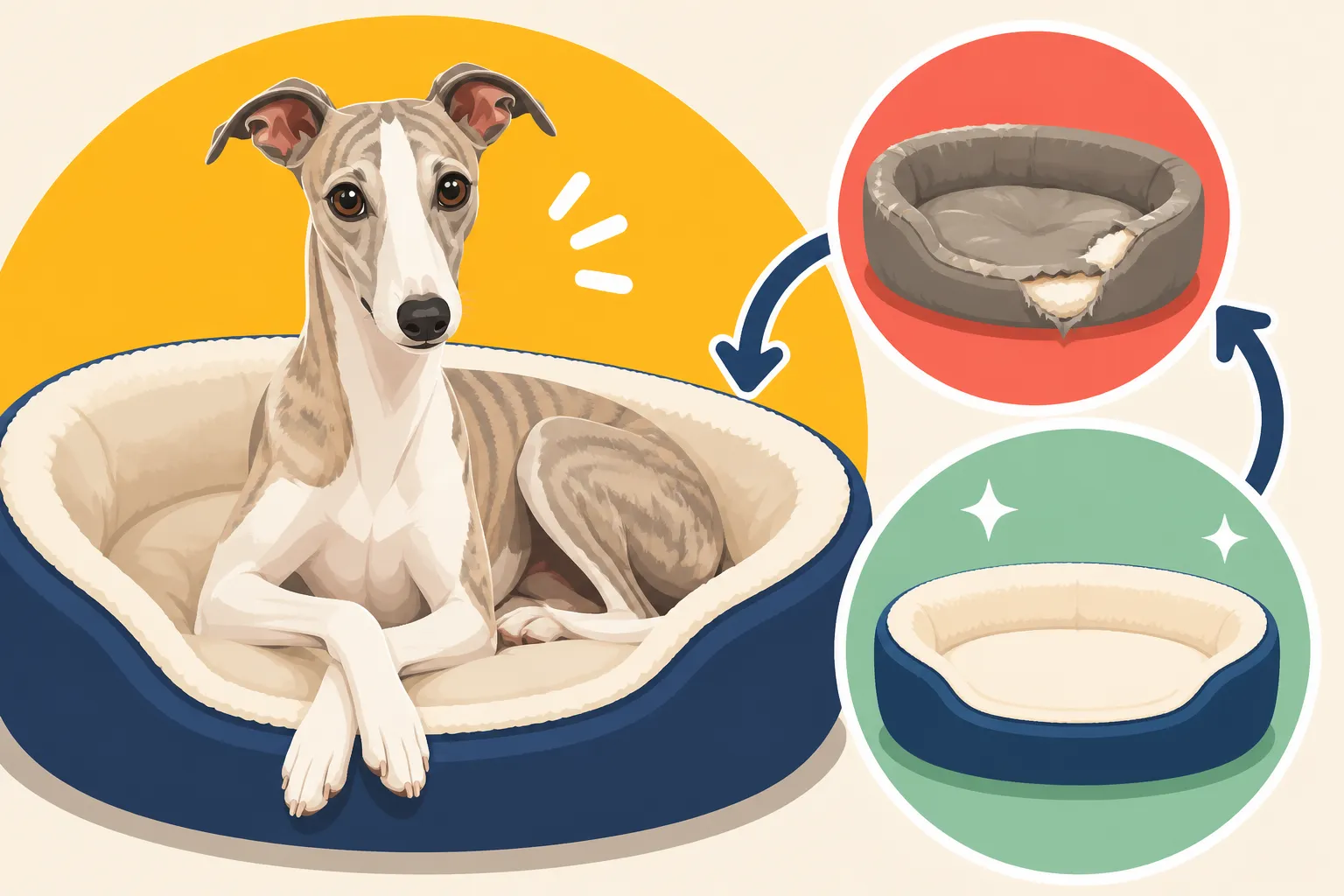
- Irreparable Flattening or Lumping: If the bed's stuffing is so compressed that it offers no cushioning, or has clumped into hard, uncomfortable lumps, it's time for a new one. This is especially critical for Whippets, whose bony joints need proper padding to prevent pressure sores. An old, flat bed offers no support and can actually be worse than sleeping on the floor.
- Major Tears or Exposed Stuffing: While small tears can often be patched, large rips that expose the internal stuffing are problematic. Not only does it make the bed less comfortable, but it creates a choking hazard if your Whippet ingests the filling. If your Whippet is a "picker" and starts pulling out stuffing, it's definitely time to replace it.
- Lingering Odors or Stains: Despite regular cleaning, some beds just hold onto smells, especially after repeated accidents. If you can't get the bed clean and fresh anymore, it's often a sign that bacteria have permeated the inner materials. For hygienic reasons and your own nose, a new bed is the answer.
- Structural Damage to Bolsters or Frames: If a bolster has completely collapsed and offers no support, or if an elevated bed's frame is bent or broken, the bed is no longer serving its purpose. These kinds of structural failures compromise both comfort and safety.
- Your Whippet Avoids It: This is perhaps the clearest sign from your dog. If your Whippet consistently chooses the hard floor, the sofa, or your bed over their own, it's likely they find their bed uncomfortable. Pay attention to their cues; they're usually pretty clear about what they like and dislike. Sometimes, even subtle changes in behavior, like increased restlessness at night, can indicate discomfort with their sleeping arrangements.
- Health Considerations: For older Whippets or those with orthopedic issues, the support a bed provides is paramount. If their current bed no longer offers adequate cushioning for their joints or eases arthritis (When a Whippet Gets Arthritis), then a new, possibly more specialized, orthopedic bed is a necessity, not a luxury. Even ensuring a high-quality diet, like the fresh meal options from Ollie, contributes to overall health which impacts their comfort needs.
Ultimately, the frequency of bed replacement for your Whippet is a blend of their individual habits, the quality of the beds you choose, and your vigilance in maintaining them. Paying attention to your Whippet's comfort and the condition of their beds will ensure they always have a warm, safe, and supportive place to rest their elegant heads.
Disclaimer
This article is for general informational purposes only and does not constitute professional advice. Laws, prices and regulations vary by location and change over time. Consult a qualified professional for guidance on your specific situation.