Whether Padding a Crate Prevents Whippet Sores
It's truly heartbreaking for any whippet owner to discover those tell-tale red, calloused, or even raw patches on their beloved dog's elbows, hocks, or hips. You try so hard to provide comfort and care, and yet these persistent pressure sores can crop up, often despite your best efforts. This guide aims to tackle that specific problem head-on, exploring how proper crate padding is not just a luxury, but a vital preventative measure, and what other steps you can take to keep your whippet's delicate skin happy and healthy.
The Unique Vulnerability of a Whippet's Skin and Bones
Let's be honest, whippets are built for speed and elegance, not for cushioning against hard surfaces. Their sleek, athletic frames, while beautiful, come with a distinct set of challenges when it comes to everyday comfort and preventing skin issues. Understanding why they're so prone to these problems is the first step in effective prevention.
Why Whippets Are Prone to Pressure Sores
Unlike many other breeds, whippets possess very little natural fat or muscle padding over their prominent bony areas. Think about it – when you feel along your whippet's back, you can count the vertebrae. Run your hand over their hips or elbows, and you feel bone right beneath the skin. This isn't a sign of being underweight; it's simply their natural sighthound physiology. This lack of natural insulation means that when they lie down, especially for extended periods, the full weight of their body presses directly on these bony points.
Imagine lying on a concrete floor yourself; you'd quickly feel discomfort where your hips, elbows, or shoulder blades meet the hard ground. For a whippet, this pressure is intensified due to their minimal natural cushioning. Over time, this constant pressure restricts blood flow to the skin and underlying tissues, leading to cell damage, thickening, and eventually, the formation of those unsightly and often painful pressure sores or calluses. It's not a reflection on your care; it's just how they're built. We talk more about this in A Whippet Has No Insulation and No Padding.
Common Areas for Pressure Sores
These pressure points aren't random; they're predictably found where bone is closest to the surface. You'll most commonly see them on the elbows, where the dog's front legs meet the ground when lying down. The hocks, or ankles, of their rear legs are another prime target. Hips, particularly the prominent bony points of the pelvis, can also develop issues, especially in dogs who favor lying on their sides. And let's not forget the sternum or breastbone; if your whippet loves to sphinx-pose, resting with their chest flat on the ground, this area can also become affected.
Initially, these might appear as thickened, rough patches of skin, often darker in color than the surrounding fur. The fur might even thin or disappear entirely from the affected area, leaving bald spots. If the pressure continues and isn't addressed, these calluses can become dry, cracked, and sometimes even ulcerated or infected, leading to painful open wounds. It's much easier to prevent them than to treat them once they've become problematic. Where a Whippet Develops Pressure Calluses dives deeper into these specific problem areas.
Beyond the Skin: The Risk of Deeper Issues
While we often focus on the visible skin sores, it's important to remember that prolonged and unrelieved pressure can affect more than just the surface. Underneath those calluses, the muscle and connective tissues can also be impacted. This isn't just a cosmetic problem; it can lead to chronic discomfort, pain, and even lameness if the deeper structures become inflamed or damaged.
For an older whippet, or one with existing orthopedic issues like arthritis, these pressure points can exacerbate their overall pain and reduce their willingness to move or shift positions, creating a vicious cycle. Preventing these sores is about more than just skin health; it's about supporting their entire musculoskeletal system and ensuring their long-term comfort and mobility.
How Crate Padding Acts as a Critical Defense
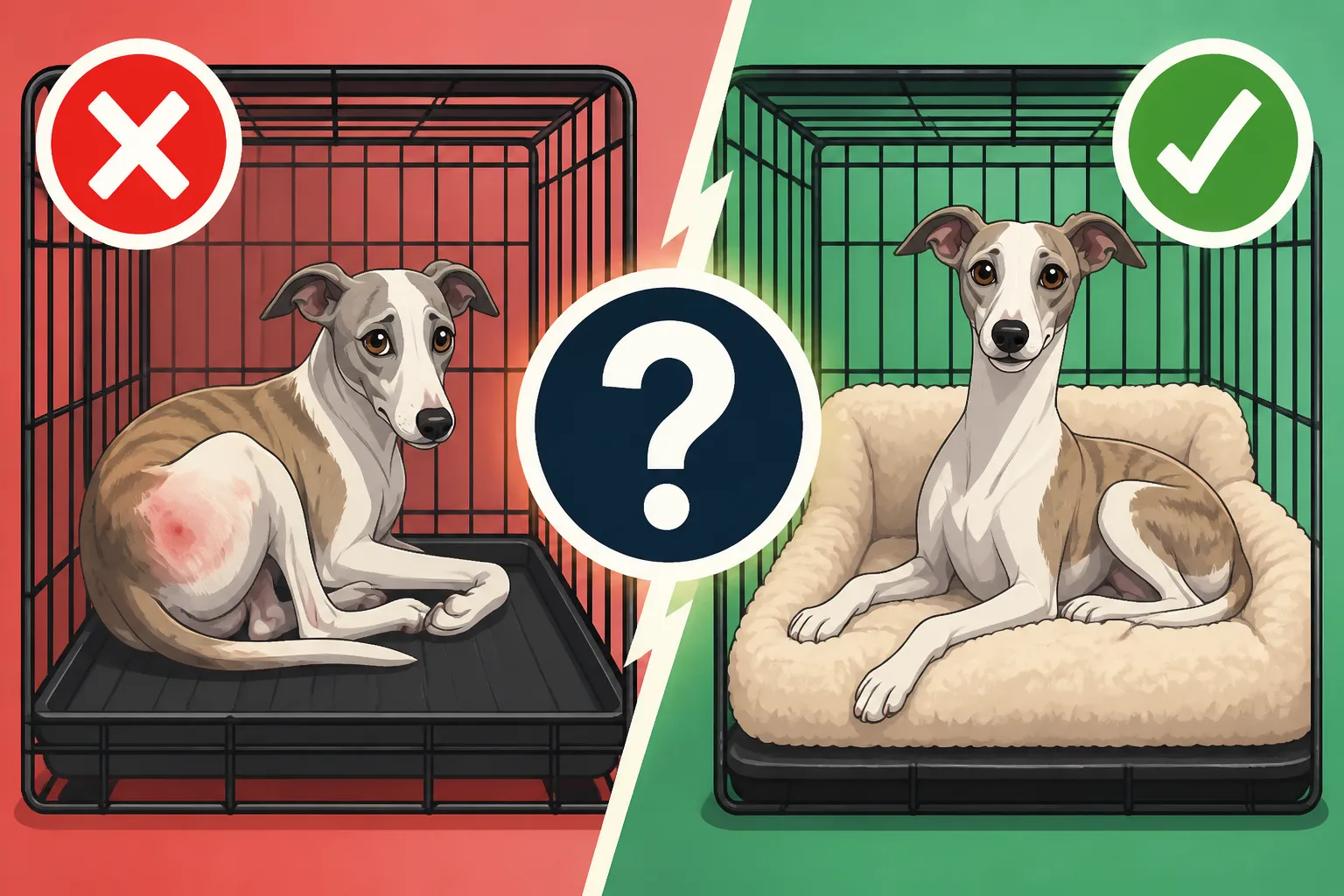
Given their inherent predisposition to pressure sores, simply providing a crate – even a spacious one – without adequate padding is setting your whippet up for potential problems. The right crate padding isn't just about making their space cozier; it's a fundamental health necessity for a whippet.
Distributing Weight and Relieving Pressure
The primary function of good crate padding is to distribute your whippet's body weight evenly across a larger surface area, thereby eliminating the concentrated pressure on bony prominences. Think of it like this: if you push your finger hard into a piece of wood, you feel a sharp, localized pressure. If you place your hand flat and apply the same force, the pressure is spread out, and it feels much less intense.
A high-quality bed or mat inside the crate achieves this by conforming slightly to your dog's body, cradling their joints and bones rather than forcing them to bear the brunt of their weight. This allows for better blood circulation to those vulnerable areas, preventing the tissue damage that leads to sores. Without this crucial buffer, even a short time in a crate can start to take its toll, especially on a whippet who might spend several hours sleeping or resting there.
Material Matters: Choosing the Right Cushion
When it comes to crate padding, not all materials are created equal, especially for a whippet. You need something that offers genuine support and cushioning, not just a thin layer of fluff that compresses flat under their weight.
- Memory Foam: This is often considered the gold standard for pressure relief. It molds to your whippet's unique body shape, distributing weight exceptionally well. For older whippets or those with existing joint issues, memory foam can be a godsend.
- Orthopedic Foam: Similar to memory foam, orthopedic foam provides dense, supportive cushioning. It's designed to maintain its loft and support even with prolonged use, which is crucial for preventing those painful pressure spots.
- Dense Polyester Fill: While not as contouring as memory foam, a dense polyester fill can offer good support if it's thick and packed tightly enough not to flatten immediately. Avoid anything too fluffy or airy, as it won't provide the necessary structure.
When you're shopping for these, reputable pet supply retailers like Chewy often have a fantastic selection of orthopedic and memory foam beds specifically designed for crates. You can also find great options on Amazon, reading reviews to ensure the product holds up to its claims of support and durability. Always look for beds with removable, washable covers – because life with dogs is messy, and hygiene is important for skin health!
Beyond Just the Crate: The Importance of Soft Surfaces Everywhere
While we're focusing on crates today, it's vital to remember that a whippet's vulnerability isn't limited to one spot. These dogs will find any hard surface to lie on if given the chance – the kitchen floor, the entryway tiles, even the cold patio in summer. Every single one of those moments contributes to the cumulative pressure on their joints and bones.
That's why a truly proactive approach involves providing soft, supportive bedding throughout your home. Think about where your whippet likes to nap during the day – under the window, by your desk, in the living room. Each of these spots should have a comfortable bed or thick mat. You might even find your whippet gravitates towards particular types of bedding. A deep, cozy dog bed in the living room, a soft mat in the kitchen, and, of course, a supremely comfortable bed in their crate or sleeping area. This distributed comfort reduces the overall time spent on hard surfaces and significantly lowers the risk of developing sores. We delve deeper into this aspect in Why a Whippet Needs Soft Bedding Everywhere.
Selecting the Best Crate Padding for Your Whippet
Choosing the right crate bed isn't just a matter of picking the prettiest option; it's about making an informed decision that directly impacts your whippet's health and comfort. Let's break down what truly makes a bed suitable.
Orthopedic and Memory Foam Options
For a whippet, orthopedic and memory foam beds aren't just a luxury; they're practically a medical necessity. These materials excel at providing superior support and pressure relief. Memory foam, in particular, has a unique ability to conform to your dog's body heat and weight, creating a customized cradle that minimizes pressure points. This is especially beneficial for older whippets who might have arthritis or other joint pain, as the support helps cushion their aching bodies. Even young, healthy whippets benefit from this level of comfort, protecting their joints from future wear and tear.
When evaluating these options, look for beds with a substantial thickness – at least 3-4 inches of dense foam is ideal. Anything thinner might feel soft initially but will compress too much over time, negating its protective qualities. Many high-quality orthopedic beds come with waterproof liners under the main cover, which is a fantastic feature for protecting the foam core from accidents or drool, ensuring longevity and hygiene.
Durability and Washability
Whippets, while generally not heavy chewers compared to some breeds, can still be prone to "nesting" behaviors – digging and circling before settling down. This can put stress on bedding, especially less durable fabrics. Investing in a bed with a tough, tear-resistant cover is a wise choice. Look for materials like heavy-duty canvas, microsuede, or even ballistic nylon, which can withstand more abuse.
More importantly, washability is non-negotiable. Dogs get dirty. Accidents happen. A bed that can't be easily cleaned will quickly become a breeding ground for bacteria and odors, which isn't good for your whippet's skin or your home. Opt for beds with fully removable, machine-washable covers. Some premium brands even offer foam inserts that are encased in water-resistant liners, allowing you to easily wipe them down if liquid penetrates the outer cover. This ensures both cleanliness and the longevity of your investment.
Avoiding Insufficient Padding
This is where many well-meaning owners inadvertently fall short. A thin fleece blanket, a flat dog bed that's seen better days, or a pile of old towels simply won't cut it for a whippet in a crate. While these might add a touch of softness, they offer negligible support against hard surfaces. Under the weight of a whippet, they'll compress almost instantly, leaving those bony areas pressing directly against the hard plastic or metal floor of the crate.
It's tempting to use what you have, but for a whippet, inadequate padding is almost as bad as no padding at all. It gives a false sense of security while still allowing the damage to occur. If you're unsure if a bed is sufficient, try this simple test: press your hand down firmly on the bed, mimicking your dog's weight. If you can easily feel the hard surface underneath, it's not thick or dense enough to protect your whippet's delicate frame. It’s an investment in their long-term health and comfort.
Beyond Padding: Holistic Approaches to Prevent Sores
While proper crate padding is undeniably crucial, it's part of a larger picture when it comes to preventing pressure sores in whippets. A holistic approach considers their overall health, diet, and daily routine.
Maintaining Ideal Body Condition
It's a common misconception that a whippet needs to be "plumped up" to avoid sores. In fact, an overweight whippet can face a whole host of other health issues, including increased strain on joints and heart problems. The goal isn't to make them fat, but to maintain their ideal, lean body condition. A healthy whippet should have visible last two to three ribs, a distinct tuck-up, and their hip bones should be easily felt but not sharply protruding.
If your whippet is genuinely too thin, to the point where their bones are extremely prominent and sharply angled, then working with your vet to safely increase their weight might be part of the solution. This could involve adjusting their diet to a higher calorie, nutrient-dense food, or addressing any underlying health issues that might be preventing weight gain. However, this should always be done under veterinary guidance to ensure you're adding healthy weight, not just fat, and not masking other problems. For more on this, check out Keeping Weight On a Whippet Without Making It Fat.
Regular Inspection and Skin Care
Prevention isn't just about what you put under them; it's also about what you notice on them. Make it a routine to gently check your whippet's elbows, hocks, hips, and sternum. Feel for any changes in skin texture – is it becoming thicker, rougher, or balder? Are there any signs of redness, cracking, or tenderness? Early detection is key.
If you notice dry, beginning calluses, keeping the skin moisturized can help prevent them from cracking. Products like vitamin E oil, coconut oil, or specialized paw balms can be gently massaged into the affected areas. Always ensure any product you use is safe for dogs, as they will inevitably lick it. If the skin is broken, red, or showing signs of infection, it's time for a vet visit. Your vet can advise on medicated creams or other treatments to prevent further complications.
Strategic Placement of Beds and Resting Spots
Remember our earlier point about soft surfaces everywhere? It's worth reiterating. Whippets are creatures of comfort, and if there's a soft spot available, they'll usually choose it. Strategically placing comfortable, well-padded beds in all the areas your whippet frequents can drastically reduce their time spent on hard floors.
Think about your daily routine: where does your whippet sleep at night? Where do they hang out while you're cooking dinner or watching TV? Where do they sunbathe? Ensure each of these zones has a suitable bed. This encourages them to rotate their resting spots and positions, preventing prolonged pressure on any single area. Some owners even have a rotation of beds to allow for cleaning and airing. It doesn't have to be a designer bed in every room; a thick mat or even a few layers of soft, clean blankets can make a huge difference in less used areas. How Many Beds a Whippet Needs in a House offers more ideas for creating a comfortable home for your whippet.
Here's a quick comparison of popular crate padding options:
| Feature | Memory Foam Bed | Orthopedic Foam Bed | Dense Polyester Fill Bed | Thin Fleece Blanket/Old Towels |
|---|---|---|---|---|
| Pressure Relief | Excellent (conforms to body) | Very Good (firm, even support) | Good (if dense and thick) | Poor (compresses to nothing) |
| Support | Excellent (cradles joints) | Excellent (maintains shape) | Fair to Good (can flatten over time) | None |
| Durability | Very Good (foam retains shape, covers vary) | Very Good (foam retains shape, covers vary) | Moderate (fill can clump, covers vary) | Poor (wears thin, offers no structure) |
| Washability | Usually has removable, washable cover | Usually has removable, washable cover | Often fully washable, but can be bulky | Excellent (easily washable) |
| Cost | Higher | Higher | Moderate | Low |
| Whippet Suitability | Highly Recommended (especially for older/arthritic) | Highly Recommended (excellent all-around choice) | Recommended if sufficiently thick and dense | Not Recommended (insufficient protection) |
Disclaimer
This article is for general informational purposes only and does not constitute professional advice. Laws, prices and regulations vary by location and change over time. Consult a qualified professional for guidance on your specific situation.