Whether a Whippet Eats Better From a Slow Feeder
It's a common sight for us Whippet owners, isn't it? You put down a bowl of kibble, and before you can even turn around, it's GONE. A vacuum cleaner couldn't devour food faster. This rapid eating isn't just a quirky habit; it can lead to some real health concerns for our lean, speedy companions. This guide will explore whether a slow feeder can genuinely improve your Whippet's mealtime experience, digestive health, and overall well-being.
Understanding Your Whippet's Eating Habits
Our Whippets are incredible athletes, built for speed and efficiency, but sometimes that efficiency extends to their mealtime in a way that isn't always beneficial. They're often lean, with high metabolisms, and they can pack away food at an alarming rate.
Why Whippets Often Eat So Fast
Whippets, like their larger sighthound cousins, carry very little body fat. This lean physique, combined with their naturally high metabolism, means they burn through calories quickly. In the wild, or in their historical context as "poor man's racehorses," food might not have been guaranteed. This can translate into an instinct to eat quickly when food is available. They don't have the luxury of grazing or slowly savouring a meal when their bodies are primed for performance and they have A Whippet Has No Insulation and No Padding.
Think about it from their perspective: they’ve got a long, slender neck and a powerful gulping mechanism designed for quickly swallowing prey. When presented with a bowl of easily accessible kibble, that instinct kicks in. Many Whippets simply don't see the need to chew thoroughly or take their time. Their bodies are built to convert food into energy as fast as possible, and for many, that means hoovering up their dinner in a flash. This isn't necessarily a sign of extreme hunger (though they'll often act like they haven't eaten in days!), but rather a manifestation of their evolutionary wiring and physical build.
The Risks of Eating Too Quickly
While watching your Whippet inhale their meal might seem harmless, rapid eating can pose several significant health risks, the most serious of which is Gastric Dilatation-Volvulus (GDV), commonly known as bloat. Although bloat is often associated with larger, deep-chested breeds, sighthounds, including Whippets, are not entirely immune to its dangers. When a dog eats too fast, they swallow a lot of air along with their food. This excess air can cause the stomach to distend, and in severe cases, twist upon itself, cutting off blood supply and becoming a life-threatening emergency.
Beyond bloat, fast eating can lead to other uncomfortable and potentially problematic issues. Choking is a real concern, especially if your Whippet is inhaling large pieces of kibble without proper chewing. Indigestion, regurgitation, and vomiting are also common complaints among owners of speedy eaters. When food isn't properly chewed and mixed with saliva, it's harder for their digestive system to break it down efficiently. This can lead to stomach upset, gas, and even reduced nutrient absorption because the body doesn't have enough time to process the food before it rushes through the system. You want your Whippet to get the most out of Feeding a Whippet That Sprints and Then Sleeps, so slowing down is key.
What Exactly is a Slow Feeder?
A slow feeder isn't just another pretty bowl; it's a tool specifically designed to tackle the common problem of dogs eating too quickly. It aims to make mealtime a more deliberate and engaging activity, turning a five-second gobble into a several-minute exploration.
How Slow Feeders Work
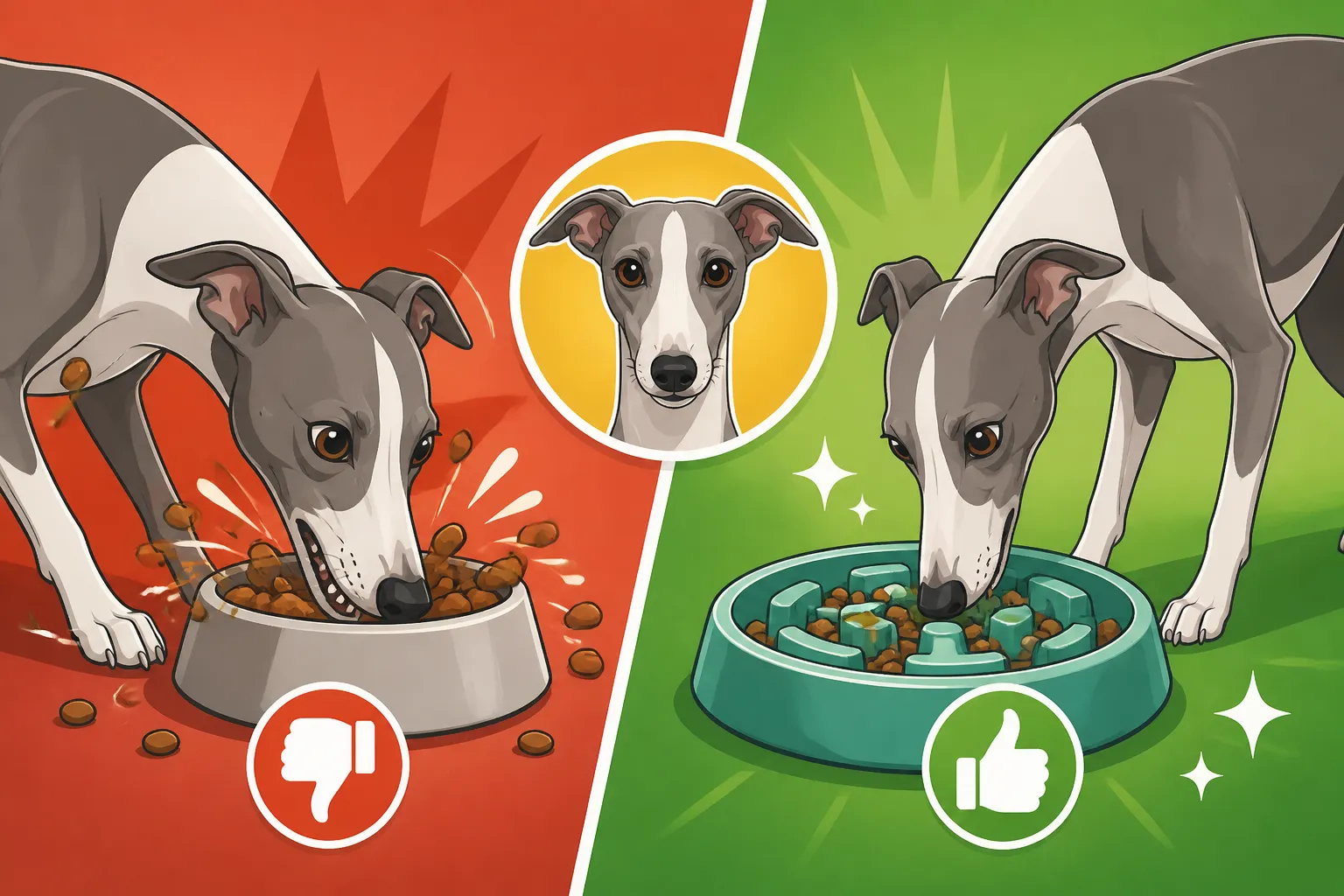
At its core, a slow feeder works by introducing physical obstacles into the food bowl, forcing your dog to work around them to get to their meal. Instead of a wide, open surface where food is easily scooped up, these bowls feature various designs like mazes, ridges, bumps, or intricate patterns. Imagine a winding path or a series of small compartments rather than a straight highway to dinner. Your Whippet has to use their tongue, nose, and sometimes even their paws to navigate these barriers, pushing kibble around to get a bite.
These designs effectively break up the eating process. They prevent your Whippet from taking large gulps of food and air, encouraging smaller bites and more thorough chewing. Some slow feeders are more like puzzle toys, requiring your Whippet to roll them or manipulate parts to release food, adding an extra layer of mental stimulation to the meal. Whether it’s a simple silicone mat with raised patterns that you spread wet food onto, or a hard plastic bowl with deep, winding channels for kibble, the principle is the same: make it harder, and therefore slower, to eat. This deliberate process helps engage their brain as much as their stomach.
Benefits Beyond Slowing Down Mealtime
While the primary benefit of a slow feeder is, quite obviously, to slow down eating, its advantages extend far beyond just pacing a meal. For a Whippet, who might otherwise finish their dinner in under a minute, a slow feeder transforms mealtime into a richer experience. This extended engagement provides valuable mental stimulation. Instead of a passive activity, eating becomes a mini-problem-solving exercise. This can be particularly beneficial for intelligent breeds like Whippets, helping to stave off boredom and reduce anxiety that might arise from routine, unchallenging mealtimes.
Furthermore, by encouraging slower eating and more chewing, a slow feeder can significantly aid digestion. Better chewing means smaller food particles, which are easier for the stomach to process. Reduced air intake means less gas and discomfort after eating. This can lead to a more settled stomach and potentially better nutrient absorption. When a dog eats too fast, their brain doesn't always register satiety as quickly, leading to begging for more food or feeling unsatisfied. A longer meal can help your Whippet feel more full and content, reducing the likelihood of them looking for extra snacks or The Whippet That Steals Off the Counter. It's about making mealtime a mindful activity, not just a race to the bottom of the bowl.
Choosing the Right Slow Feeder for Your Whippet
With so many slow feeders on the market, picking the right one for your Whippet can feel a bit overwhelming. It's not a one-size-fits-all solution, and what works for a Bulldog might not be ideal for our elegant sighthounds.
Different Types and Their Suitability for Whippets
Slow feeders come in a variety of materials and designs, each with its pros and cons for a Whippet owner.
- Plastic Slow Feeders: These are often the most common and budget-friendly option. They come in countless designs, from simple raised ridges to elaborate maze patterns. Brands like Outward Hound offer a wide range on platforms like Chewy and Amazon. For Whippets, look for designs with shallower, wider channels to avoid frustrating their long noses and tongues too much. Durability can be a concern if your Whippet is a chewer, as plastic can be gnawed on and ingestible pieces could break off.
- Ceramic Slow Feeders: These bowls are heavier and more stable, making them harder to tip over. They are also usually dishwasher safe and less likely to harbor bacteria than some plastics. The smooth surface is often easier to clean. However, they can be more expensive and, being ceramic, they are breakable if dropped. For a Whippet, the weight is a definite plus against pushing the bowl around, and many ceramic designs are quite aesthetically pleasing.
- Silicone Slow Feeder Mats: These are fantastic for wet food, raw food, or even smearable treats like peanut butter or yogurt. They feature a textured surface that requires the dog to lick and work to get the food. They're often flexible, dishwasher safe, and can be frozen for an extra challenge or to cool down a treat on a warm day. While not ideal for dry kibble alone unless mixed with something wet, they offer great mental stimulation and can be found readily from retailers like Amazon.
- Puzzle Feeders: These are more interactive and require your Whippet to use their paws or nose to move sliders, lift flaps, or spin compartments to release food. They offer the highest level of mental engagement. While some Whippets might adore the challenge, others, especially if they are easily frustrated, might give up or try to chew the feeder apart. Start with simpler puzzles and observe your Whippet's response. For wet or fresh food diets, like those from Ollie, ensure the feeder design is compatible and easy to clean.
When considering the various options, think about your Whippet's personality. Is your Whippet generally patient and eager for a challenge, or do they tend to get frustrated easily? An overly complex feeder might just lead to them flipping the bowl in protest!
Factors to Consider Before Buying
Beyond the type of material and design, there are a few other critical factors to keep in mind when selecting a slow feeder for your Whippet:
- Size and Capacity: Ensure the bowl is appropriately sized for your Whippet's meal portion. A bowl that's too small will be ineffective, and one that's too large might not challenge them enough or could be awkward for them to reach all the food. Consider the daily volume of food your Whippet consumes.
- Ease of Cleaning: This is paramount for hygiene. Food can get stuck in nooks and crannies, leading to bacterial growth. Look for bowls that are dishwasher safe or have smooth, easily accessible surfaces for handwashing. Intricate puzzle feeders, while stimulating, can sometimes be a pain to clean thoroughly. This is especially true for bowls used for What a Whippet Eats in a Month if you feed wet food.
- Non-Slip Base: Whippets can be quite enthusiastic eaters, and a lightweight bowl without a non-slip base is likely to be pushed all over your kitchen floor. Rubber feet or a weighted design will prevent this common frustration for both you and your dog.
- Durability: As mentioned, if your Whippet tends to chew, a flimsy plastic bowl might not last long. Consider a more robust material if chewing is a concern. Some Whippets might try to chew on the obstacles in the bowl if they find it frustrating or if the material is enticing.
- Challenge Level: Start with a simpler design and gradually increase the difficulty if needed. It's better to ease your Whippet into the concept of a slow feeder rather than overwhelming them immediately. A slow feeder should be an engaging tool, not a source of stress.
Here’s a quick overview to help you compare:
| Feeder Type | Pros | Cons | Best For |
|---|---|---|---|
| Plastic Maze Bowls | Wide variety of designs, affordable, lightweight | Can be chewed, might slide, harder to clean deep | Beginners, dry kibble, cost-conscious owners |
| Ceramic Maze Bowls | Heavy, stable, durable, easy to clean, stylish | Breakable if dropped, heavier, less variety | Dry kibble, wet food, no chewers, aesthetics |
| Silicone Lick Mats | Excellent for wet food/raw, flexible, portable, good for anxiety | Not ideal for large dry kibble portions, less challenge | Wet food, raw food, spreads, freezing treats |
| Interactive Puzzles | High mental stimulation, engaging, variety of challenges | Can be frustrating, harder to clean, can be chewed | Engaged dogs, variety, boredom busting |
Introducing a Slow Feeder to Your Whippet
Introducing any new feeding method to your dog should be a thoughtful process. While some Whippets might take to a slow feeder immediately, others might need a bit of encouragement or a gradual transition.
Gradual Introduction and Observation
When you first bring home a slow feeder, don't just dump your Whippet's entire meal into it and expect seamless success. Start by putting a small portion of their regular food, perhaps just a quarter of their meal, into the slow feeder. Place the rest of their food in their old, familiar bowl. This allows them to explore the new feeder without the pressure of a full meal, ensuring they still get enough to eat even if they're initially confused or reluctant. As they become more comfortable and adept at using it, gradually increase the amount of food in the slow feeder and reduce the portion in the old bowl, until they are eating their full meal from the new apparatus.
Throughout this process, observe your Whippet carefully. Are they engaging with the feeder? Are they showing signs of frustration, like batting at it or trying to flip it? Are they successfully getting food out, or are they giving up? Praise them when they interact positively with the feeder, and be patient. Some Whippets might take a few meals, or even a few days, to adjust. The goal is to make mealtime a positive experience, not a source of stress. You might find that for a particularly sensitive Whippet, a shallower, simpler design from a brand found on Chewy might be a better starting point than a deep, complex maze.
Potential Downsides or Challenges
While slow feeders offer numerous benefits, they aren't a perfect solution for every Whippet. One common challenge is frustration. A Whippet who is used to eating without effort might find the obstacles irritating. If the feeder is too difficult, or if your dog is naturally impatient, they might become frustrated, pawing at the bowl, flipping it over, or even trying to chew through the plastic or silicone barriers. This isn't just annoying for you; it can also lead to negative associations with mealtime.
Another potential issue is chewing. If your Whippet is a strong chewer, they might attempt to chew on the slow feeder's ridges or puzzles rather than navigating them. This can damage the feeder, potentially releasing small pieces that could be ingested, posing a choking hazard or digestive block. Always supervise your Whippet with a new slow feeder, especially if you know they are prone to chewing.
Finally, not every Whippet actually needs a slow feeder. If your Whippet already eats at a reasonable pace, doesn't gulp air, and doesn't experience digestive upset after meals, then a slow feeder might be an unnecessary complication. The effectiveness also depends on the individual dog and the specific feeder. Some designs are simply not engaging enough, or too easy, for certain dogs to truly make a difference. It's about finding the right balance between challenge and accessibility for your individual Whippet. If you're concerned about digestive issues in general, considering Whether a Whippet Has a Sensitive Stomach might be a broader discussion with your vet.
Using a slow feeder can be a fantastic way to improve your Whippet's digestion, reduce the risks associated with fast eating, and add a valuable dose of mental enrichment to their day. By understanding their unique needs and choosing the right product, you can transform mealtime into a healthier, happier experience for your beloved sighthound.
Disclaimer
This article is for general informational purposes only and does not constitute professional advice. Laws, prices and regulations vary by location and change over time. Consult a qualified professional for guidance on your specific situation.